Silo de Carlomagno Roncesvalles
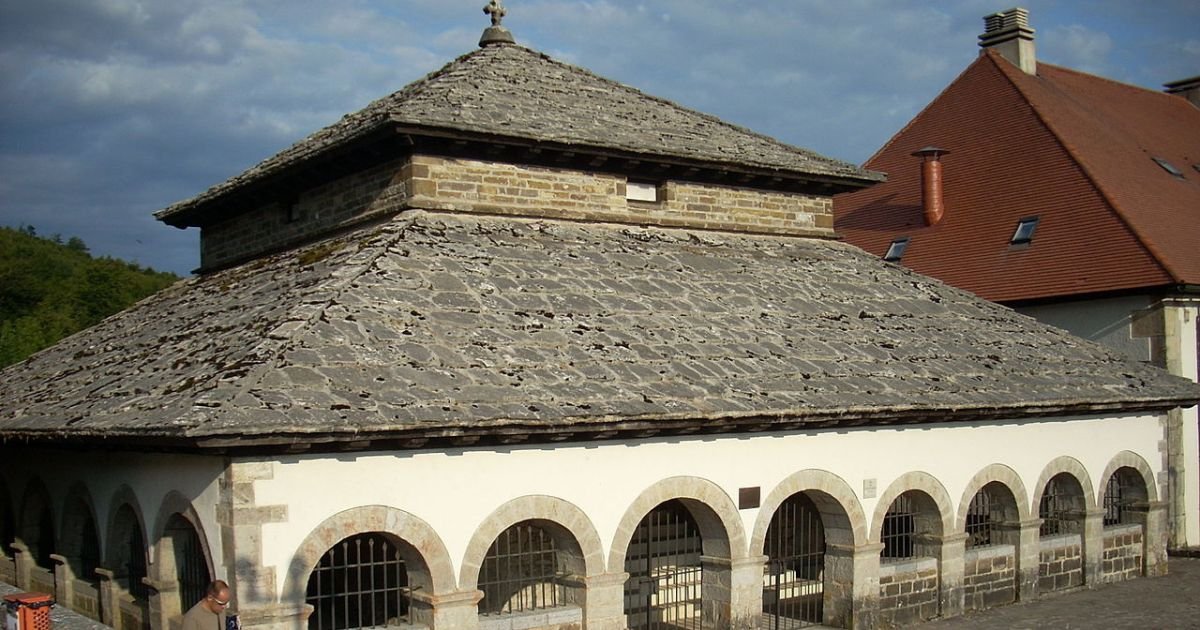
The Capilla de Sancti Spiritus in Roncesvalles, Navarra, Spain, on the Camino de Santiago Frances, also known as the Silo de Carlomagno due to the belief that it was built to bury the Frankish soldiers who died in the year 778, which makes sense, has its origins in the 12th century. For this reason, it is considered the oldest structure in Roncesvalles, which gives it significant historical value. The chapel is a testament to the rich history of this region and draws visitors interested in learning more about the medieval roots of Roncesvalles and its connection to historic events.
Capilla de Sancti Spiritus
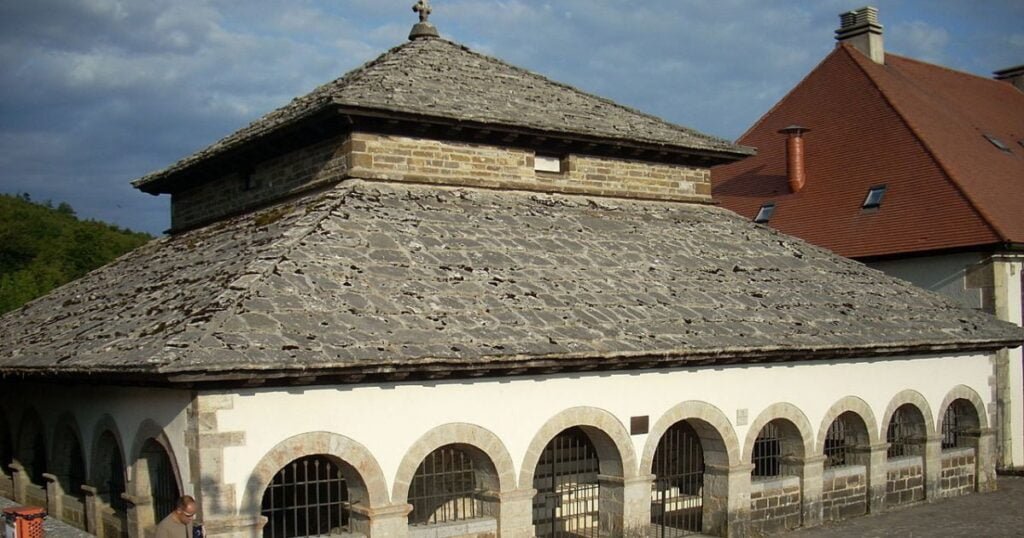
The Sancti Spiritus, an ancient chapel, has an impressive pyramid-shaped dome topped with a beautiful cross, as noted by traveller Domenico Laffi in 1670. The roof has a unique style with a four-sided pitch covered in limestone slabs, giving it a sturdy appearance. Long ago, the roof was covered with simple tiles, but this more recent change has transformed it. Over the years, in Roncesvalles, the church has undergone many modifications, at times reflecting questionable decisions. An additional structure above the chapel keeps the original proportions and ends in a small decorative cross atop a truncated conical base.
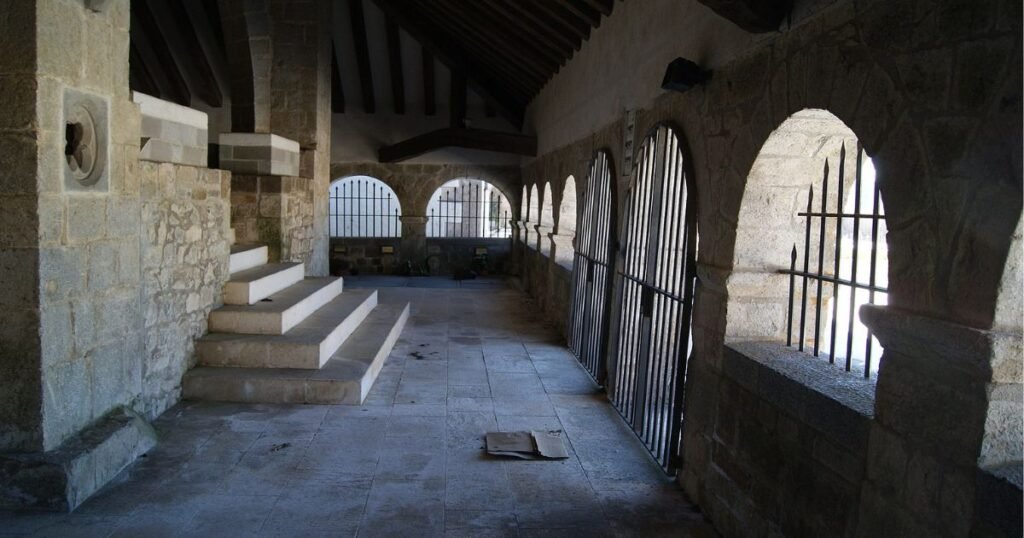
The chapel sits above an old well used as an ossuary, reinforced with stone walls and a barrel vault of the same material. Its floor plan is square, with a simple ribbed vault. This area is raised above ground level, and at this level a small cloister was built in the 17th century, with stone arches on three sides and a wall. The arches are semicircular and rest on square pillars with a decorative upper section.
The Sancti Spiritus was known as a funerary chapel, although it was not used as a permanent burial site in the Middle Ages. Masses were held here for pilgrims who had died at the hospital, whose remains, after some time following burial elsewhere, were moved to the ossuary beneath the standalone chapel. Today, the canons and beneficiaries of the collegiate church are buried in the cloister, their names listed on a framed plaque on the back wall.