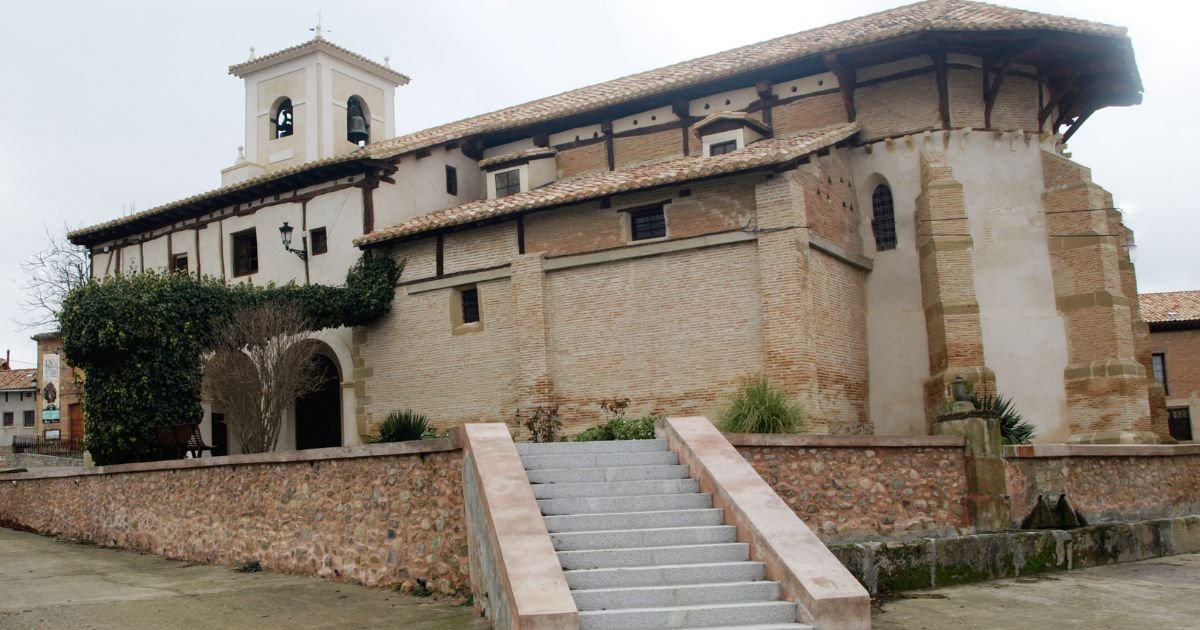
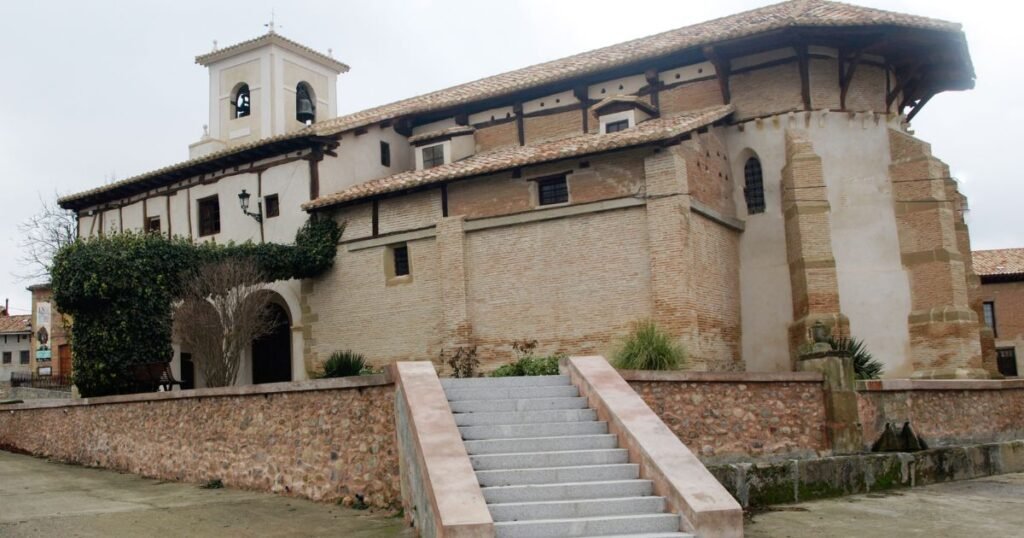
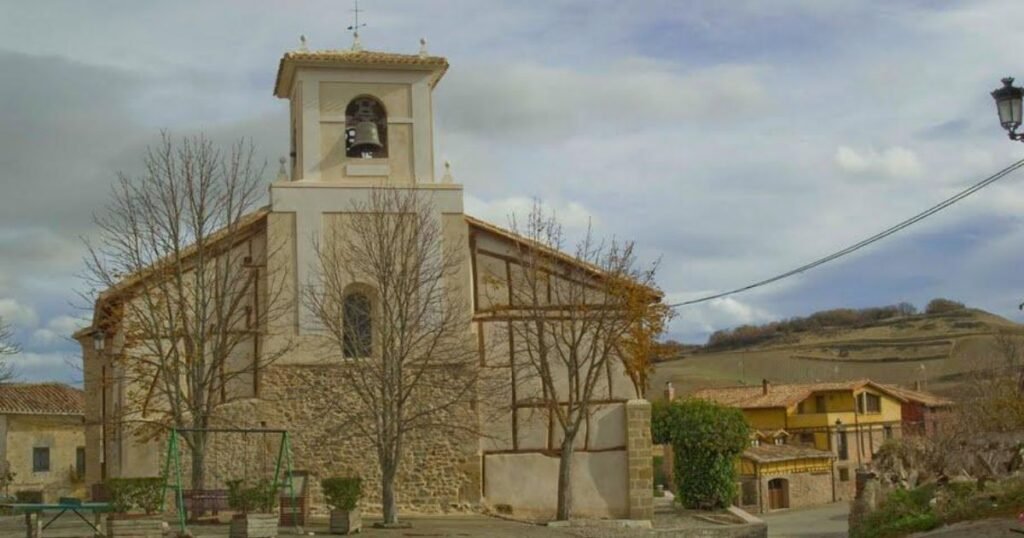
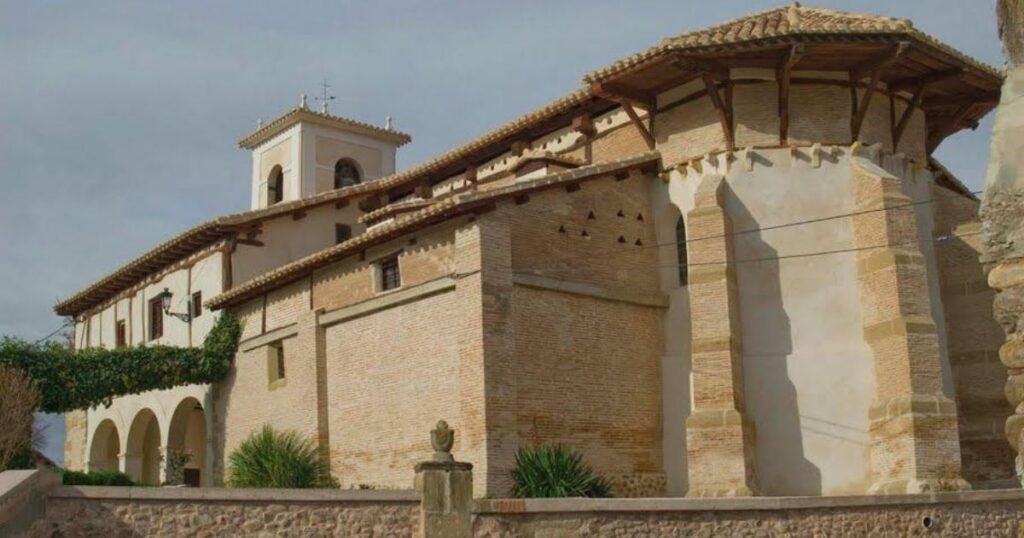
Church of Our Lady of the Assumption in Viloria de Rioja (Burgos)
Viloria de Rioja, despite its name, does not belong to La Rioja, but to Burgos Province, in Castilla y Leon. However, its location on the border with La Rioja means it shares many traditions and much of the culture of that neighboring land.
In this corner of the Camino de Santiago Frances stands the Church of Our Lady of the Assumption, a church that holds centuries of history, art and spirituality.
Historical context of the Church of Our Lady of the Assumption
The church was built in the Middle Ages, at the height of the Camino de Santiago Frances. Viloria de Rioja is also the birthplace of Saint Dominic of the Causeway (1019), a saint closely associated with pilgrims, which gave the church immediate significance.
Later renovations and extensions
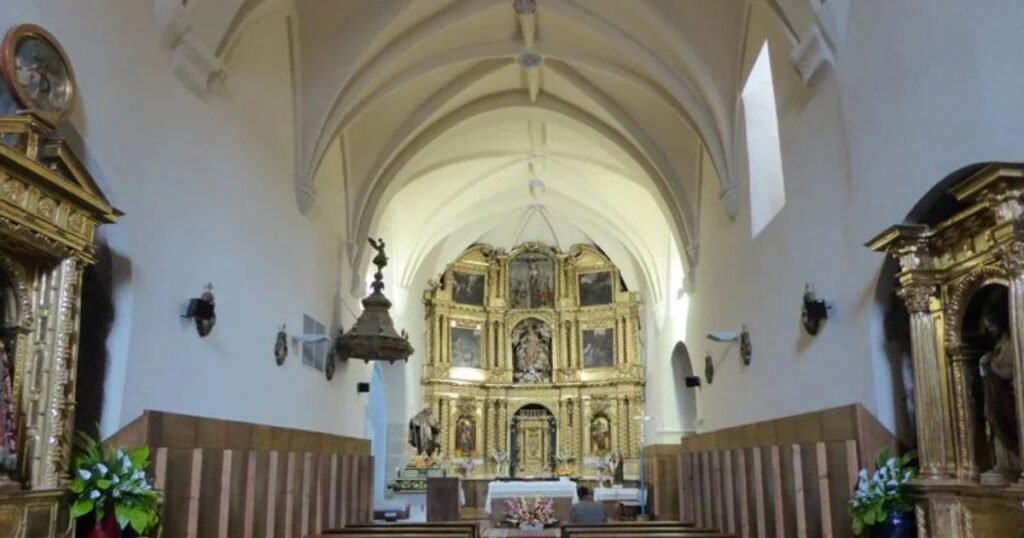
Over the centuries, the building has been expanded and modified. Romanesque remains can be seen in some of the walls, Gothic elements in the vaults, and Baroque additions in the altarpieces.
Connection to Saint Dominic of the Causeway
The birth of Saint Dominic in Viloria de Rioja made the town a spiritual landmark. Although his main work took place in the city that bears his name, the church of Viloria still recalls that connection.
Architecture and style of the Church of Our Lady of the Assumption
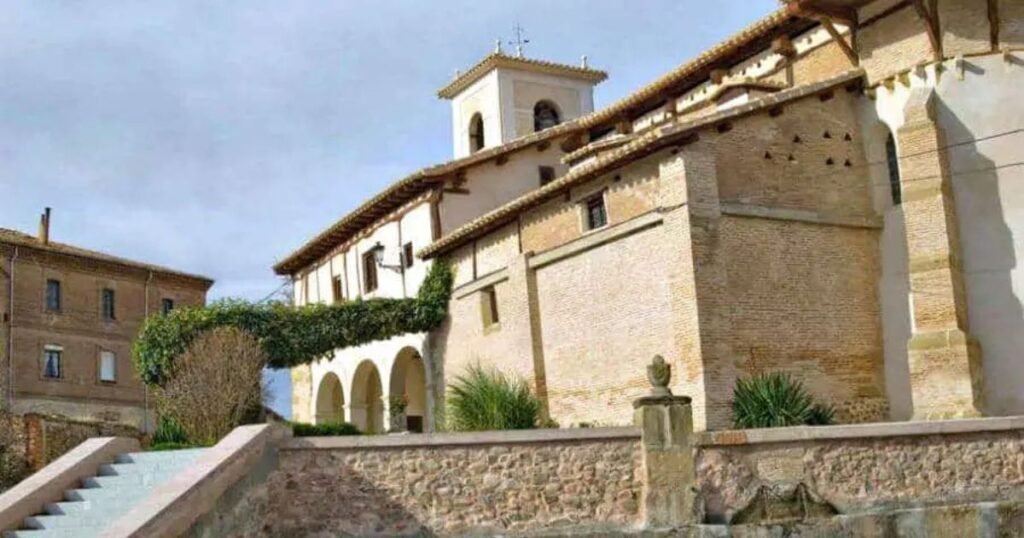
The facade is austere, built in stone, typical of rural Castilian architecture. It does not boast excessive ornamentation, but conveys strength and authenticity.
The tower, visible from the surroundings, has been a beacon and voice of the village for centuries. Its bells have accompanied every key moment of local life.
The interior is surprisingly intimate and quiet.
The main altarpiece is the most impressive, but others depict scenes of saints and popular devotions.
Polychrome wooden sculptures adorn the side chapels, reflecting the skill of local craftsmen.
The ribbed vaults add majesty, while the capitals narrate religious episodes and natural motifs.
Notable artistic features
Baroque in style, the main altarpiece stands out for its gilding and the richness of its biblical scenes. It is, without doubt, the artistic gem of the church.
Although worn by time, traces of mural paintings that once colored the walls can still be made out.
Among the most treasured objects are Marian images and relics linked to the Jacobean tradition.
Religious and community function
Far from being just a monument, the church remains alive. It is the place where residents celebrate their festivities, gather and keep alive the faith of their ancestors.
During the patronal festivities, the church comes alive with processions, music and flowers. It reflects the deep cultural and religious roots of Viloria.
A point on the Jacobean route
Viloria de Rioja lies right on the Camino Frances, so pilgrims from all over the world stop at the church to pray, rest or simply admire its beauty.
The church is part of the historical heritage of Castilla y Leon, protected to ensure its conservation. It is a cultural asset of great value that connects history, faith and art.
Hours and access
The church is usually open for celebrations and also during tourist hours in high season. It is advisable to ask at the town hall or with residents to make sure you can visit it.
What else to see in Viloria de Rioja
The village is small but charming. Strolling through its stone streets, seeing the traditional houses and enjoying the transitional landscape between La Rioja and Burgos Province is a unique experience.
Church of Our Lady of the Assumption in Viloria de Rioja
The Church of Our Lady of the Assumption in Viloria de Rioja (Burgos Province) is not just a church: it is the living memory of a village on the border between Castilla and La Rioja, a place where history, art and spirituality intertwine. Visiting it means discovering a corner of the Camino de Santiago full of authenticity and emotion.
Frequently Asked Questions (FAQs)
1. Which province is Viloria de Rioja in?
Despite its name, it belongs to the province of Burgos (Castilla y Leon), not La Rioja.
2. What style is the church?
It combines Romanesque, Gothic and Baroque elements, the result of centuries of transformations.
3. What is its connection to Saint Dominic of the Causeway?
It is the saint’s birthplace, and the church preserves that spiritual bond with his figure.
4. Is it part of the Camino de Santiago?
Yes, it is located on the Camino Frances, one of the most heavily traveled routes by pilgrims.
5. What else can you do in Viloria de Rioja?
Besides visiting the church, you can stroll through the village, enjoy the rural surroundings and experience the hospitality of the Camino.