Church of Saint Francis of Assisi of León
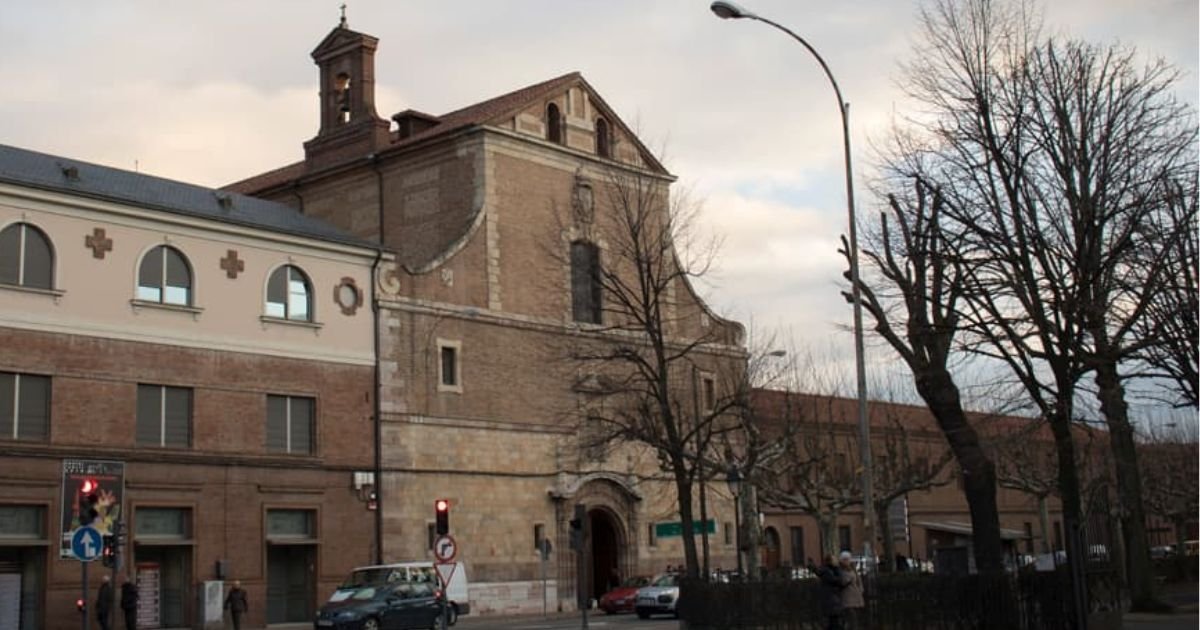
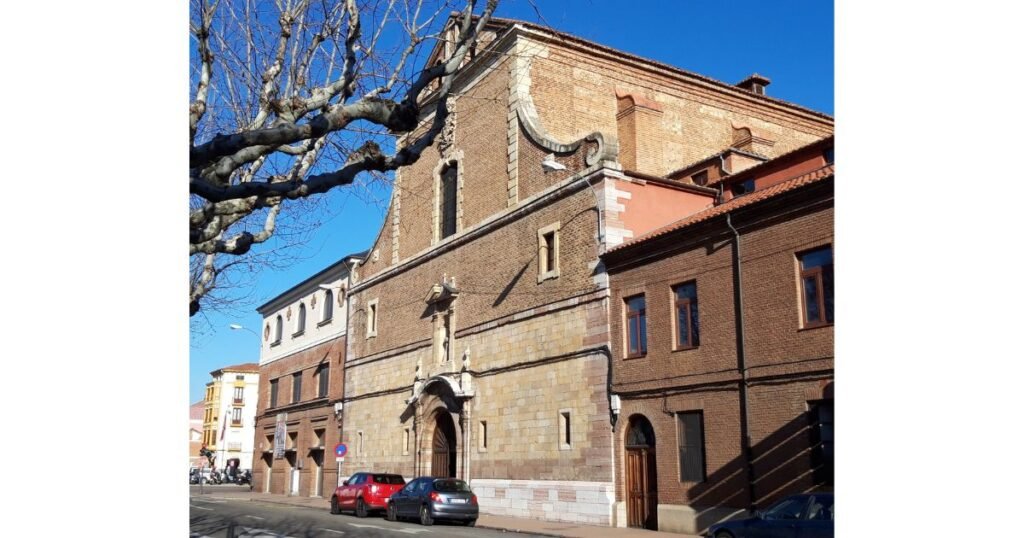
The Church of Saint Francis of Assisi, located in the city of León, Spain, is a notable example of the region’s religious and architectural heritage. Located at Calle de la Corredera no. 1, facing the Jardin de San Francisco, this church has witnessed centuries of history and transformation.
History of the Church of Saint Francis of Assisi
The first church of Saint Francis was built in the 13th century, outside the city walls, in the southern part of Leon. In 1763, during the reign of Carlos III, construction of the present-day, larger temple began, in the Classicist forms typical of the second half of the 18th century. The work was directed by architect Francisco de Rivas and completed in 1791, by then under the reign of Carlos IV.
Disentailment and Restoration
In 1836, with the Mendizabal disentailment, the suppression of religious orders was decreed, leading to the abandonment of the church of Saint Francis, linked to the convent of the same name. During this period, numerous liturgical objects and altarpieces were lost. The church was later sold and turned into a workshop for restoring carriages.
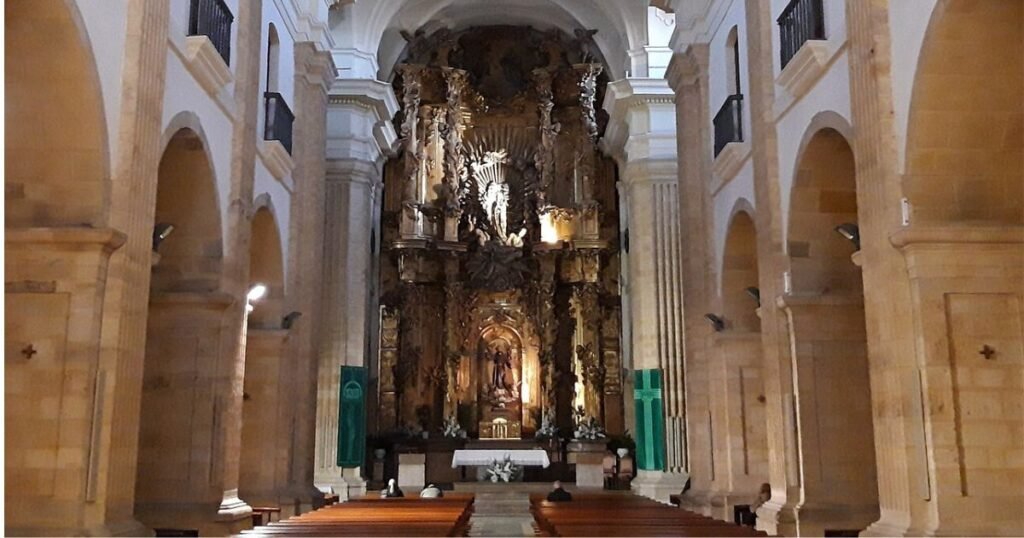
In 1880, the Third Order of Saint Francis acquired the church and convent after 44 years without religious use, beginning the temple’s restoration. During this process, the main altar was installed, one of the church’s treasures. The present-day altarpiece was originally the main altarpiece of Cathedral de León, made in 1733, which presided over the Leon cathedral for almost a century and a half. In the late 19th century, during the restoration of the cathedral by Juan de Madrazo, the altarpiece was dismantled to restore more Gothic forms to the temple. The Capuchin community then decided to acquire the Baroque altarpiece to install it in the church of Saint Francis.
Architecture of the Church of Saint Francis of Assisi, León
The Church of Saint Francis follows the models established by the Church of the Gesu in Rome, the great model of the Baroque church. It shares with it the presence of a single nave with side chapels connected through arches, very shallow transepts, the absence of towers, and the presence of a dome over the transept. The temple is decorated with Doric-order pilasters and has a Latin-cross floor plan.
Adjacent Features
The church is surrounded by various buildings belonging to the Capuchin order. Notable among them are the convent to its south, with a large garden cloister, and the Teatro San Francisco to the north, hosting various film, music and theatre programmes.
The Main Altarpiece
The main altarpiece of the Church of Saint Francis is a notable work of Spanish Baroque. It was made in 1733 by architects Narciso Thome and Simon Gavilan Thome. The altarpiece is dedicated to the Assumption of Mary and features rich iconography and ornamentation.
The altarpiece is divided into three bays. The central one, kept as in the original work, and two side bays, each divided into two tiers set in the arms of the church’s transept. The centre and focus of the entire composition of the main altarpiece is the Assumption of Mary. Curiously, when the Baroque altarpiece was handed over to the Franciscans, the Virgin from the Gothic altarpiece was also moved there on loan, a 15th-century image by Jusquin. This led to the peculiar situation in which the Virgin from the Baroque altarpiece presides over the Gothic altarpiece, and the Gothic Virgin presides over the Baroque altarpiece.
Cultural and Religious Importance
The Church of Saint Francis is one of the main churches in the city of Leon and is linked to the Capuchin convent. It forms part of the Camino de Santiago Frances in Leon Province, giving it special significance both for pilgrims and for scholars of art and religious history.
Church of Saint Francis of Assisi
The Church of Saint Francis of Assisi of León is a living testament to the city’s rich religious and artistic history. Its Baroque architecture, its impressive main altarpiece and its connection to the Camino de Santiago make it a must-visit for those wishing to discover the cultural heritage of Leon.