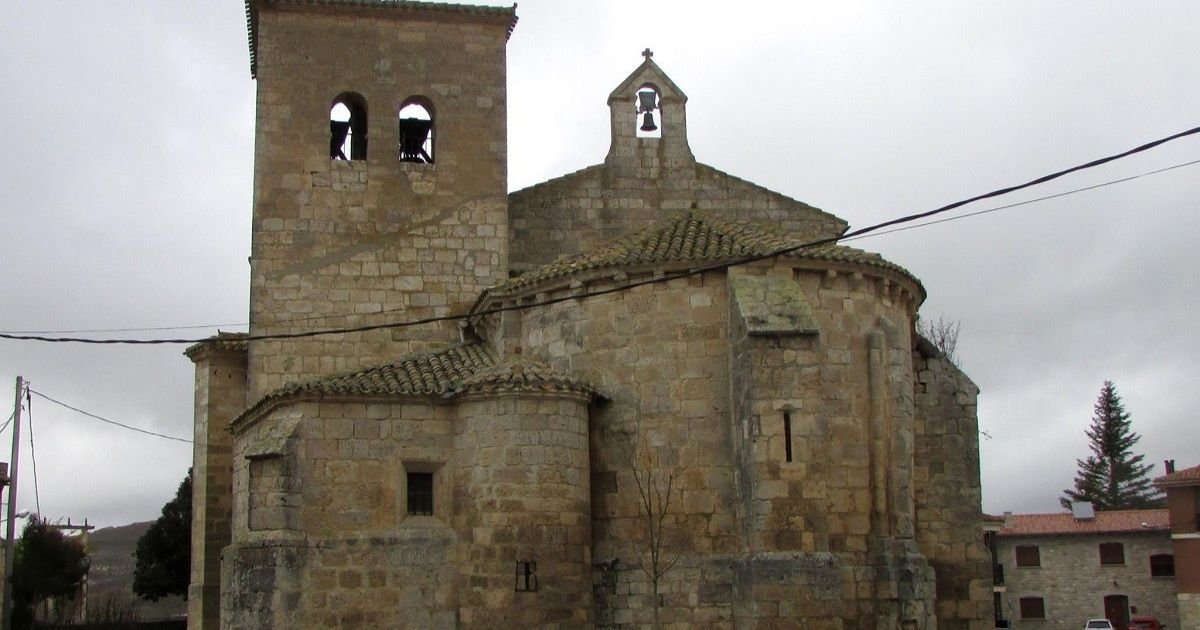

Church of Saint Martin of Tours in Palacios de Benaver
Right in the heart of the province of Burgos, within the municipality of Isar, lies the village of Palacios de Benaver, a site of great historical value located on the route of the Camino de Santiago Frances. Its route coincides with the ancient Via Aquitania, a Roman road that connected Bordeaux with Astorga and which, centuries later, became a pilgrim route toward Compostela. In this small Castilian village, religious heritage finds its fullest expression in the Church of Saint Martin of Tours, the spiritual and cultural center of the place.
History and origin of the church
The parish church of Saint Martin of Tours stands as the most important building in Palacios de Benaver. Its initial construction dates back to the 12th century, at the height of the Romanesque style’s expansion across the Castilian plateau. Over the centuries, the church has undergone various architectural transformations that have left a visible mark: Gothic elements in its naves, Classicist additions in its altarpieces, and consolidation work that has ensured its survival to the present day.
Located at the center of the so-called “barrio grande” (big quarter), the church was, from its origins, the religious and social meeting point. Baptisms, weddings and festivities that shaped the rhythm of community life were held there. Every stone in its structure bears witness to the central role it played in local history.
Architecture: Romanesque and Gothic in a single church
The building retains an interesting combination of styles. The Romanesque chancel preserves the sobriety characteristic of medieval art, with sturdy, simple walls evoking spirituality and quiet reflection. The two Gothic naves, added in later stages, bring greater width and verticality, reflecting the evolution of Castilian religious architecture.
The original Romanesque layout thus coexists with the Gothic additions, offering visitors a clear example of how rural churches adapted over the centuries to new artistic trends and to the needs of the community.
The artistic value of the altarpieces
One of the most outstanding features of the church is its main altarpiece, restored in 2005. This Classicist work is the product of renowned sculptors such as Miguel de Quevedo, Jeronimo de Corseto and Pedro Garcia Montero. The piece, dedicated to Saint Martin of Tours, stands out for the fineness of its carving and the perfect integration of the saint’s iconography with the Christian message of hospitality and self-giving.
The church also preserves a 16th-century side altarpiece, attributed to the master craftsman Domingo de Amberes. Although in a state of deterioration, its artistic value is undeniable, as it is an exceptional example of Flemish influence in Castilla during the Renaissance. These works make the church a space where different eras and styles converge, enriching the artistic heritage of the Camino de Santiago.
Saint Martin of Tours: a symbol of hospitality
The dedication to Saint Martin of Tours, patron saint of the city of Burgos and of numerous Castilian villages, is no coincidence. His figure embodies the values of generosity and hospitality, essential virtues in a land crossed by thousands of pilgrims since the Middle Ages. The famous scene in which Saint Martin cuts his cloak in two to share it with a poor man is reflected in the spirituality of the church and in the welcoming character of the village.
In Palacios de Benaver, devotion to him has remained alive for centuries through patronal festivities, processions and liturgical events that are still an essential part of the festive calendar today.
Restoration and heritage conservation
The church has required conservation work to secure its future. The 2005 restoration not only restored the beauty of the main altarpiece, but also strengthened the community’s commitment to protecting its heritage.
However, the conservation of other pieces, such as the side altarpiece by Domingo de Amberes, remains an ongoing challenge. The risk of deterioration of these works underscores the importance of continuing to pursue restoration projects that ensure this artistic legacy is passed on to future generations.
Palacios de Benaver on the Camino de Santiago Frances
The church’s location on the Via Aquitania makes Palacios de Benaver a point of interest for pilgrims walking the Camino de Santiago Frances. Far from being a monumental stop, the village offers the chance to discover the authenticity of rural life in Burgos, with religious heritage that invites contemplation and quiet reflection.
The Church of Saint Martin of Tours stands as a symbol of the bond between faith, culture and hospitality, values that are part of the essence of the Camino de Santiago. For travelers crossing these lands, visiting Palacios de Benaver means stepping into the history of a village that, despite its small size, has preserved its spiritual and artistic heritage intact.
Church of Saint Martin of Tours in Palacios de Benaver
The Church of Saint Martin of Tours in Palacios de Benaver is an outstanding example of Castilian religious heritage on the Camino de Santiago Frances. Its architecture, combining Romanesque and Gothic styles, its valuable Classicist and Renaissance altarpieces, and the deep devotion to Saint Martin make this church a heritage gem right on the Via Aquitania.
Visiting it means understanding how history, faith and art come together in a space that has accompanied the village’s residents and pilgrims for centuries on their way to the Cathedral of Santiago in Santiago de Compostela. Palacios de Benaver thus presents itself as an essential destination for those who seek, on the Camino, not only the physical journey, but also an encounter with the memory and tradition of Castilla.