

Church of Saint Mary of Belorado
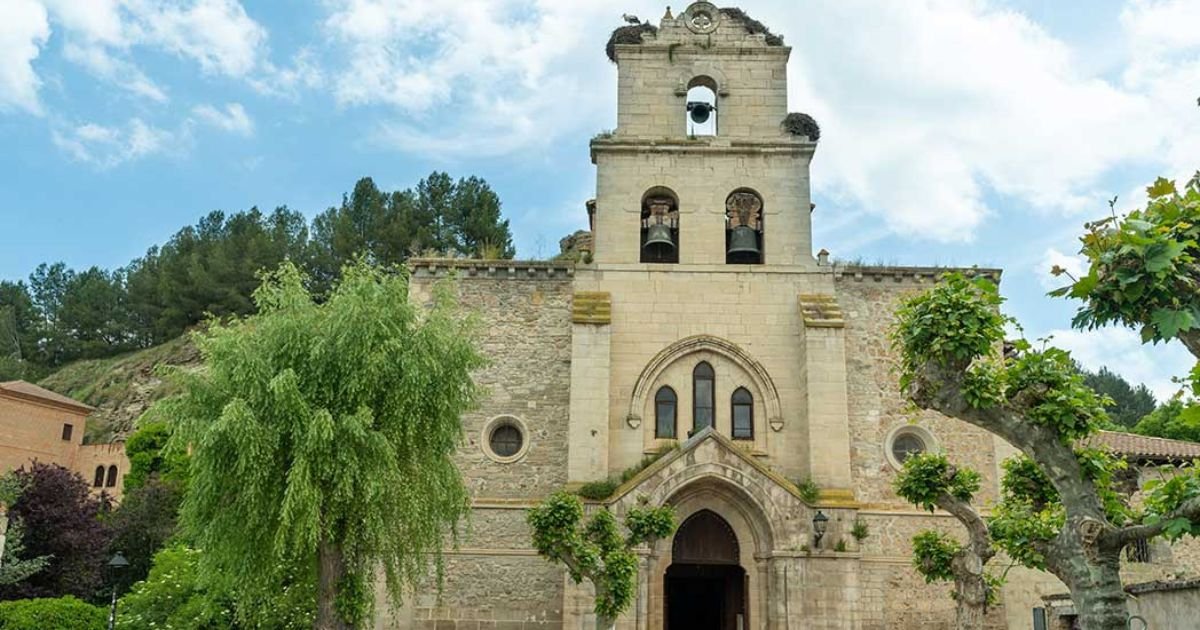
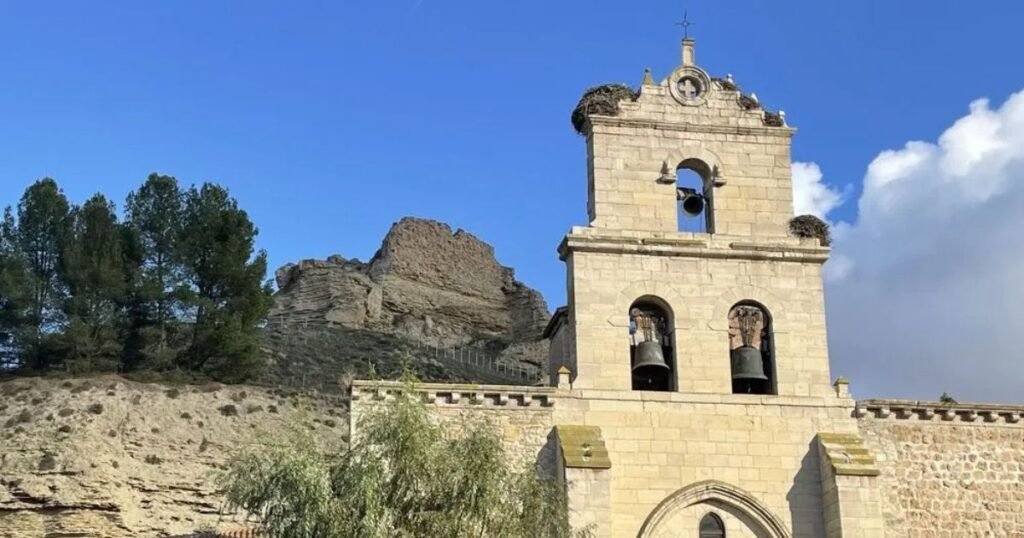
The Church of Saint Mary is set on the slope leading up to the ruins of Belorado Castle, in the historic centre of this Jacobean town in the east of Burgos Province (Castile and León). Located in the Montes de Oca region, very close to La Rioja and the Tiron river valley, it is part of the monumental fabric pilgrims encounter when crossing Belorado on the Camino de Santiago Frances.
Origin and timeline: from castle chapel to great Renaissance church
The current structure dates from the 16th century, built over the site of the so-called “Chapel Church”, itself the successor of a castle chapel. From the original medieval oratory, only a Romanesque carving of Saint Mary (13th c.) survives, now the centerpiece of the main altar.
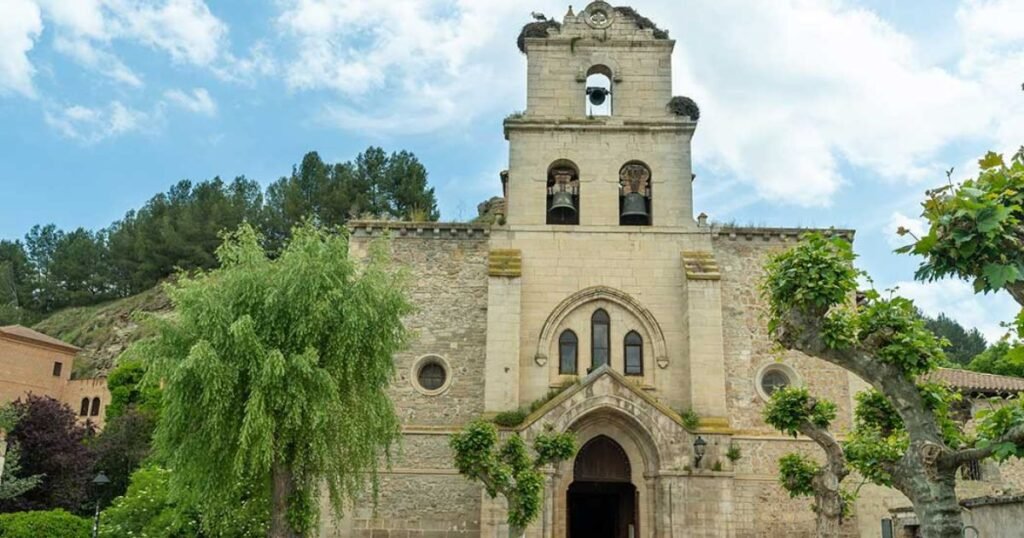
In 1780, Manuel Francisco de Gorbea added a semi-spherical dome on pendentives, topped by a lantern, giving the chancel a monumental character. In the early 20th century (1901), the facade and tower were remodeled, shaping the church’s current appearance without losing the essence of its Renaissance design.
Popular Renaissance architecture: hall church plan and star vaults
The church follows the hall church model: three naves of different heights separated by six sturdy cylindrical pillars; the central nave, wider than the others, unifies the spatial reading.
The elevation is covered with star vaults in late Gothic/Renaissance style, whose ribs form a visually open lattice. Above the crossing rises the dome on pendentives with a lantern, which concentrates the light and gives hierarchy to the presbytery. The 1901 intervention reorganized the facade and tower, bringing clean lines and a coherent historical reading.
Interior layout: chapels, choir and devotional routes
The interior layout emphasizes Marian and Jacobean devotion through chapels each with their own identity:
- Gospel side (left):
- Chapel of the Immaculate Conception: houses a carving of the Immaculate Conception of notable delicacy.
- Chapel of the Rosary: a focal point for rosary groups and brotherhoods in parish life.
- Epistle side (right):
- Chapel of the Montes Marron family: a burial chapel and patronage space.
- Chapel of the Mendoza-Salazar family: a testament to local noble ties.
The upper choir, reached by the Sebastian de Compania staircase, features walnut choir stalls carved by Manuel de Zamora and Juan Antonio Izquierdo, an example of fine liturgical craftsmanship from Burgos.
Baroque Main Altarpiece: catechesis in wood, gold and light
The Main Altarpiece –Baroque, from the late 17th century or early 18th century– forms a devotional program centreed on the Virgin and Christology, with a composition of restrained estipite columns, gilding and reliefs that echo the dome above. The Romanesque carving of Saint Mary (13th c.) now presides over the ensemble, linking the medieval roots with the Baroque theatricality. The result is a visual synthesis that elevates the spiritual tone of the presbytery.
Jacobean iconography: Saint James the Pilgrim and Saint James the Moor-Slayer
The church preserves images of Saint James in his two most widespread depictions:
- Saint James the Pilgrim: with staff, cape and gourd, a symbol of hospitality on the route to Compostela.
- Saint James the Moor-Slayer: a historical-military depiction typical of Spanish Baroque, present in altarpieces and devotions.
This dual presence reaffirms Belorado’s Jacobean vocation and its role as a spiritual waypoint on the Camino Frances.
Notable works and artistic treasures
In addition to the Main Altarpiece and the medieval carving of Saint Mary, other highlights include:
- Painting of Our Lady of Bethlehem, linked to the tradition of caring for pilgrims.
- Side altarpieces with Marian and Franciscan imagery, in keeping with the taste of the 17th-18th centuries.
- Walnut choir stalls: work by Manuel de Zamora and Juan Antonio Izquierdo, sober and elegant in craftsmanship.
Exterior aesthetics: tower and facade (1901)
The 1901 remodeling shaped a well-proportioned facade and a tower with clean lines, framing the entrance and organizing the volume towards the castle. Its dialogue with the star vaults and the lantern creates a recognizable profile from the Plaza Mayor and from the banks of the Tiron.
Saint Mary’s on the Camino de Santiago: an essential stage visit
Thanks to its strategic location -next to the castle slopes and very close to the Jacobean route- the visit fits easily into the town walk:
- Entry via the Camino → Plaza Mayor.
- Gentle climb to the Church of Saint Mary and the castle (panoramic views).
- Descent towards the Church of Saint Peter and the shopping-dining district.
The whole route allows for a 60-90 minute experience combining art, scenery and rest.
Liturgical use and conservation: a living church with targeted restorations
The parish maintains the worship function of the church with masses, novenas and Marian solemnities. Over time, conservation work has stabilized the roofs, wall surfaces and altarpieces, preserving the Renaissance integrity and the Baroque program. The historical narrative, from the Romanesque carving to the 1901 renovation, can be clearly traced today.
Visiting tips for pilgrims and cultural travellers
- Hours: variable depending on worship; it is best to check opening times at the church itself or at the town hall.
- Etiquette: silence, appropriate attire and no flash photography where signage indicates.
- Best light: early morning or late afternoon, when the stone and the gilding gain contrast.
- Access: a pedestrian route from the Plaza Mayor; a brief ramp on the final stretch towards the castle.
- Stamps and logistics: the area has a municipal hostel, private hostels, hotels and dining options just minutes away.
Relationship with the landscape and the castle: a viewpoint over the town
Set “at the foot of the castle”, the church benefits from an exceptional scenic setting: the climb up the hill offers views of the historic centre, the Tiron valley and the Sierra de la Demanda. The profile of vaults and lantern plays off the defensive ruins, creating the monumental postcard view of Belorado.
Recommended itinerary: Saint Mary’s and essential Belorado (2-3 hours)
- Saint Mary’s: nave, Gospel and Epistle side chapels, Main Altarpiece, Romanesque carving.
- Castle and walls: viewpoint and a reading of the historic landscape.
- Church of Saint Peter (17th c.): a Classicist counterpoint.
- Plaza Mayor: arcaded architecture, the Monday market and cafes.
- Radiocommunication Museum (silo): a contemporary, informative closing stop.
Keys to understanding Saint Mary’s: a symbolic reading in three points
- Castilian Marian devotion: from the Romanesque to the Immaculate Conception, a continuity of popular piety.
- Popular Renaissance: hall church plan and star vaults serving the liturgical assembly.
- Pedagogical Baroque: the Main Altarpiece as visual catechesis structuring the sacred space.
Practical information
- Location: on the castle slope, historic centre of Belorado (Burgos).
- Accessibility: pedestrian access; the surroundings have moderate elevation changes.
- Nearby services: hostels, hotels, dining, shops, a pharmacy and a health centre less than 10 minutes on foot.
- Fitting it into the stage: an ideal stop for rest, prayer and a cultural visit before continuing towards Villafranca Montes de Oca.
Church of Saint Mary of Belorado
The Church of Saint Mary of Belorado brings together the town’s medieval memory, the Renaissance brilliance of its hall church plan and the Baroque expressiveness of its Main Altarpiece. Located at the foot of the castle and right on the Camino de Santiago Frances, it offers visitors a complete experience of art, devotion and scenery. For the pilgrim and the cultural traveller, visiting it is essential for understanding the historical and spiritual identity of Belorado.
Frequently Asked Questions (FAQ) – Church of Saint Mary (Belorado)
What style is the Church of Saint Mary built in?
It is an example of popular Castilian Renaissance with a hall church plan and star vaults, enriched by a dome on pendentives with a lantern (1780) and a Baroque Main Altarpiece (late 17th-early 18th c.).
What is the oldest work it preserves?
The Romanesque carving of Saint Mary (13th c.), from the former castle chapel and now located on the main altar.
Which chapels should not be missed?
Those of the Immaculate Conception and Our Lady of the Rosary (Gospel side) and those of Montes Marron and Mendoza-Salazar (Epistle side), each with its own heritage and history.
Can it be visited while walking the Camino de Santiago?
Yes. The visit fits easily into the town walk during the stage, just minutes from the Plaza Mayor and the Jacobean route.
What else can be seen near Saint Mary’s?
The castle ruins, the Church of Saint Peter, the Plaza Mayor and the Radiocommunication Museum; nearby, the Puras de Villafranca Mining Complex (BIC) and the Fuentemolinos Cave.