Church of Saint Peter in Frómista
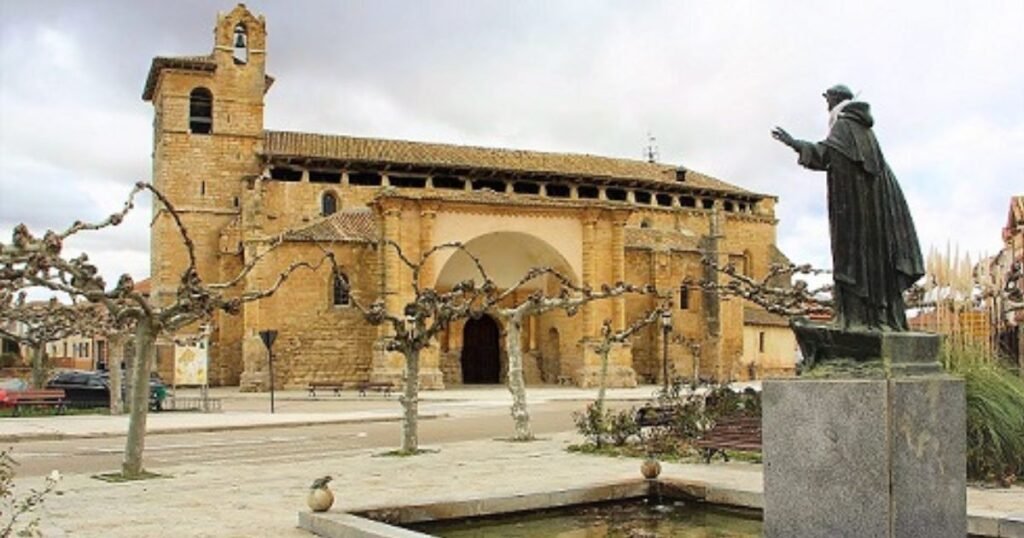
In the heart of Frómista, a town in Palencia Province with a deep Jacobean tradition, stands the majestic Church of Saint Peter. This temple is not only an architectural landmark, but also a symbol of the religious and cultural fervour that characterises the Camino de Santiago Frances.
History of the Church of Saint Peter Frómista
Construction of the Church of Saint Peter began in the 15th century, at the height of the Gothic style. However, it was not until the 16th century that its final structure was completed, incorporating Renaissance features that enrich its design.
Architectural Evolution
Over the centuries, the church has undergone various modifications reflecting the evolution of architectural styles and the community’s liturgical needs. These transformations have contributed to its aesthetic and heritage richness.
Exterior Architecture of the Church of Saint Peter Frómista
The Renaissance Doorway by Juan de Escalante
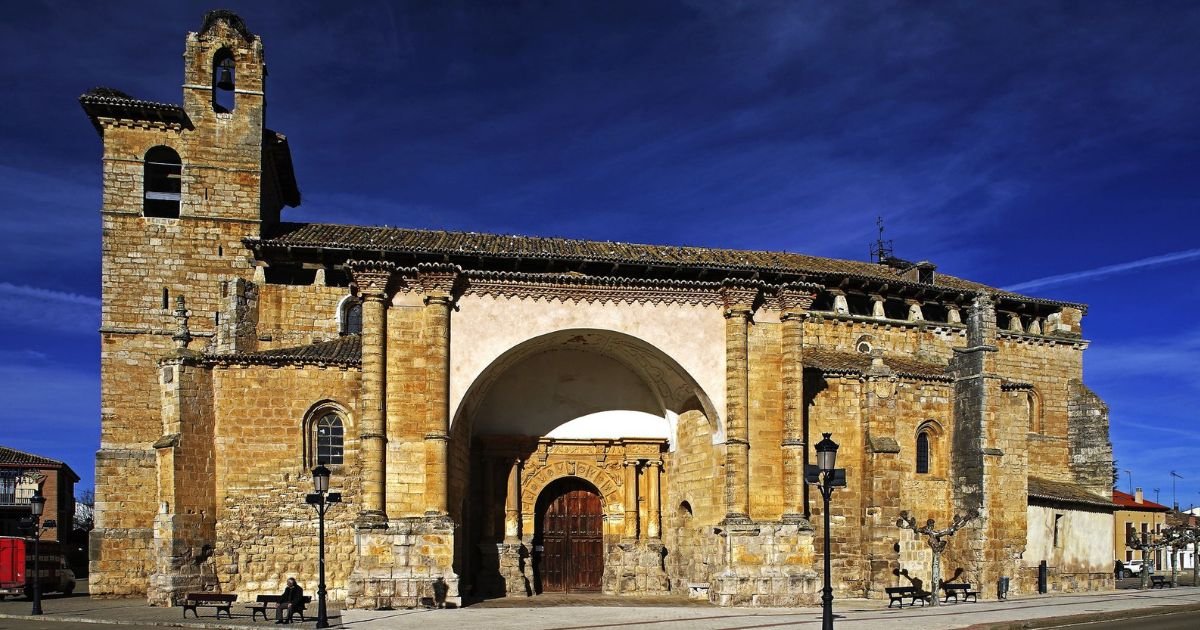
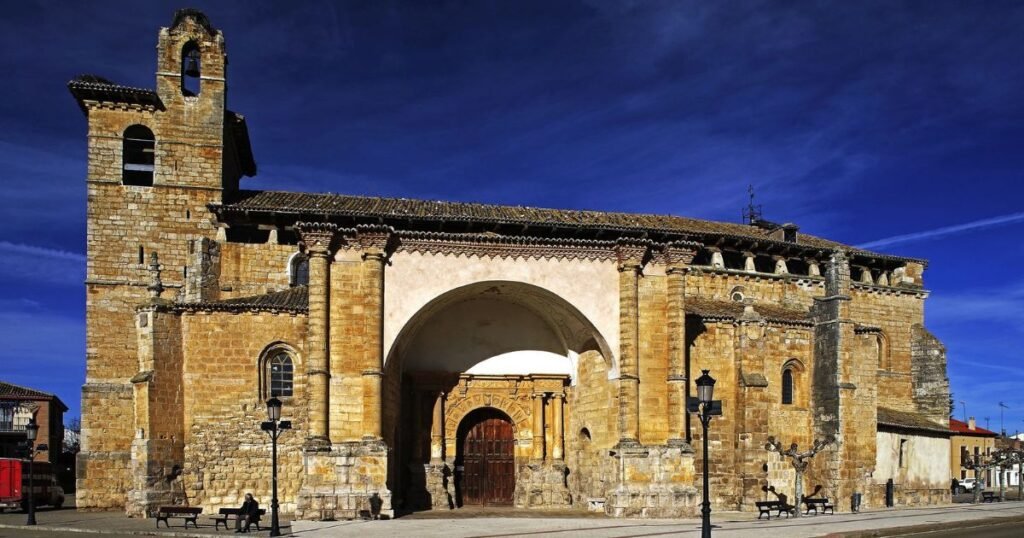
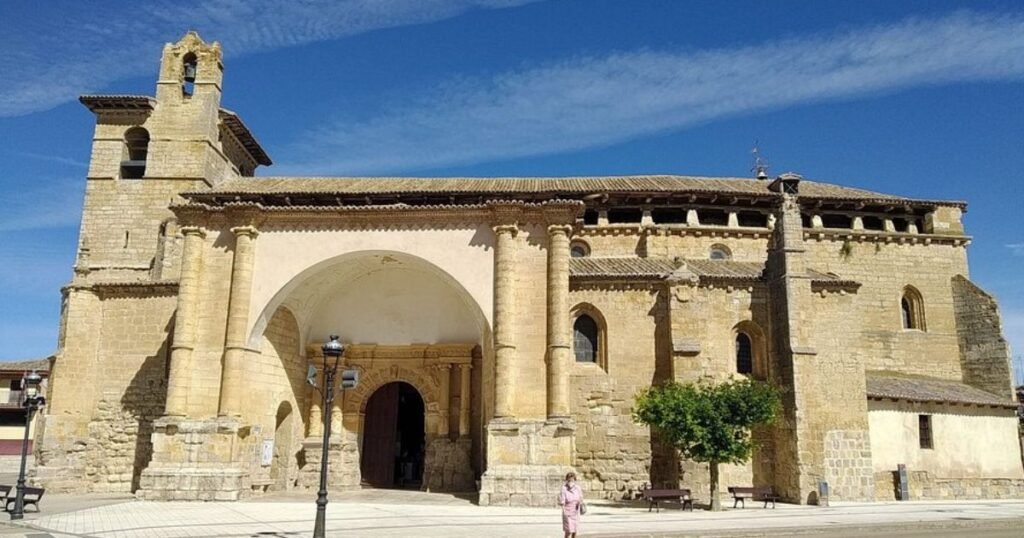
One of the most notable features of the exterior is its Renaissance doorway, designed by Juan de Escalante around 1560. This entrance recalls ancient Roman triumphal arches, with a round arch flanked by paired columns on a tall plinth.
The Four-Tier Tower
The church has an imposing four-tier tower, sturdy and solid in appearance, standing as a spiritual beacon for pilgrims and visitors.
Inside the Temple
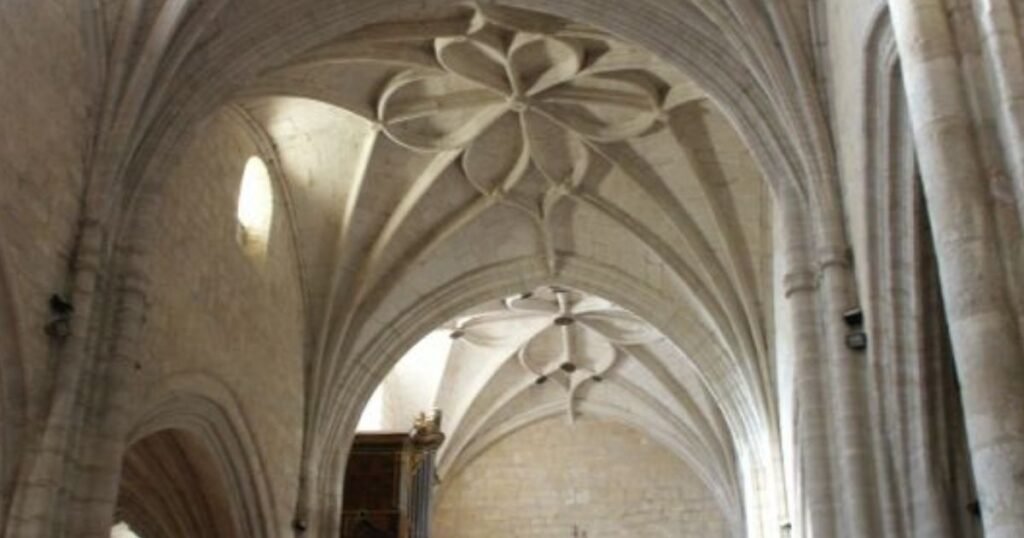
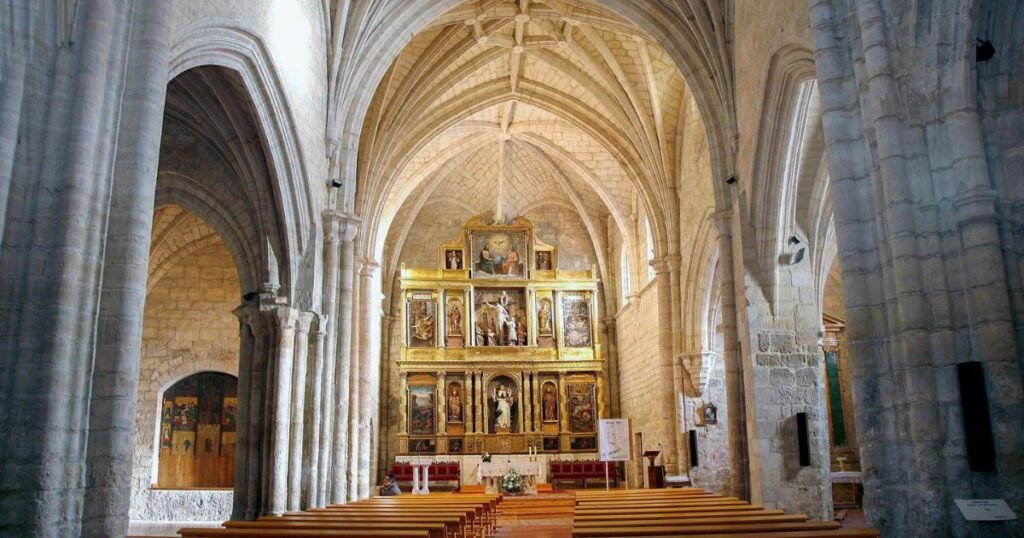
The interior is arranged in five bays and three naves divided by clustered pillars, which support star-ribbed vaults with curved ribs. This layout creates a harmonious, solemn space, well suited to contemplation and quiet reflection.
The Main Altarpiece by Francisco Trejo
Presiding over the presbytery stands the main altarpiece, designed by Francisco Trejo in 1636. This altarpiece, in the Classicist style, is notable for its order and monumentality, features typical of altarpieces inspired by Herrerian motifs.
Notable Works: Saint Peter, Saint Paul and the Descent from the Cross
Among the most notable works are the sculptures of Saint Peter and Saint Paul, as well as the Descent from the Cross group, attributed to Juan de Valmaseda of the Castilian school. These pieces enrich the temple’s artistic heritage and offer deep insight into the religious iconography of the period.
The Church of Saint Peter of Frómista and the Camino de Santiago
Located just 300 metres from the emblematic Church of Saint Martin of Tours, the Church of Saint Peter has established itself as a landmark for pilgrims walking the Camino de Santiago. Its presence offers a space for rest and reflection along the Jacobean route.
Connection to San Telmo
The church also has a close connection to San Telmo, patron saint of sailors and a figure venerated in Frómista. Devotion to this saint is reflected in various local celebrations and traditions centred on this temple.
Museum of Sacred Art
The Church of Saint Peter houses the Museum of Sacred Art, which holds a valuable collection of Flemish panels, carvings, sculptures and metalwork. These pieces offer a comprehensive view of the religious art and spirituality that have shaped Frómista’s history.
2024 Museum Redesign
In March 2024, a new museum display was unveiled, with a redesigned layout that enhances the visitor experience and highlights the temple’s artistic heritage.
Events at the Church of Saint Peter in Frómista
Feast of San Telmo and “El Ole”
One of Frómista’s most distinctive festivities is the Feast of San Telmo, held on the Monday following Easter. The central event is the civic procession of “El Ole”, a display of popular devotion that winds through the streets of the village with dances, songs and traditional rituals.
Current Cultural Activities
In addition to religious festivities, the church hosts various cultural activities, such as concerts, exhibitions and educational events, strengthening its role as a dynamic hub of the community.
Church of Saint Peter of Frómista
The Church of Saint Peter of Frómista is not just a historic monument, but a living space that continues to bear witness to the faith, culture and traditions of a community deeply linked to the Camino de Santiago Frances. Its architectural and artistic richness make it a must-visit for anyone wishing to understand the spiritual and cultural essence of this age-old route.
Frequently Asked Questions (FAQs)
1. Where is the Church of Saint Peter located in Frómista?
The church is located at Plaza de Tuy, 2, in the centre of Frómista, Palencia.
2. What architectural style predominates in the church?
The Gothic style predominates, with Renaissance features added in the 16th century.
3. Can the Museum of Sacred Art inside the church be visited?
Yes, the museum is open to the public and offers a collection of religious art of great historical and artistic value.
4. What is the “El Ole” procession?
It is a civic procession held during the Feast of San Telmo, marked by dances, songs and traditional rituals unique to the region.
5. What is the church’s connection to the Camino de Santiago?
The Church of Saint Peter is a landmark for pilgrims walking the Camino de Santiago, offering a space for rest and reflection along their route.