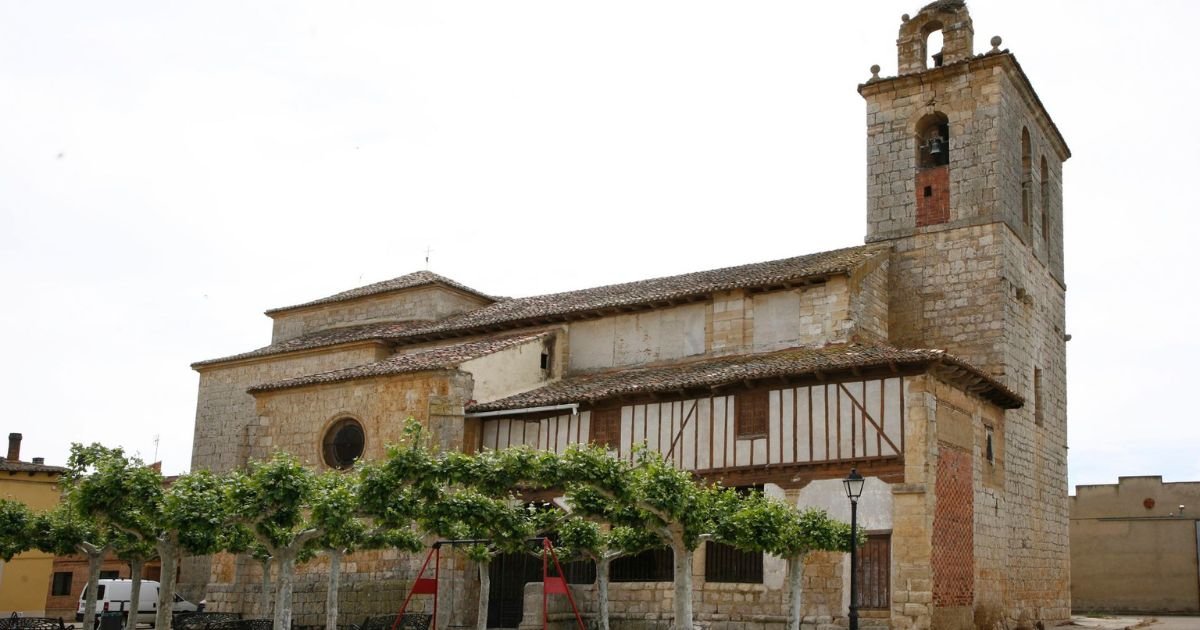
Church of Saint Peter in Itero de la Vega
This is a Catholic temple that serves as the parish church of the village of Itero de la Vega, and its construction began in the 13th century. Over time, this sacred place was extended in several stages, particularly between the 16th and 17th centuries. The temple’s structure stands out for having three distinct naves. These naves are separated by large pillars forming the base of the round arches visible inside. The central nave has a particularly distinctive roof, featuring a groin vault that creates a sense of spaciousness and height. The aisles, meanwhile, are covered by barrel vaults that include features called lunettes. This same vault design is applied in the main chapel, giving the space aesthetic continuity. There is also a transept covered by a flattened dome, adding further architectural interest to the church.
Looking at the temple’s exterior facade, we notice the doorway, which gives off a historic air, featuring pointed arches dating from the 13th century. This is one of the few surviving parts of the original Gothic church. In front of the doorway stands a portico built in the second half of the 16th century, offering an interesting contrast between the different historical periods reflected in the architecture.
Inside the temple, one of the most striking features is the main altarpiece, in the Baroque style and dating from the third quarter of the 17th century. This altarpiece is beautifully decorated with various paintings and sculptures depicting important figures such as Mary Magdalene, Saint Peter Enthroned, Saint Anthony and Calvary, creating a highly enriching artistic and spiritual atmosphere. On either side of the presbytery stand two cenotaphs, monuments honouring the deceased. One of these cenotaphs features statues of Antonio de Pina y Hermosa together with his wife Maria de Pina. The other cenotaph pays tribute to their son, Antonio de Pinahermosa, who was bishop in important cities such as Salamanca, Malaga and Jaen.
In the Gospel-aisle, we find another Baroque altarpiece dating from the second third of the 17th century. This altarpiece is notable for including sculptures of figures such as Saint James the Greater and Saint Dominic. This altarpiece is presided over by an image of Our Lady of the Rosary made in the 16th century, giving the space even greater value. In the Epistle-aisle stand two altarpieces, one of which was made in 1778 and displays a Rococo style. The central relief of this altarpiece shows the Souls in Purgatory and the Guardian Angel beside the tomb of Bishop Antonio de Pina and his parents, adding a profound religious meaning and family connection that enriches the history of this temple.