Church of Saint Romanus in Cirauqui
The Church of Saint Romanus in Cirauqui: History, Art and Meaning on the Camino de Santiago Route
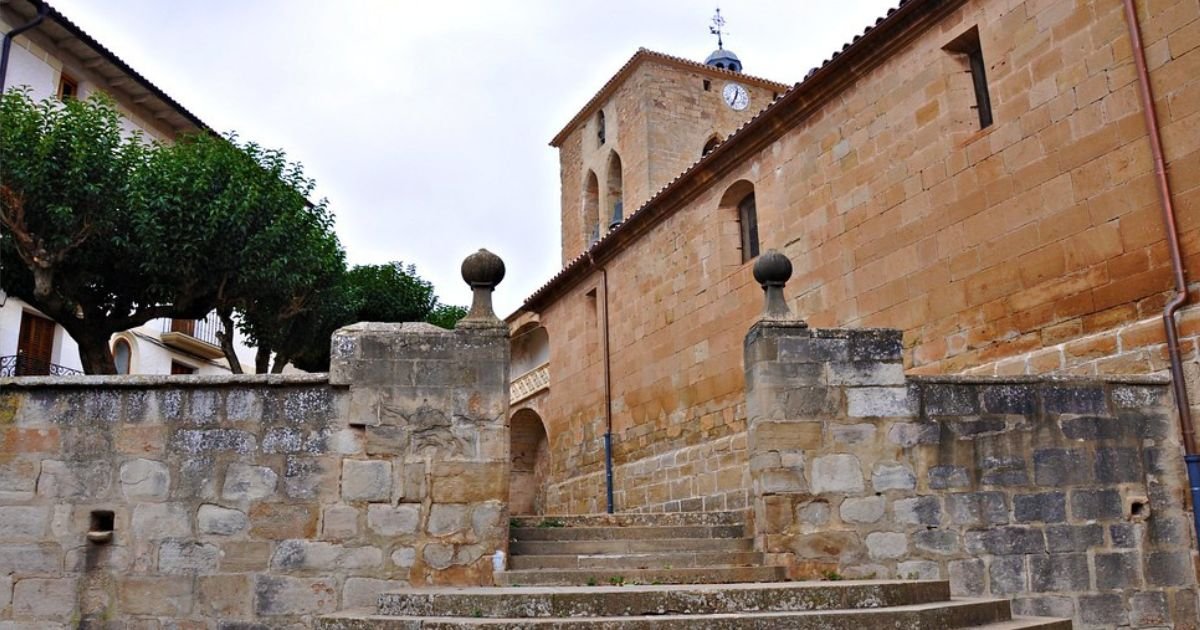
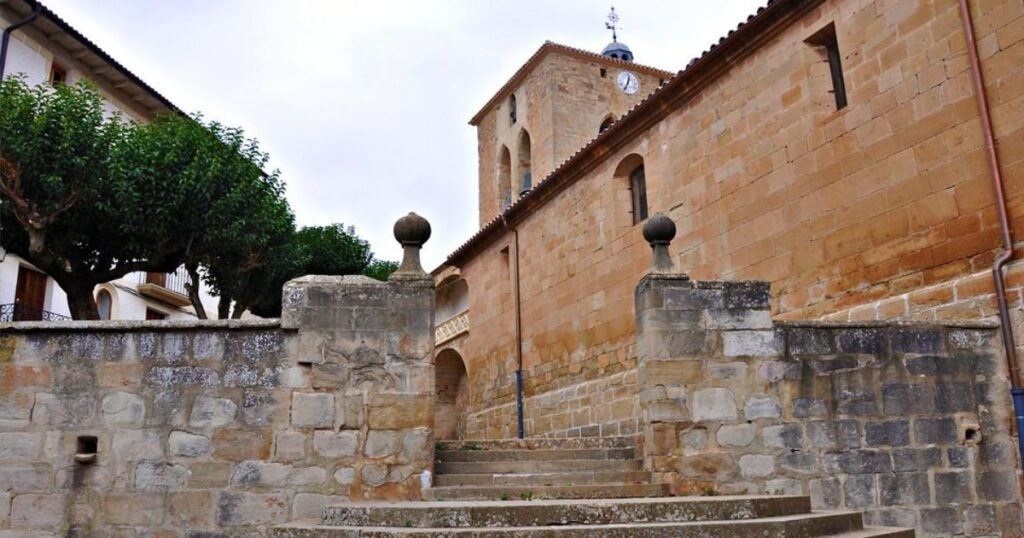
The Church of Saint Romanus, located in the picturesque village of Cirauqui, Navarra, is one of the most emblematic and history-laden monuments in the region. Built around 1200, this church has witnessed centuries of transformations and reforms, still retaining its Romanesque essence today while incorporating elements of Gothic and Mudejar art. The Church of Saint Romanus stands on the route of the Camino de Santiago Frances.
Origins and Historical Evolution of the Church of Saint Romanus
The Church of Saint Romanus was built in the late 12th or early 13th century, at a time of transition between the Romanesque and Gothic styles. Cirauqui, being a strategic point on the Camino de Santiago route, needed a temple that would serve not only the local community but also offer a place of worship and rest for pilgrims. The original church, of which mainly the doorway survives today, had a four-bay nave and a semicircular apse, typical of the Romanesque style.
This period of architectural transition on the Iberian Peninsula was marked by the coexistence and blending of Christian and Muslim artistic influences. It is in this context that elements such as horseshoe arches emerge, reflecting Mudejar influence, which can be observed on the doorway of Saint Romanus.
Reforms and Transformations Over the Centuries at the Church of Saint Romanus
Over the course of the 16th, 17th and 18th centuries, the Church of Saint Romanus underwent numerous reforms that significantly altered its original structure. These reforms were driven by the need to expand and adapt the temple to the demands of the growing population and to the new artistic currents that arrived with the Renaissance and the Baroque.
Among the most significant modifications was the extension of the building, which included the addition of new naves and the modification of the original apse. However, despite these changes, the church has managed to preserve some of its original elements, such as its impressive south doorway and some remains of the Romanesque nave.
The South Doorway: An Example of the Romanesque-Gothic Transition
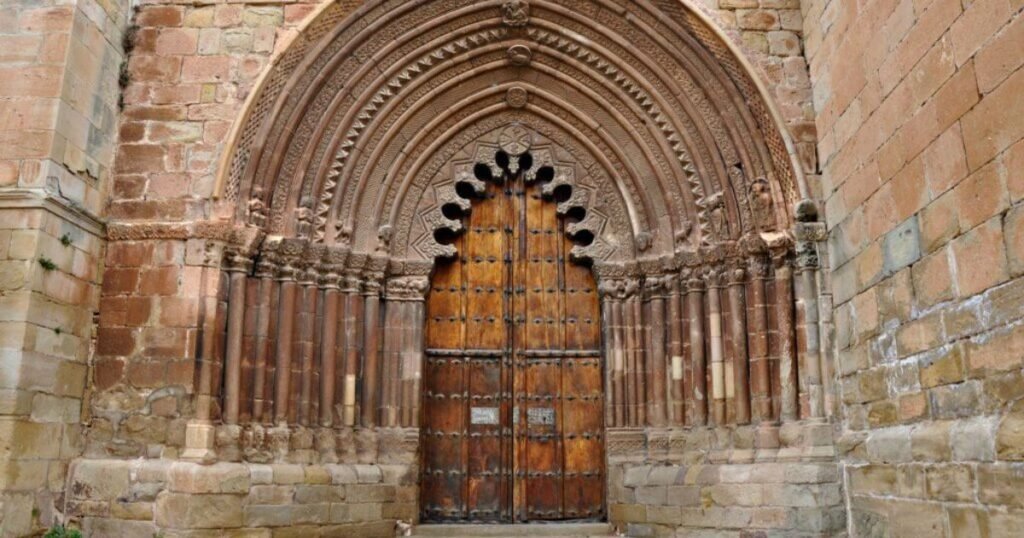
The south doorway of the Church of Saint Romanus is one of the most notable and best-preserved features of the temple. This doorway is a perfect example of the transition between the late Romanesque and the early Gothic, combining structural and decorative elements of both styles.
The entrance arch is crenellated and multifoil, with horseshoe-shaped lobes that reveal a strong Mudejar influence. This type of arch is uncommon in the Christian architecture of the period and is evidence of how craftsmen in the region incorporated techniques and styles from Islamic art. Surrounding the arch is a zigzag moulding that culminates in a beautiful trinitarian chrismon, a Christian symbol representing the Holy Trinity.
The Sculptural Decoration
The doorway is made up of eight archivolts richly decorated with geometric and plant motifs. The patterns include chequerwork, interlacing, flowers, honeycombs and diamond points, reflecting the skill and precision of the craftsmen who worked on the church. The figurative decoration is concentrated on the capitals and impost blocks, where representations of fantastical animals, such as confronting griffins, and human figures can be seen.
A comparison often made is with the doorway of the Church of San Pedro de la Rua in Estella, suggesting that both doorways may have been the work of the same master stonemason or of a workshop with similar influences. The combination of Cistercian, Mudejar and Romanesque elements in the decoration of the doorway is a clear reflection of the cultural and artistic diversity that characterised the region in the 13th century.
Interior of the Church of Saint Romanus: Romanesque and Baroque Elements
Romanesque Remains Inside
Although much of the church’s interior has been modified over the centuries, some original Romanesque elements are still preserved, especially in the last bays of the nave. Here, the transverse arches rest on capitals decorated with simple plant motifs, reflecting the austerity and symbolism of Romanesque art.
On the outside, Romanesque corbels can also be seen — small decorative brackets that originally supported the eaves of the roof. These corbels are carved with animal heads and human figures, adding a touch of life and dynamism to the structure of the temple.
18th-Century Baroque Altarpieces
The interior of the Church of Saint Romanus houses three 18th-century Baroque altarpieces, a clear example of the artistic style that prevailed at the time. These altarpieces are characterised by their elaborate carving work, with solomonic columns and exuberant decoration seeking to inspire devotion through magnificence and detail.
The main altarpiece, located in the presbytery, is dedicated to Saint Romanus and features a carving of Gothic origin that has been restored on several occasions. This altarpiece stands out for its vertical composition and the use of decorative elements that guide the viewer’s gaze towards the central figure of the saint.
Symbolism and Sculpture in the Church of Saint Romanus
The Chrismon and Other Religious Symbols
The trinitarian chrismon adorning the keystone of the south doorway’s arch is one of the most important symbols of the Church of Saint Romanus. This symbol, consisting of a monogram formed by the Greek letters “X” (chi) and “P” (rho), the first two letters of Christ’s name in Greek, represents the divine presence and the Holy Trinity.
In addition to the chrismon, the church has other symbolic elements such as the mystic lamb, the hand of God and the figure of an angel, which reinforce the sacred character of the temple and its role as a meeting place between the earthly and the divine.
The Mermaid: A Sculpture with Moralising Meaning
Among the sculptures adorning the church, one of the most intriguing is the figure of a mermaid, carved on one of the capitals. In medieval iconography, mermaids were seen as symbols of lust and of woman’s ability to seduce men and lead them into sin. The inclusion of this figure in the church is a reminder of the power of sin and the need to resist carnal temptations.
This type of moralising representation was common in Romanesque and Gothic art, and was used to educate the faithful about Christian virtues and the dangers of sin.
The Roman Altar: A Testimony to Cirauqui’s Ancient Past
Cirauqui and Its Roman Origin
Cirauqui, like many towns in the region, has an origin dating back to Roman times. The presence of a Roman road running through the village is one of the clearest signs of the importance of this settlement in ancient times. This road was part of a network of routes connecting different parts of the Roman Empire, facilitating trade and communication.
Inside the church stands a Roman altar, a small altar used in the religious rituals of the period. This altar is a testimony to the continuity of religious practice in Cirauqui, from Roman times to medieval Christianity. Its presence in the church suggests that the site where the temple was built may have been a sacred place since ancient times, adding an extra layer of historical and spiritual meaning to the Church of Saint Romanus.
The Roman Altar in a Christian Context
The Roman altar, although originally pagan, was incorporated into Christian worship as a secondary altar within the church. This practice of reusing pagan elements in Christian temples is not unusual and reflects the way in which Christianity assimilated and transformed earlier religious traditions.
The presence of the altar inside the Church of Saint Romanus is a reminder of the Roman past of Cirauqui and of how religious beliefs and practices have evolved over the centuries. This small altar connects the faithful and visitors with a history much older than the church itself, offering a unique perspective on the continuity of faith in the region.
The Church of Saint Romanus on the Camino de Santiago Route
A Meeting Point for Pilgrims
The Church of Saint Romanus, situated on top of a hill in Cirauqui, is a landmark for pilgrims walking the Camino de Santiago. Its strategic location on one of the stages of the Camino Frances makes it a place of rest and reflection for those heading to the Cathedral of Santiago de Compostela in the city of Santiago de Compostela.
Pilgrims arriving in Cirauqui often stop at the church to admire its architecture, light a candle, or simply rest before continuing their journey. The church, with its serene atmosphere and rich history, offers a space of peace and spirituality amid the arduous pilgrimage.