Church of Santa María la Blanca of Villalcázar de Sirga
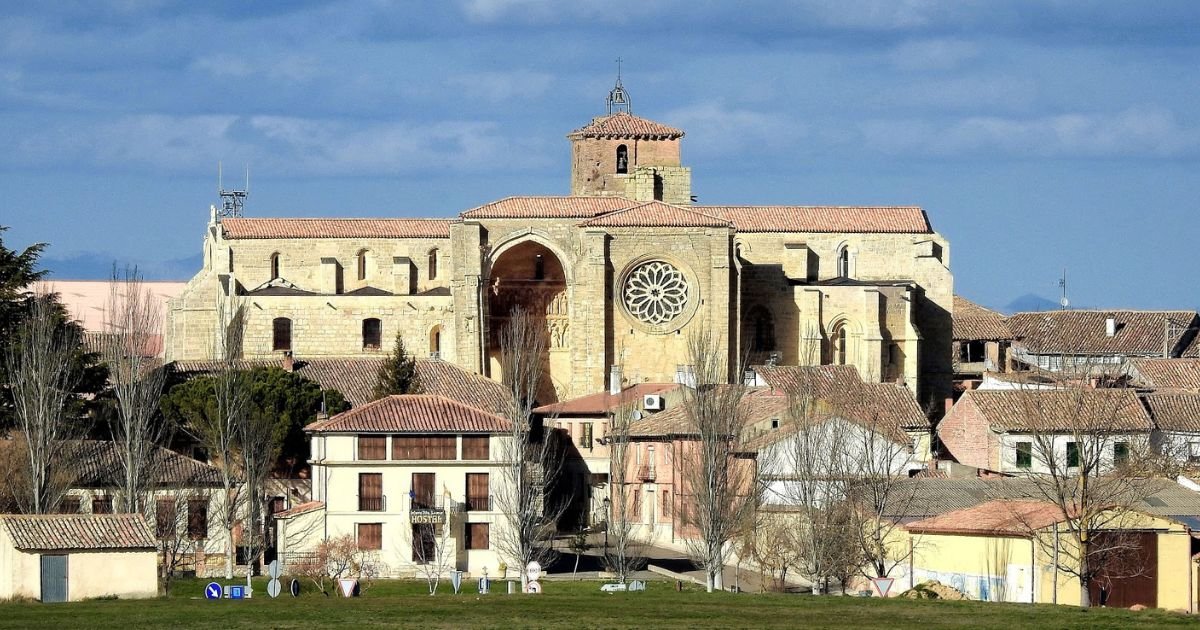
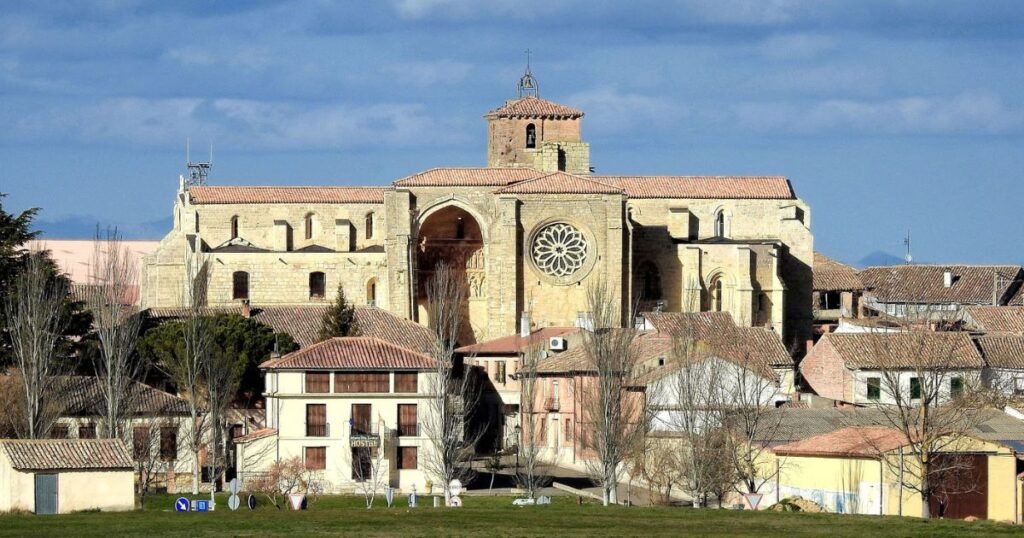
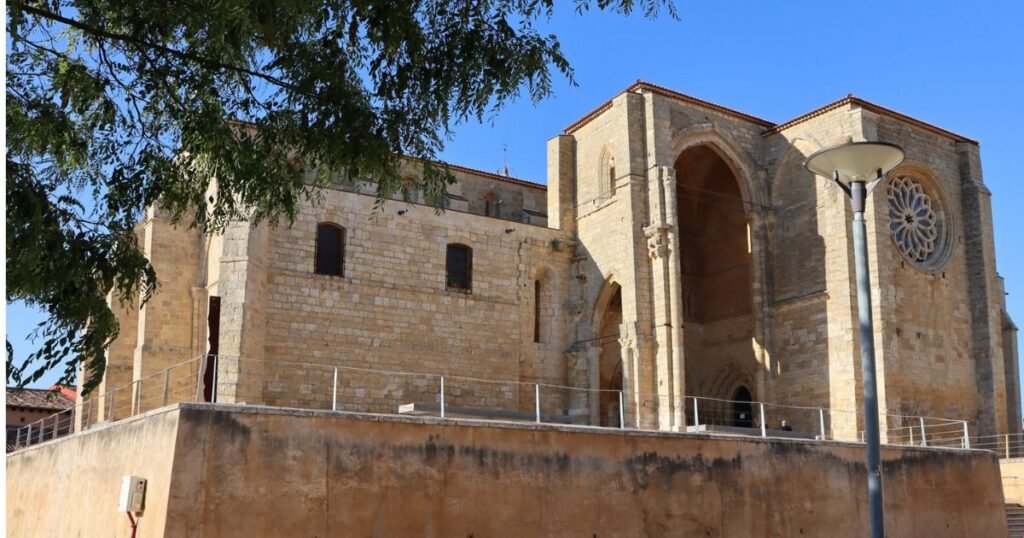
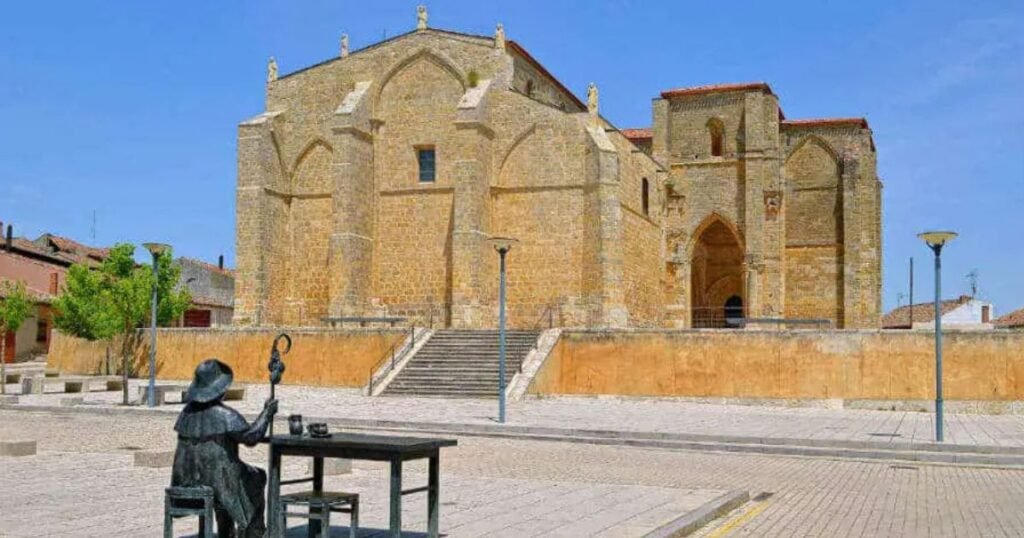
The Church of Santa María la Blanca, located in Villalcázar de Sirga, Palencia Province, is an architectural gem of Castilian proto-Gothic style. Built between the 12th and 14th centuries, this fortress-church stands out for its imposing structure and rich sculptural ornamentation. Its historical and artistic significance has made it a landmark of the Camino de Santiago Frances and an Asset of Cultural Interest since 1919.
Architecture and Style
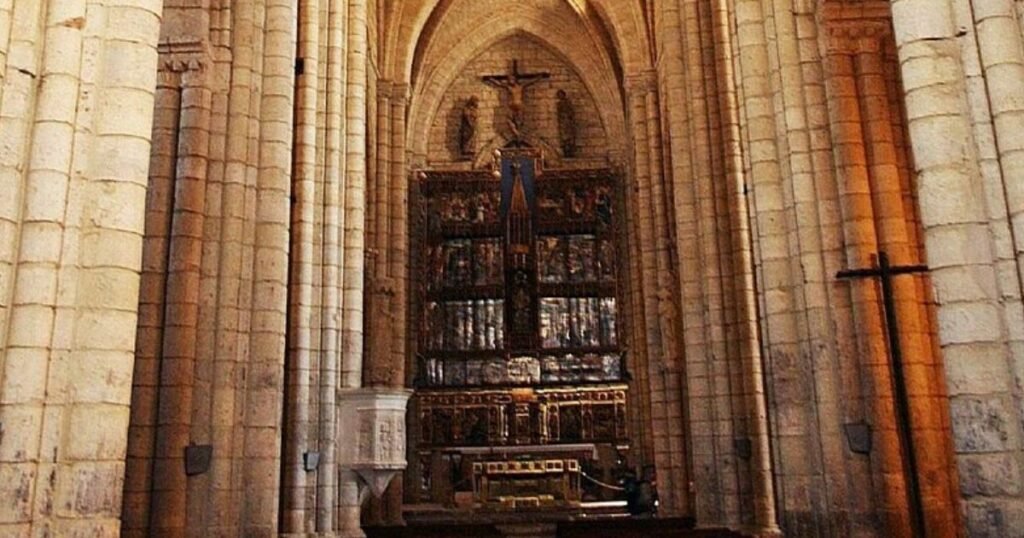
The building has a three-nave floor plan, with the central nave taller and wider than the side ones, separated by compound pillars with a square core and paired columns on each face. The east end has five chapels: the three central ones with a flat wall and the side ones with polygonal apses. The double transept is flanked by a tower on the north side and the Chapel of Saint James on the south. Sexpartite ribbed vaults cover the central nave, while the aisles and transept feature simple ribbed vaults.
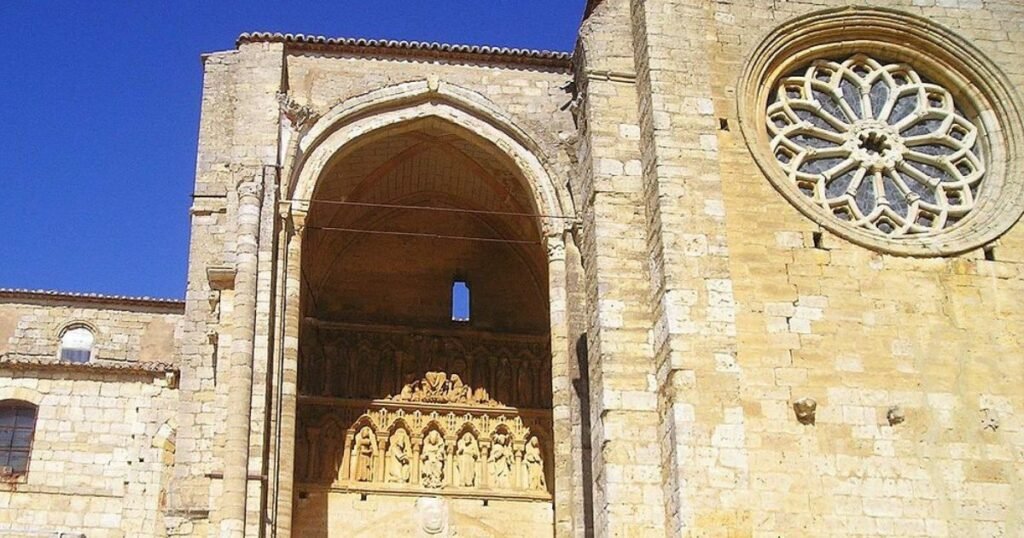
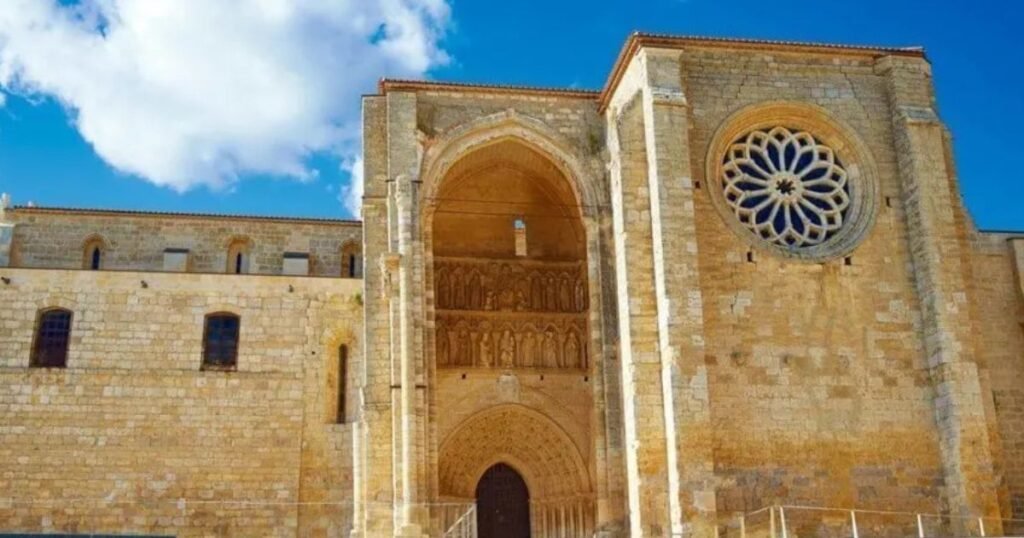
South Doorway
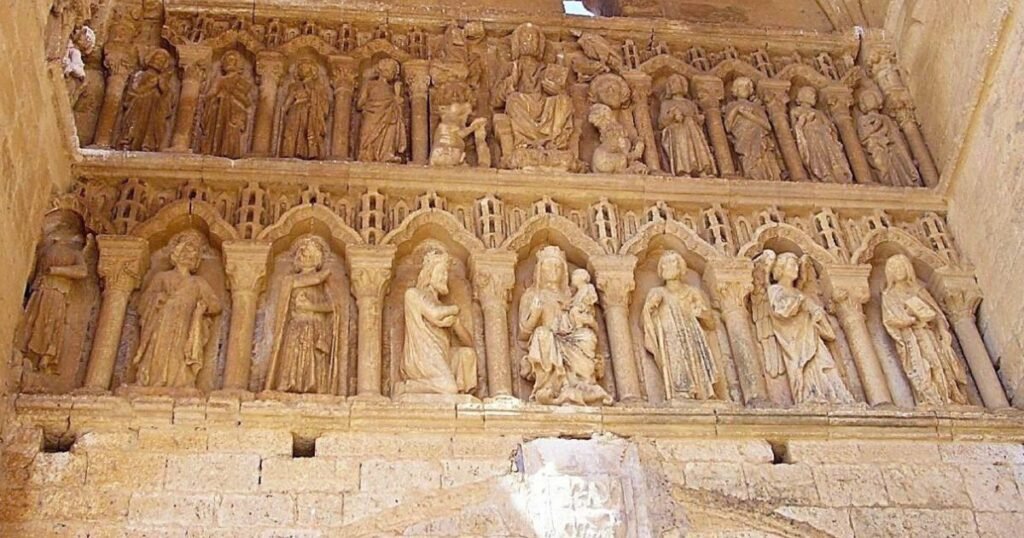
The south doorway is one of the church’s most notable features. It consists of six pointed archivolts decorated with 51 figures depicting angels, saints and figures with musical instruments. Above the doorway, a double sculptural frieze shows the Pantocrator flanked by the Evangelists and Apostles on the upper level, and the Assumption of the White Virgin on the lower level, accompanied by scenes of the Annunciation and the Adoration of the Magi.
Chapel of Saint James and Tombs
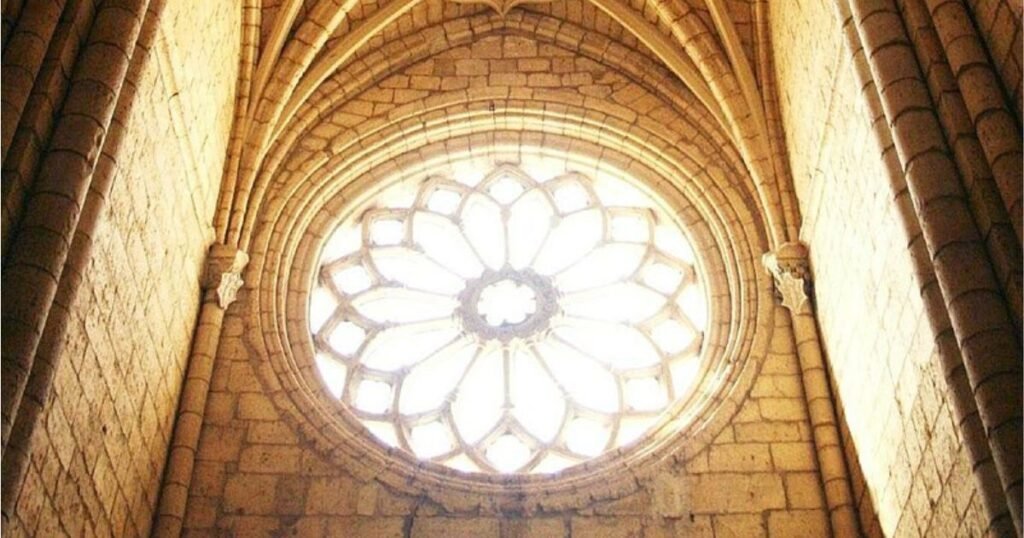
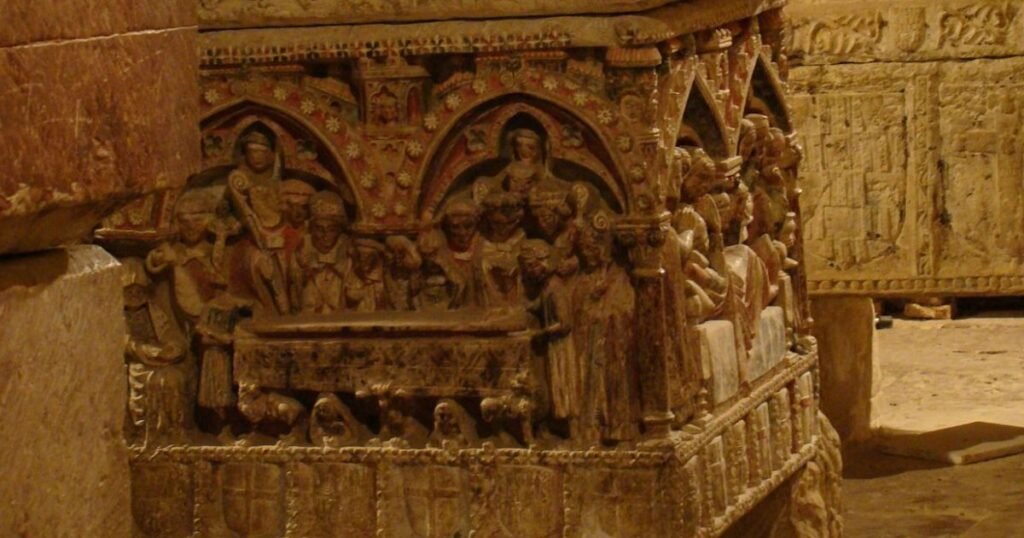
Attached to the south side of the church, the Chapel of Saint James was built in the 14th century. It is lit by a rose window and features a ribbed vault with tiercerons and curved ribs. Inside it holds three Gothic tombs:
- Infante Felipe of Castile: son of Ferdinand III and brother of Alfonso X, who died in 1274.
- Inés de Guevara: second wife of Infante Felipe.
- Juan de Pereira: a knight of the Order of Santiago.
The tombs stand out for their polychrome reliefs and the rich iconography depicting scenes of mourning and funeral processions.
Main Altarpiece
The main altarpiece is a work made up of elements from different periods. At the top, a Gothic Calvary from around 1300 shows carvings of Christ crucified, the Virgin and Saint John. The 27 panels in the Hispano-Flemish style, attributed to the Master Alejo, depict hagiographic and gospel scenes. At the centre, a niche holds the image of Our Lady of Villasirga, a 13th-century Gothic carving. A Renaissance predella, attributed to Manuel Álvarez with polychromy by Francisco de Carracejas, completes the ensemble.
Other Altarpieces and Furnishings
The church holds various altarpieces and liturgical features of great value:
- Altarpiece of Saint James: Plateresque Renaissance, from around 1530, with paintings by Cristóbal de Herrera and a sculpture of Saint James the Pilgrim by Juan de Valmaseda.
- Altarpiece of Our Lady of the Rosary: Romanist Renaissance, from 1570, with carvings from the 16th and 18th centuries and panels painted by Francisco de Carracejas.
- Baptismal font: decorated with gadroons, dated to the 16th century.
- Pulpit: a work of Gothic plasterwork from the 16th century.
- Altarpiece of Saint Anthony: with 17th-century carved framework and seven panels painted in the early 16th century, attributed to the Master of Calzada.
- Portable organ: from the hermitage of Our Lady of the River, made by José Otorel in 1844.
- Altarpiece of Our Lady of Peace: a simple work from the first third of the 18th century.
- Altarpiece of the Holy Christ: Neoclassical, from 1860, with a 16th-century Crucified Christ.
- Sacristy: located at the head of the nave, holding paintings such as a 16th-century Calvary and the Cross of the Holy Places, dated 1826.
Importance on the Camino de Santiago
The church was an important religious centre on the Camino de Santiago, especially during the reign of Alfonso X the Wise, who drew inspiration from Our Lady of Villasirga to compose several of his Cantigas de Santa María. Sancho IV also showed great devotion, making pilgrimage to the church on several occasions.
Recognition and Preservation
In 1919, the church was declared a National Historic-Artistic Monument. In 2015, it was included as an associated feature in Spain’s extension of the Camino de Santiago listing as “Routes of Santiago de Compostela: Camino Frances and Routes of Northern Spain”, recognised by UNESCO. Today, it forms part of the “Beacons of the Camino” project, which aims to enhance the beauty of monuments through LED lighting, improving energy efficiency and creating night-time landmarks for pilgrims.
Practical Information
- Location: Villalcázar de Sirga, Palencia, Castile and León, Spain.
- Coordinates: 42°19′00″N 4°32′33″W.
- Contact: secretario@villalcazardesirga.es | Phone: 979 888 041
- Website: villalcazardesirga.es
Church of Santa María la Blanca
The Church of Santa María la Blanca is a living testament to the history, art and spirituality that has accompanied pilgrims for centuries. Its grandeur and artistic richness make it a must-visit for lovers of heritage and culture.