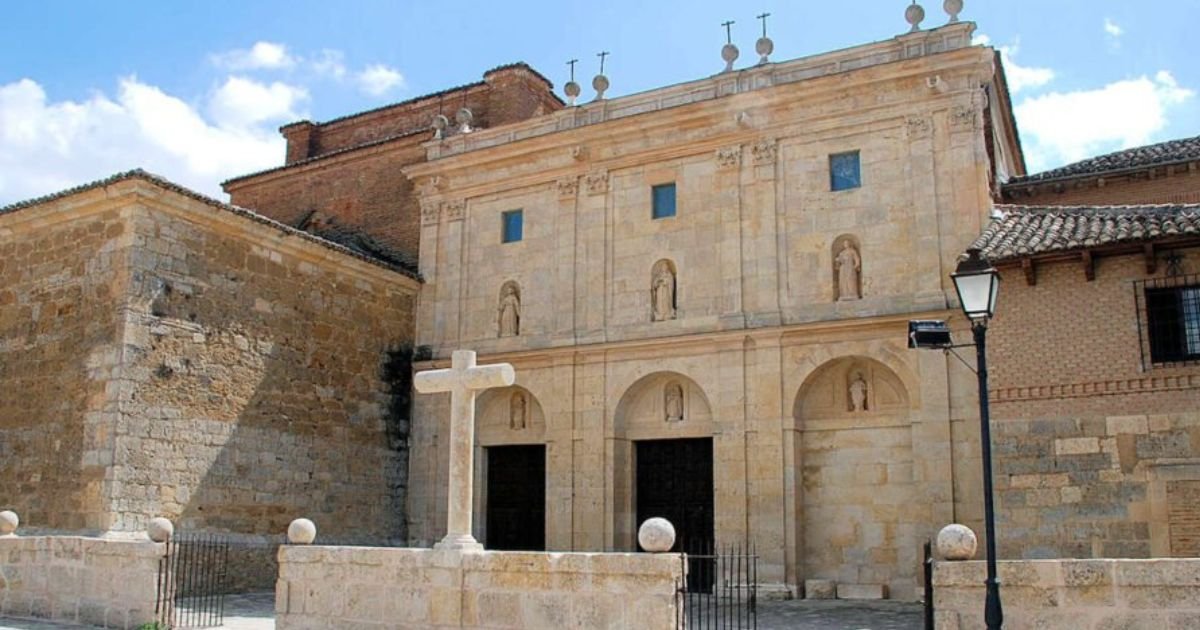


Monasterio de Santa Clara in Carrion de los Condes
Located in the heart of Carrion de los Condes, in Palencia Province, the Monasterio de Santa Clara stands as a living testament to the spirituality, art and history that have shaped the Camino de Santiago Frances. Founded in the 13th century, this monastic site has witnessed centuries of devotion, sacred art and hospitality towards pilgrims.
Origins and Founding of the Monastery
Oral tradition holds that the Monasterio de Santa Clara was founded in 1231 by direct disciples of Saint Clare of Assisi, initially settling at the beaterio (lay religious community) of Santa Maria del Paramo. In 1255, thanks to the intervention of Pope Alexander IV and the patronage of Dona Mencia Lopez de Haro, widow of King Sancho II of Portugal, the community moved to its current location in Carrion de los Condes. This move marked the start of a new stage for the Poor Clare community, consolidating its presence in the region.
Architecture and Artistic Heritage
The Monasterio de Santa Clara stands out for its sober, elegant architecture, reflecting the different building phases it has undergone over the centuries. The convent church houses a remarkable carving of the Pieta, created around 1620 by sculptor Gregorio Fernandez, one of the masterpieces of Spanish Baroque art. The main altarpiece, also Baroque, features three tiers with Solomonic columns, enriched with paintings and sculptures depicting scenes from the life of Christ and of Saint Clare.
Ties to the Castilian Nobility
Throughout its history, the Monasterio de Santa Clara has kept close ties with the Castilian nobility, especially the House of Zuniga. Alvaro de Zuniga, 1st Duke of Bejar and Plasencia, a descendant of Dona Mencia Lopez de Haro, was one of the monastery’s main benefactors, contributing to its expansion and consolidation. This relationship with the nobility ensured the monastery’s survival through times of political and social change.
The Monastery Museum
The monastery houses a museum offering visitors a detailed look at monastic life and the artistic heritage accumulated over the centuries. Notable pieces include liturgical ornaments, sculptures, paintings and historical documents recounting the convent’s rich history. From December to February, the museum displays a collection of nativity scenes started in the 20th century by Sister Maria Micaela Velon de Francisco, following the tradition attributed to Saint Francis of Assisi.
Traditions and Legends
One of the most curious traditions associated with the monastery is the ram statue located in the courtyard. According to legend, visitors must place their index and ring fingers in the statue’s ears; otherwise, they will face seven years of misery and misfortune. This tradition adds a touch of mysticism and folklore to the visit, symbolically connecting the past with the present.
The Monastery on the Camino de Santiago
Located along one of the key stages of the Camino de Santiago Frances, the Monasterio de Santa Clara has been, and continues to be, a place of welcome for pilgrims walking the Jacobean route. The Poor Clare community offers hospitality and a space for spiritual reflection, keeping alive the tradition of service and welcome that characterizes the Camino de Santiago.
The monastery is also home to the Albergue del Convento de Santa Clara.
Practical Information for Visitors
- Address: Calle Santa Clara, 1, 34120 Carrion de los Condes, Palencia, Spain.
- Phone: +34 979 880 134.
- Email: clarisascarrionblog@gmail.com
- Accessibility: The monastery has access for people with mobility difficulties, with prior notice.
- Visiting hours: Check in advance, as they may vary depending on the time of year.
Monasterio de Santa Clara
The Monasterio de Santa Clara de Carrion de los Condes is much more than a historic building; it is a symbol of the spirituality, art and hospitality that have defined the Camino de Santiago over the centuries. Its rich history, artistic heritage and ongoing role in the lives of pilgrims make it a must-see for anyone wishing to connect with the cultural and spiritual legacy of Castile and León.