


What to see in Estella?


The names Estella and Lizarra
The town has two official names, Estella in Spanish and Lizarra in Basque, and the Basque one is the older. It appears from 958 in the documents of the monastery of Irache and, during the following century, in many spellings: Leizarrara, Lizarrara, Liçarrara, Lizarara, Liçarra or Lizarra. It has sometimes been read as “old town” or “old church”, but the soundest explanation is different: lizar, “ash tree”, with the place suffix, that is, “the ash grove”, after the ash trees that grew, and still grow, along the Ega.
The Spanish name has a curious history. It comes from the Latin stella, “star”, and is first recorded in 1072, when a certain Lope Arnalt appears as merino “in Stella”. The most widely accepted explanation is a misunderstanding: the Frankish settlers in the quarter of San Pedro de la Rúa would have heard Lizarra as izarra, which in Basque means “the star”, and translated it into Latin. The name was first applied to the Frankish borough promoted by King Sancho Ramírez to look after pilgrims and, over time, to the other medieval boroughs: San Miguel, San Salvador del Arenal and San Juan.
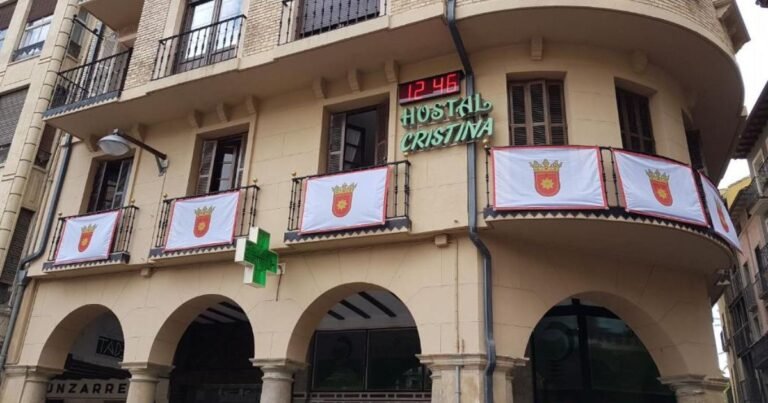
Since the Middle Ages, the town’s coat of arms has borne an eight-pointed star, a direct reference to that name.
Estella facts
| Country | Spain | |
|---|---|---|
| Autonomous community | Navarra | |
| Province | Navarra | |
| Merindad | Estella | |
| District | Estella Oriental | |
| Judicial district | Estella | |
| Mancomunidad | Montejurra | |
| Location | 42°40′14″N 2°01′50″W | |
| Elevation | 421 m | |
| Area | 15.39 km² | |
| Population | 14,195 (2023) | |
| Density | 890.64 inhab./km² | |
| Demonym | estellés, estellesa estellica | |
| Predominant language | Mixed area | |
| Postal code | 31200 | |
| Telephone prefix | 948 | |
| Twinned with | Saint-Jean-Pied-de-Port (France) | |
| Patron saint | Saint Andrew | |
| Patron saint (female) | Nuestra Señora del Puy | |
| Website | www.estella-lizarra.com | |