Route of the Camino Frances stage: Burgos – Hornillos del Camino (19.8 km)
This stage of the Camino de Santiago Frances leaves Burgos and heads, for the first time, fully into the Castilian meseta. It’s a gentle 19.8 kilometres that, after the Arlanzón valley and the villages of Tardajos and Rabé de las Calzadas, climb onto the cereal-growing plateau and drop down into the one-street village of Hornillos del Camino.
KM 0
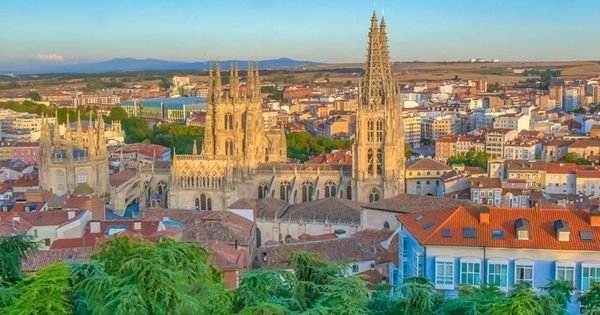
Burgos
You leave Burgos through Parral Park, beside the Arlanzón river, and exit the city past the university campus and the hospital. A path through the valley, between Villalbilla and the road, leads to Tardajos.
10.5 km
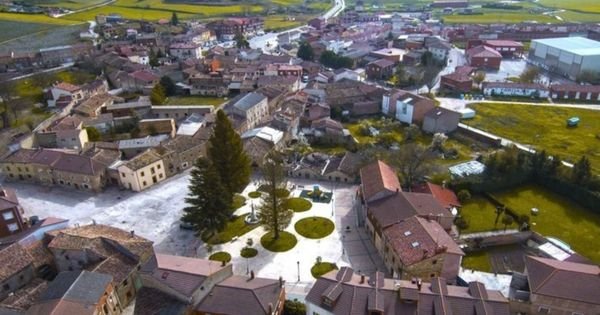
Tardajos
A farming village on the Urbel river, with the church of la Asunción and all services. Just over two kilometres separate it from Rabé.
12.8 km

Rabé de las Calzadas
The last village before climbing onto the meseta. Beside the hermitage of Nuestra Señora de Monasterio begins the so-called Matamulas slope, a long, exposed climb up onto the cereal plateau.
19.8 km
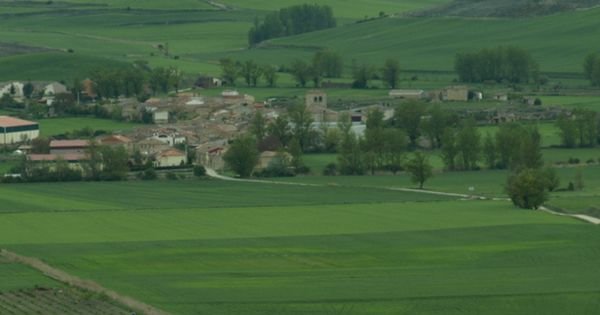
Hornillos del Camino
After seven kilometres across the plateau, with no shade or water, the path drops into the Hormazuela river valley and Hornillos del Camino, a village with one long street, the Gothic church of San Román, and several hostels. This is the meseta in its purest form.
Burgos – Hornillos del Camino: complete guide
Stage profile: distance, elevation and difficulty
Distance: 19.8 km. Walking time: 4 h – 4 h 45 min. Elevation: about +150 m and –130 m. Difficulty: low-medium, but it’s the first full day on the meseta. Leaving Burgos through Arlanzón Park is pleasant; then valley and villages as far as Rabé, and from there the climb onto the plateau up the Matamulas slope and seven kilometres of wheat-field horizon without a scrap of shade until Hornillos. Easy and fast rolling by bike.
The meseta: learning to walk the emptiness
From Burgos onward, the Camino crosses some 200 kilometres of meseta: Castile’s great cereal plain, all the way to Astorga. Many pilgrims skip it by bus; that’s a mistake. In Camino tradition the meseta is the purgatory between the hell of the Pyrenees and the glory of Galicia: the most meditative stretch of the Camino, made of silence, low-angled light and endless horizons. The rules are simple: set off at dawn, carry water, protect yourself from the sun, and accept the monotony until it stops feeling like one.
What to see: monuments and heritage
In Burgos, the cathedral, the Monasterio de las Huelgas, the Cartuja de Miraflores and the Museum of Human Evolution. Along the way, the hermitage of Nuestra Señora de Monasterio in Rabé de las Calzadas and the Gothic church of San Román in Hornillos del Camino, with its stork nests. This is a stage of landscape more than monuments: the plateau itself, with its dovecotes and threshing barns.
A little history
Hornillos del Camino was an important stop in the Middle Ages, with a priory dependent on the French abbey of Rocamadour and a pilgrims’ hospital, remembered today in its church of San Román. The names Tardajos and Rabé de las Calzadas preserve the memory of the Roman roads that once crossed here. The whole area lived off grain farming and transhumance.
Food and drink
Burgos and meseta cooking: Burgos-style morcilla (blood sausage), fresh Burgos cheese, roast lechazo (milk-fed lamb), garlic soup and good bread. In small villages like Hornillos it’s common for a grocery van to supply the hostels. To drink, wines from the Ribera del Duero and Arlanza.
Practical tips
Leave Burgos without rushing, but with your water bottle full. Grab something in Tardajos or Rabé de las Calzadas: between Rabé and Hornillos (7 km) there is absolutely nothing. In summer, start early: the plateau doesn’t have a single patch of shade. Hornillos is tiny, with few hostel beds and one mobile shop; book ahead or arrive early. Strong walkers can push on to Castrojeriz, but it’s a long and very exposed day.
Services and accommodation by town
Listings published in our guide for the towns on this stage.
Burgos
Hostels
- Hostel Divine Shepherdess Burgos
- Hostel Cathedral Burgos
- Hostel Mola! Hostel Burgos
- Hostel Municipal Casa del Cubo
Accommodation
Churches
Tardajos
Hostels
Churches
Rabé de las Calzadas
Accommodation
Hornillos del Camino
Hostels