Camino Frances Stage Route: Estella – Los Arcos (21.8 km)
This stage of the Camino de Santiago Frances links Estella with Los Arcos over 21.8 kilometres. It begins among pine woods and vineyards, passing the Monastery of Irache and its famous wine fountain, and ends with one of the loneliest stretches of the entire Camino: almost 13 kilometres with no villages or fountains, an early taste of the vastness of the meseta to come.
KM 0

Estella
Leave Estella along Calle Curtidores and the San Miguel district. In just over a kilometre you reach the level of Ayegui and the Monastery of Irache.
2.2 km

Ayegui
Next to the Benedictine monastery of Irache, one of the oldest in Navarre, is the wine fountain of Bodegas Irache: a spout offers pilgrims free wine beside the inscription “if you want to reach Santiago full of strength and vitality, take a drink of this great wine and toast to happiness.” The Camino skirts the estate and climbs between pine woods and vineyards.
6.5 km
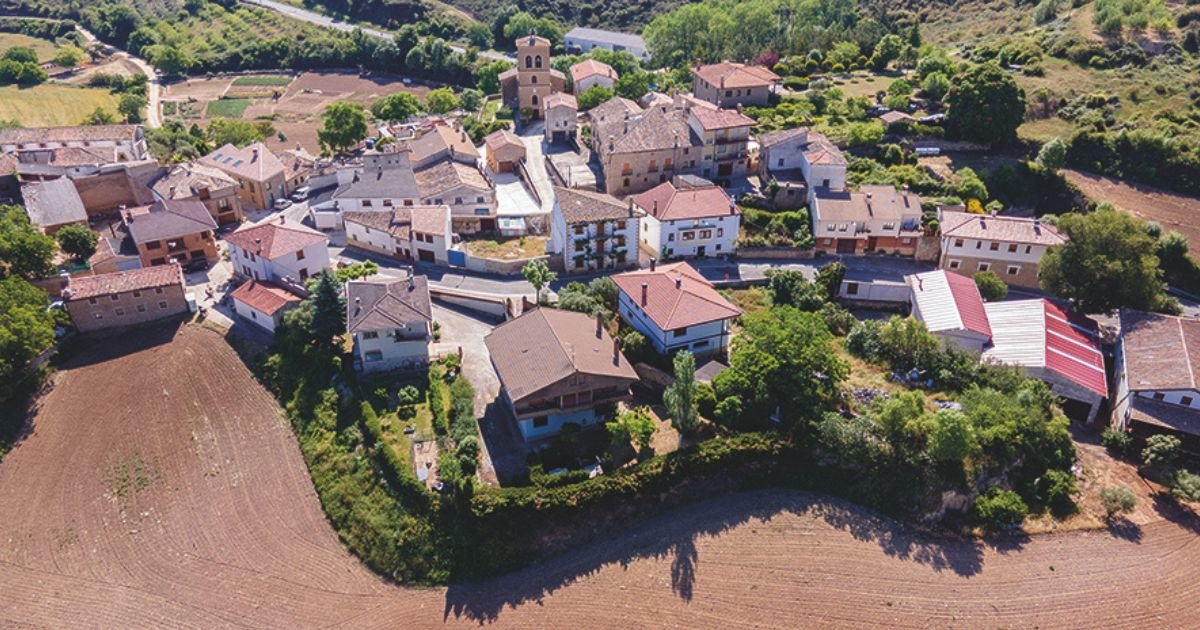
Ázqueta
A small hamlet with the Church of San Pedro. On the way out, next to the Camino, the Fuente de los Moros, a 13th-century Gothic cistern with two pointed arches where pilgrims have drunk for centuries. The route climbs towards Villamayor de Monjardin.
8.8 km

Villamayor de Monjardín
Crowning the village, on Mount Deyo, are the ruins of the San Esteban castle; in the village itself, the Romanesque Church of San Andres, which holds a 13th-century processional cross. This is the last place with services before a long, solitary stretch: fill your water bottles well.
21.8 km
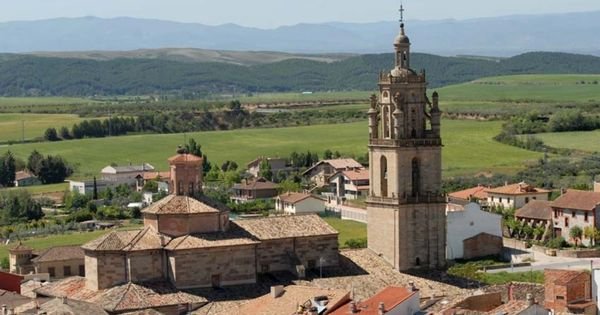
Los Arcos
After almost 13 kilometres of solitary tracks through vineyards and open fields, with no villages or fountains, you enter Los Arcos through the Puerta de Castilla. In the centre, the Church of Santa Maria de los Arcos, a showcase of styles from Romanesque to Baroque, with a Gothic cloister and a Renaissance choir.
Estella – Los Arcos: Complete Guide
Stage Profile: Distance, Elevation and Difficulty
Distance: 21.8 km. Walking time: 4 h 45 min – 5 h 30 min. Elevation change: about +430 m of climbing and –350 m of descent. Difficulty: moderate. The first nine kilometres, from Irache to Villamayor de Monjardin, climb gently through pine woods and vineyards. From there comes the feature that defines the day: about 12.5 km with not a single house or fountain before Los Arcos, on a wide, exposed track, tough in summer due to the sun and lack of shade. By bike it is a comfortable stage on rolling track.
The “Desert” from Monjardin to Los Arcos
The second half of the stage is one of the loneliest stretches of the entire Camino Frances: a straight dirt track that rolls between vineyards and grain fields, with no villages, no bars and no fountains, the horizon always far away. Many pilgrims remember it as their first real taste of the meseta feeling, while still in Navarre. Historically it was an area favored by bandits who took advantage of the lack of witnesses. Today the only real risk is the heat: leave Villamayor with at least a liter and a half of water per person, plus sun protection.
What to See: Monuments and Heritage
The Monastery of Irache (a 12th-century Romanesque church, a plateresque cloister and tower) was once a pilgrims’ hospital and later a university; beside it, the wine fountain of Bodegas Irache. In Azqueta, the Fuente de los Moros, a 13th-century Gothic cistern. Above Villamayor de Monjardin stands the castle of San Esteban de Deyo, and in the village the Romanesque Church of San Andres with its processional cross. In Los Arcos, the Church of Santa Maria: a Gothic doorway, a gilded Baroque main altarpiece, a historic organ, a cloister and a Renaissance tower; and the Puerta de Castilla, a remnant of the old town walls.
A Bit of History
The castle of Villamayor de Monjardin, on Mount Deyo, was one of the key strongholds in the formation of the Kingdom of Pamplona: tradition credits its conquest to Sancho Garces I in the 10th century. Los Arcos emerged as a border town between Navarre and Castile and changed hands several times through the medieval and early modern periods; its church reflects that long history in its layering of styles. The Monastery of Irache, already documented in the 10th century, ran one of the earliest pilgrim hospitals on the Camino.
Local Food
The Tierra Estella area is wine country: besides Bodegas Irache, the wineries of Villamayor de Monjardin produce chardonnay whites and garnacha reds under the Navarra D.O. On the table, traditional Navarrese cooking: lamb, shepherd’s migas, pochas, menestra, and cuajada for dessert. In Los Arcos, bars and restaurants with pilgrim menus cluster around Plaza de Santa Maria.
Practical Tips
Visit the Irache wine fountain early in the day: it is usually accessible from 8:00 am to 8:00 pm and can run dry by mid-morning in high season. Fill up on water in Villamayor de Monjardin (the village fountain): it is the last point before Los Arcos, about 12.5 km away. In summer, set off early and bring a hat and sunscreen: the final stretch does not have a single tree. Los Arcos is small and has several albergues (municipal, parish and private); booking ahead is a good idea in high season.
Services and Accommodation by Village
Listings published in our guide for the villages on this stage. Azqueta does not yet have accommodation or heritage listings in the guide.
Estella
Hostels
- Hostel Ágora Hostel Estella
- Hostel Alda Estella Hostel
- Hostel Capuchinos Rocamador Estella
- Hostel de Peregrinos de Estella
- Hostel Inn de Curtidores Estella
- Hostel Parroquial Saint Michael the Archangel
Accommodation
- Guesthouse Cristina Estella
- Guesthouse La Rúa Estella
- Hotel Yerri Estella
- Guesthouse Buen Camino Estella
- Guesthouse Ibai Ega Estella
Churches
- Basilica of Our Lady of Rocamador
- Basilica of Nuestra Señora del Puy
- Church of the Holy Sepulchre Estella
Ayegui
Hostels
Villamayor de Monjardín
Hostels
Los Arcos
Hostels
- Hostel Casa Arqueña Los Arcos
- Hostel Casa de la Abuela Los Arcos
- Hostel Los Arcos
- Hostel Municipal Isaac Santiago
Accommodation
Churches