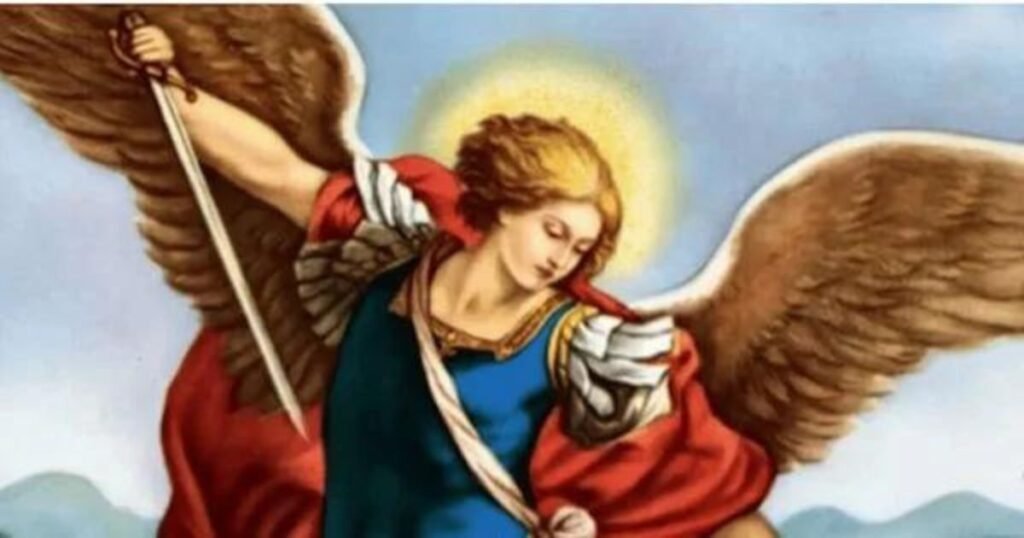
Archangel San Miguel
San Miguel Arcángel is an important protector for Christians, considered the guardian of the Church and the advocate of the people chosen by God. The Catholic Church venerates him as patron and protector of the whole Universal Church, while for the Coptic Church he is the chief of the seven archangels, alongside Gabriel, Raphael and Uriel. He is entrusted with the task of thwarting the plans of Lucifer or Satan, the fallen angel and representative of evil according to Revelation 12:7.
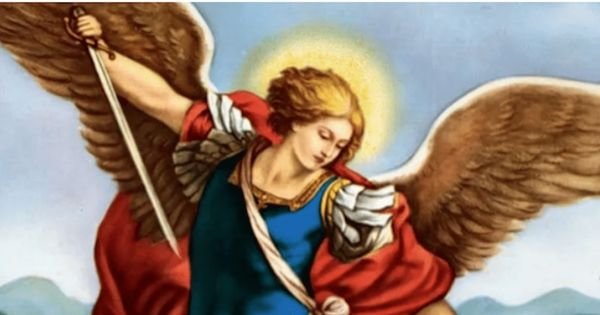
In iconography, he is depicted as an angel dressed in armour in the style of a Roman general, holding a spear or sword in a defiant stance toward a demon or dragon. Another common depiction shows him weighing souls on a scale, since he is believed to play a crucial role in the Last Judgement.
San Miguel Arcángel: Protector of the Church and Humanity
San Miguel Arcángel is a central figure in Christian tradition, portrayed as the defender of the Church and the leader of the heavenly armies in the fight against evil. From his mention in Scripture to his veneration in the Catholic Church, San Miguel has been a symbol of protection and spiritual strength. In this article, we explore the history, meaning and impact of San Miguel in the Christian faith, as well as his role in the eternal struggle between good and evil.
The History of San Miguel Arcángel
San Miguel in Scripture
San Miguel first appears in the Bible, specifically in the Book of Daniel, where he is described as the “great prince” who protects God’s people (Daniel 12:1). His role in Scripture is that of defender and warrior, an angelic being who fights on behalf of divine justice. Christian tradition has identified him as the leader of the faithful angels who fought against Lucifer and his followers, expelling them from heaven.
The Fall of Lucifer and the War in Heaven
According to Christian tradition, at the beginning of Creation, God revealed his plans to the angels, including the Incarnation of the second Person of the Holy Trinity. This revelation was accepted by some angels but rejected by others, led by Lucifer, the greatest angel. Lucifer, in his pride, refused to submit to a lesser being, man, and proclaimed: “Non serviam” (I will not serve!). San Miguel, responding with the powerful cry “Quis ut Deus?” (Who is like God?), led the loyal angels in a battle that ended with the expulsion of Lucifer and his followers from heaven.
The Meaning of San Miguel in the Christian Faith
Prince of the Heavenly Host
San Miguel is known as the Prince of the Heavenly Host, a title reflecting his leadership over the angels in the struggle against the forces of evil. This role places him as the chief opponent of Satan and the defender of humanity against the temptations and attacks of the devil. The Catholic Church has given him a special place in its liturgy and devotions, recognising his power and intercession in the daily spiritual battle the faithful face.
Protector of the Catholic Church
Since the earliest days of Christianity, San Miguel has been seen as a protector of the Church. During the Roman persecutions, Christians prayed to San Miguel for protection and strength. Angelic intervention has been associated with the Church’s survival in times of danger, and San Miguel has been invoked at moments of crisis throughout history. One of the most notable events was his intervention at the Battle of the Milvian Bridge, where the Emperor Constantine, after seeing a cross in the sky, attributed his victory to the divine help of San Miguel.
San Miguel in Catholic Tradition
The Prayer to San Miguel Arcángel
One of the best-known devotions to San Miguel is the prayer that bears his name. This prayer was promoted by Pope Leo XIII in 1884, after a vision in which he saw the Church being attacked by evil forces. The Pope urged the faithful to pray to San Miguel for protection against evil. The prayer to San Miguel became a regular part of Catholic life and was reaffirmed by Pope Saint John Paul II, who asked all Catholics to continue reciting it.
Prayer to San Miguel:
“San Miguel Arcángel, defend us in battle; be our protection against the wickedness and snares of the devil. May God rebuke him, we humbly pray; and do thou, O Prince of the Heavenly Host, by the power of God, cast into hell Satan and all the evil spirits who wander through the world seeking the ruin of souls. Amen.”
After the Second Vatican Council, the instruction to recite this prayer at the end of Mass was officially rescinded, but it is still possible to keep this custom as a way of expressing devotion and faith.
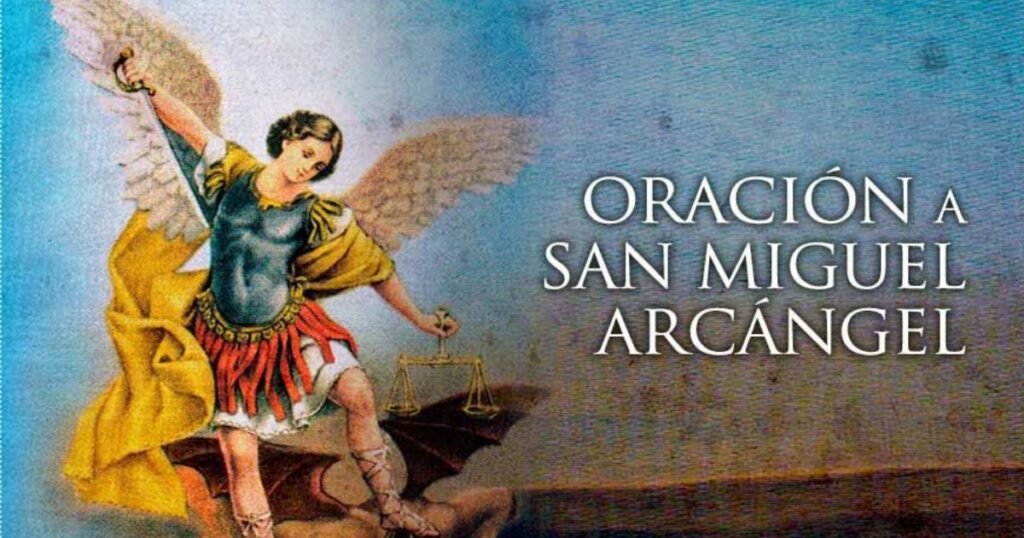
According to Catholic Church teaching, the Chaplet of San Miguel Arcángel is considered a source of abundant blessings for whoever recites it, among which is the possible release from purgatory not only for the person praying but also for their family and loved ones, which is interpreted as an act of mercy and spiritual protection.
Apparitions and Devotions to San Miguel
Over the centuries, San Miguel has been the subject of numerous apparitions and devotions. One of the best known is the apparition on Monte Gargano in Italy, where San Miguel is said to have appeared in the 5th century to request the building of a sanctuary in his honour. This site became an important centre of pilgrimage.
San Miguel is also linked to the apparition of the Virgin Mary at Fátima in 1917, where he is said to have prepared the young shepherds for the Virgin’s visits. His figure is also central to the consecration of Russia to the Immaculate Heart of Mary, an act many believe was influenced by angelic intervention.
San Miguel and the Spiritual Battle
The Fight Against the Forces of Evil
San Miguel is seen as the leader in the spiritual battle continually waged between good and evil. This battle is not merely a past event but an ongoing reality in the lives of Christians. San Miguel, as defender of the faith, plays a crucial role in helping the faithful resist temptation and the attacks of the devil. His sword, often depicted in art, symbolises the truth and justice with which he fights lies and evil.
The Last Judgement and Salvation
In Christian theology, San Miguel is also believed to play a role at the Last Judgement, assisting Christ in separating the righteous from sinners. This role reinforces his image as defender of justice and guardian of souls. In many cultures, San Miguel is invoked at the moment of death to help souls find salvation and to protect them on their passage into eternal life.
The Devotion to San Miguel in the Modern World
San Miguel’s Relevance Today
In the modern world, devotion to San Miguel remains strong. At a time when the forces of evil seem more present than ever, many Christians find comfort and protection in the figure of San Miguel. The prayer to San Miguel continues to be recited in many parishes and homes, and his figure remains a source of inspiration for those struggling against adversity.
Shrines and Places of Pilgrimage
There are numerous shrines dedicated to San Miguel around the world, among the most famous being the Sanctuary of Monte Sant’Angelo in Italy and the Abbey of Mont-Saint-Michel in France. These sites attract thousands of pilgrims every year seeking San Miguel’s intercession in their lives. Devotion to San Miguel is a tradition that has endured through the centuries, adapting to the times while always keeping its essence as protector and spiritual guide.
San Miguel Arcángel, Eternal Defender of the Faith
San Miguel Arcángel is more than a symbol; he is an active figure in the Christian faith, a protector and defender in the spiritual battle every believer faces. His role as leader of the heavenly armies, protector of the Church and guide of souls on their passage into eternal life, makes him a central figure in Christian devotion.
The history and tradition of San Miguel remind us of the constant struggle between good and evil and the need to remain ever vigilant. His example of obedience and strength inspires the faithful to stand firm in their faith, trusting in divine protection. In a world full of uncertainty and challenges, San Miguel remains a beacon of hope and a source of strength for Christians of every generation.
The Archangel Michael in Christianity
Devotion to the Archangel San Miguel in the Christian religion is based mainly on interpretations of New Testament texts and on Old Testament references to him. A relevant passage is found in the Book of Revelation.
Then war broke out in heaven. Michael and his angels fought against the Dragon. The Dragon and its angels also fought back, but they were defeated, and there was no longer any place for them in heaven. And the great dragon was thrown down, that ancient serpent, called the Devil and Satan, the deceiver of the whole world — he was thrown down to the earth, and his angels with him. Revelation 12:7-9
And in the Epistle of Saint Jude, the cult of Michael is linked to Jewish traditions:
Yet when the archangel Michael, contending with the devil, disputed about the body of Moses, he did not presume to pronounce a reviling judgement, but said, “The Lord rebuke you.” Jude 1:9
If we look, too, at the apocryphal text known as the Assumption of Moses, we find that Satan wished to keep Moses’s body, claiming he had caused the death of a number of Egyptians. Because of this, the archangel grew angry and fought against him, managing to defeat him in that struggle.
Ancient governmental and ecclesiastical authorities recognised the virtues of this winged creature early on. For example, the Emperor Constantine attributed the defeat of his adversaries to Michael. For this reason he had a splendid church built near Constantinople in his honour (the Michaelion, at Sosthenion). It is also worth noting that various visions of the Virgin Mary have included some manifestation of the archangel’s presence. Among the attested apparitions is that of Fátima, in 1916, where a witness reported seeing the angel kneel, lamenting the scepticism of unbelievers and begging prayer for himself and for the Lord. In a later apparition he again asked for the practice of prayer, sacrifice and penance.
San Miguel Arcángel
| Personal information | |
|---|---|
| Name in Biblical Hebrew | michael |
| Nickname | Quis ut Deus? (Who is like God) |
| Professional information | |
| Religious information | |
| Canonisation | Saint |
| Feast day | 29 September 8 May Apparition of St Michael the Archangel on Monte Gargano |
| Attributes | A soldier with a spear or sword defeating the devil or the Dragon; a priest bearing the motto “Quis ut Deus” or the Tetragrammaton with the sacred name on his shield. |
| Venerated in | Catholic Church |
| Patronage | Lucerne, the Azores, the former Holy Roman Empire, Alfajarín, Bombay, Buenos Aires, Brussels, Entre Ríos, Hamburg, Kiev, Tegucigalpa, Toronto, Abengibre, Agres, Alcaudete, Alghero, Aoiz, Arcángel, Armilla, Basauri, Cabanillas del Monte, Cardona, Chinchilla de Montearagón, Chodes, Corral Rubio, Corella, Cuéllar, Dumfries, Enguera, Escaldes-Engordany, Fresneda de la Sierra, Gualchos, Ures, Hammerfest, Ibarra (Ecuador), Jabugo, La Horcajada, Las Rozas de Madrid, Larraga, Liria, Lucena del Cid, Monagrillo, Mora, Murtas, Nerja, Paterna del Madera, Peñaranda de Bracamonte, Piura, Pulpí, Salcedo (Ecuador), San Juan de Aragón, Tlaxcala (Mexico), San Miguel (Chile), San Miguel (Ecuador), San Miguel de Allende, San Felipe (Guanajuato), San Miguel el Alto, Bacoachi, San Miguel de Pedroso, San Miguel de Cozumel, San Miguel de Abona, San Miguel de Tucumán, San Miguel del Camino, San Rafael Cedros, Santa Cruz de La Palma, Sarracín de Aliste, Sitrama de Tera, Tazacorte Tenerife, San Miguel Arcángel de Escazú (Costa Rica), Torremolinos, Totonicapán, Tulcán, Tuzantán de Morelos, Uriangato, Valsequillo de Gran Canaria, Villanueva de Córdoba, Yurreta, Zalla, Zarzosa de Río Pisuerga, Zozocolco de Hidalgo, Los Pardos de Cantoria, San Miguel de Oia, Vigo, Spain, Argentina, Mont-Saint-Michel Abbey, Castel Sant’Angelo, Cilleros el Hondo (Salamanca); police officers, soldiers, students, paratroopers, the Dominican National Army, the Hellenic Air Force |
Buen Camino, pilgrims!
See also: