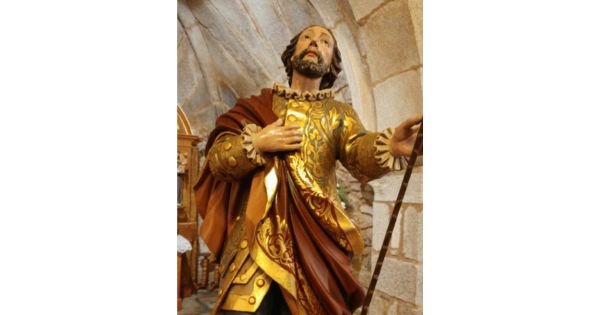
Saint Tirso: History, Legacy and Popular Devotion
Have you ever heard of San Tirso and wondered who he really was? Well, hold on tight, because we’re about to dive into a story that blends faith, courage, miracles, and a devotion that has crossed centuries. Get ready to meet a saint who, although not as well known as others, has a powerful story that continues to inspire many.
Who was San Tirso?
Origin and history of the saint
San Tirso, also known as Thyrsus in Latin, was a Christian of Eastern origin, probably born in the region of Phrygia, in what is now Turkey. He lived during the 3rd century, a time when being a Christian was almost a death sentence.
The martyrdom of San Tirso
Tradition has it that San Tirso was persecuted for refusing to renounce his faith. He was tortured, but they could not break him. In fact, his resistance was so strong that many said it was a miracle. He was eventually beheaded, becoming a martyr. His courage won him a place in the hearts of many believers.
The Christian context in which San Tirso lived
Persecutions of Christianity in Roman times
In the days of the Roman Empire, especially under the reign of Decius, Christians were seen as a threat to social order. Being a Christian meant opposing the Empire’s official gods. So, as you can imagine, life was not easy for them.
How San Tirso became a martyr
Tirso was no exception. He was arrested, forced to worship idols, and, since he flatly refused, he was subjected to unimaginable torments. However, his unshakeable faith turned him into a symbol of spiritual resistance.
The cult of San Tirso through time
Early evidence of veneration
Records of Christians venerating his figure already exist from the 4th century. It did not take long for his story to spread beyond Phrygia.
Spread of his devotion in Europe
San Tirso in Spain
On the Iberian Peninsula, especially in Asturias, Galicia and Catalonia, San Tirso enjoys great popularity. Churches were built in his honour and his name became part of local tradition.
San Tirso in other countries
Traces of his cult can also be found in France and Italy, although with less intensity than in Spain. Even so, his story left its mark on European Christianity.
Miracles attributed to San Tirso
Popular stories and legends
Like every venerated saint, San Tirso has his own collection of miracles. There is talk of miraculous healings, interventions in battles, and even storms that calmed after praying to him. Myth or reality? For believers, there is no doubt.
Present-day testimonies
Even today, people claim to have received favours through his intercession. From finding a job to recovering from illness, San Tirso continues to be a source of hope.
Churches and monuments dedicated to San Tirso
Religious architecture and art
One of the most notable temples is the Church of San Tirso in Oviedo, with a history dating back to the 8th century. Its pre-Romanesque architecture is a visual delight, and its altar is a place of pilgrimage.
Pilgrimage routes
There are rural paths in Galicia and Asturias that connect small villages with chapels dedicated to him. They do not have the fame of the Camino Frances, but they hold a unique and quiet spirituality.
San Tirso in popular culture
Festivities and celebrations
Every 28 January, his feast day is celebrated with processions, masses and, of course, good food and traditional music. In many villages, that day means the town’s main festival.
Sayings, songs and oral traditions
“San Tirso, who sees everything, watches over those who believe in him with faith” — so goes one of the sayings still heard among older generations. There are also folk songs that recount his life and miracles, especially in rural areas.
What does San Tirso represent today?
His spiritual figure in modern times
In a world where faith sometimes wavers, San Tirso represents steadfastness. He was not a perfect man, but he was firm in his beliefs. Today he inspires those who strive to remain true to their values, no matter what.
The message his story leaves us
The story of San Tirso is, in essence, a cry of spiritual courage. It reminds us that faith, when genuine, does not give in to the pressure of the world.
San Tirso: A legacy that lives on
San Tirso is not merely a figure of the past. His legacy still breathes in the mountains of Asturias, in Galician songs, in the prayers of the faithful. He is the kind of saint who, without making much noise, touches your heart. And you? Would you like to get to know him a little better?
Frequently Asked Questions about San Tirso (FAQs)
1. When is San Tirso’s feast day celebrated?
28 January is the official date of his feast day in the liturgical calendar.
2. Where was San Tirso born?
He is believed to have been born in Phrygia, an ancient region of Asia Minor, present-day Turkey.
3. What are San Tirso’s best-known miracles?
Miraculous healings, protection during storms, and help in times of distress.
4. Which church dedicated to San Tirso is the most famous?
The Church of San Tirso in Oviedo, Asturias, is one of the most emblematic.
5. Why is he considered a martyr?
Because he was executed for refusing to renounce his Christian faith during the Roman persecutions.
Would you like me to develop this article further for publishing on a website with more technical SEO (metadata, keywords, HTML structure)? Or would you like a version in a different style?