Grañón
Grañón is a small and charming municipality that forms part of the autonomous community of La Rioja in Spain. This place is famous for being the last town where pilgrims stop along the Camino de Santiago Francés before leaving La Rioja. Grañón belongs to the district of Santo Domingo de la Calzada, known for its rich history and traditions, and also falls under the judicial jurisdiction of Haro, a town known for its wines and vineyards. The inhabitants of Grañón, known as grañoneros and grañoneras, are mainly engaged in agriculture and livestock farming, activities that have been the backbone of its economy for generations.
Accommodation in Grañón


What to See in Grañón?

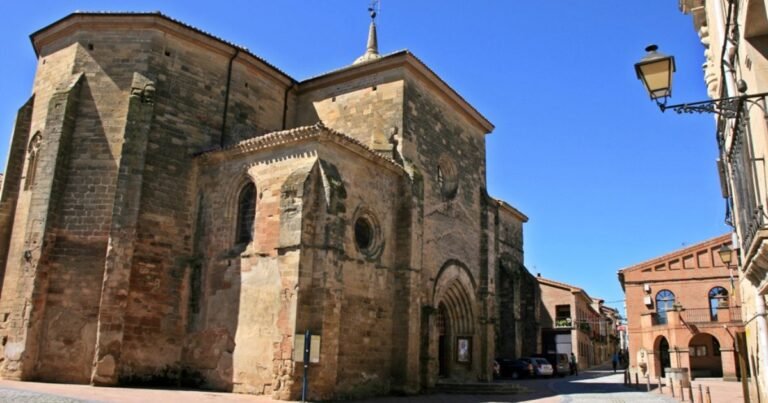
Geography of Grañón
The municipality of Grañón is located in the westernmost part of La Rioja, specifically in the area known as Rioja Alta, and is bordered by the Province of Burgos. This area features a varied landscape ranging from mountainous, wooded terrain to gentle, pleasant slopes. However, the network of rivers and water sources is quite scarce, which causes problems during the summer months, especially on the hottest days, when water-use restrictions are sometimes put in place. This affects both the population and agriculture in the region.
The extensive area of the municipal district is used mainly for agricultural activities, the main occupation in the area. In fact, only around 10 percent of the total land is wooded. Most of the land is dry farmland, meaning the crops grown mostly do not require constant irrigation. As a result, almost all farming is focused on cereal production, the mainstay of local agriculture. There are also large areas devoted to growing potatoes, another important crop here. To a lesser extent, other irrigated crops such as peas and beans are also grown, complementing the region’s agriculture.
History of Grañón
Historical documents recovered and studied over time tell us that the origin of the town of Grañón dates back many centuries, specifically to the 9th century. During this period, the king of León, Alfonso III, ordered the construction of an imposing castle. It was built on top of a hill very close to the town, known at the time as Mirabel or Mirabelia. The Najera Chronicles, one of the most important records of the region’s history, indicate that a castle already existed in Grañón around the year 885. However, other studies and historical documents also mention the year 889 as a possible date for the completion of this fortress. This castle, along with other nearby defensive structures, had the fundamental mission of protecting against the Muslim invasions that threatened the Christian territories of the region.
In the shadow and protection of Grañón Castle, small neighborhoods and hamlets began to spring up, which over time grew into a more stable population. Several hospitals are known to have existed in the area, one of the most notable being that of Carrasquedo, which today has become a hermitage bearing the same name. During the second half of the 11th century, Grañón became caught up in the territorial struggles between King Sancho VI of Navarre and Alfonso VIII of Castile, further complicating the situation in the region. In 1176, the Navarrese and Castilians met under the mediation of King Henry II of England, aiming to put an end to these hostilities and conflicts. The Navarrese king claimed the castle of Mirabel, believing it belonged to him by right of inheritance. Despite these claims, however, the castle of Grañón remained under Castilian control. In 1187, Alfonso VIII granted a charter (fuero) to the town of Grañón, allowing the new settlement to be established and planned in a more formal and organized way.
As the new settlement developed, the inhabitants of the different neighborhoods began to gather around the Monastery of San Juan, which stands on the same site where the present-day parish church of San Juan Bautista now stands. The new medieval urban layout led to the revitalization of the famous Camino de Santiago Francés, which was rerouted through the intervention of Santo Domingo de la Calzada; he redirected the route away from the old Roman road toward Burgos, passing through Grañón and Redecilla del Camino. Grañón was once surrounded by walls, although unfortunately no trace of these defensive structures remains today. Over time, as the new urban center became established, the importance of the castle declined, allowing the town of Grañón to grow and its population to expand over the years. The lands of Grañón, rich and fertile, have been the subject of numerous disputes throughout history. The most famous of these is the Legend of the Brave Men (Leyenda de los Valientes), a conflict between the towns of Grañón and Santo Domingo de la Calzada over possession of the lands known as La Dehesa, covering around a thousand hectares situated between the two towns.
Grañón
| Country | Spain | |
|---|---|---|
| • Aut. community | La Rioja | |
| • Province | La Rioja | |
| • District | Santo Domingo de la Calzada | |
| • Judicial district | Haro | |
| Location | 42°27′01″N 3°01′35″W | |
| • Elevation | 725 m | |
| Area | 31.01 km² | |
| Founded | 9th century | |
| Population | 235 inhab. (2023) | |
| • Density | 8.22 inhab./km² | |
| Demonym | grañonero, grañonera | |
| Postal code | 26259 | |
| Twinned with | Retjons (France) | |
| Patron | San Juan Bautista | |
| Patroness | Virgen de Carrasquedo | |
| Website | www.granon.es | |