Redecilla del Camino
Nestled in the province of Burgos, Redecilla del Camino stands as the first village in the Province of Burgos on the Camino Frances. This municipality combines a rich historical heritage with notable Romanesque architecture, serving as a landmark for pilgrims and lovers of cultural heritage.
Today, Redecilla del Camino falls under the judicial district of Briviesca. It also sits at a strategic point, right on the northern face of the Sierra de la Demanda, marking the start of the flat area known as the Rioja plain.
Accommodation in Redecilla del Camino

Redecilla del Camino on the Camino Frances
In 2015, UNESCO made a significant decision by approving the extension of the Camino de Santiago in Spain, recognising its cultural and historical importance. This process included an official designation covering both the Camino Frances and the other Caminos del Norte in Spain. As part of this recognition, Spain submitted documentation titled “Retrospective Inventory – Associated Elements”. Within this inventory, intended to highlight the villages and features that form an integral part of this historic route, the village of Redecilla del Camino was included under number 1225. This inclusion underscores the importance of this small village and its rich cultural heritage, as well as its connection to the Camino de Santiago and its role in the history of pilgrimage.
What to See in Redecilla del Camino?

Geography of Redecilla del Camino
The shape of the northern face of the Sierra de la Demanda has played a very important role in the lives of this region’s native inhabitants. Thanks to the form and features of these mountains, the inhabitants were able to use and enjoy this land with a sense of security, even in difficult times and under the threat of invasion. Besides offering a natural refuge, the mountains provided a setting in which to carry out their daily activities without the constant fear of attack.
Among the most notable features of this landscape are the Montes de Ayago, recognised for their suitable habitability. These mountains, which do not exceed 1,350 metres above sea level, form a mountain range stretching from the left bank of the Ciloria river — also known as the Glera — at Valgañón, running southwest to the right bank of the Tirón river. Interestingly, all the rivers that flow into the Tirón from its right bank originate in the Montes de Ayago. Several notable peaks can be found within this mountain range. In the Province of Burgos, there is the peak of Santa Brígida, reaching 1,317 metres, and Monte Somo, at 1,262 metres. In La Rioja, meanwhile, La Picota stands out at 1,163 metres, and Sampol at 1,094 metres.
Throughout history, the region has seen the arrival of various invading peoples. The Celts came first, followed by the Romans, who left their mark on the culture and social organisation of the area. After them came the Visigoths, and finally the Moors made their appearance. However, despite all these population movements and attempts at conquest, none of these groups was able to conquer this district fully or completely. This does not mean there were no cultural, commercial or social exchanges between the invaders and the native inhabitants, but it is worth noting that any forced invasion attempt tends to provoke a response from native inhabitants, who tend to retreat into their mountains. The Montes de Ayago play a crucial role in this dynamic, offering a safe and accessible refuge. Over time, when some of these invaders managed to settle permanently in the flatter lands, exchanges of all kinds commonly took place, enriching the region’s culture and economy.
History of Redecilla del Camino
Documentation has been found confirming the existence of this place around the year 968, although settlements existed in the region even before that date. The evolution and history of this village are deeply connected to the famous Camino de Santiago. Its layout and urban organisation follow the pattern characteristic of the Camino, which runs from the eastern to the western part of the peninsula. Numerous remains of Romanesque art can be found here, reflecting its rich cultural heritage. It is mentioned as one of the most significant villages along the Camino in the first Pilgrim’s Diary, known as the Codex Calixtinus. This important document was written in the 13th century by Aymeric Picaud, a French cleric and pilgrim who recorded his journey.
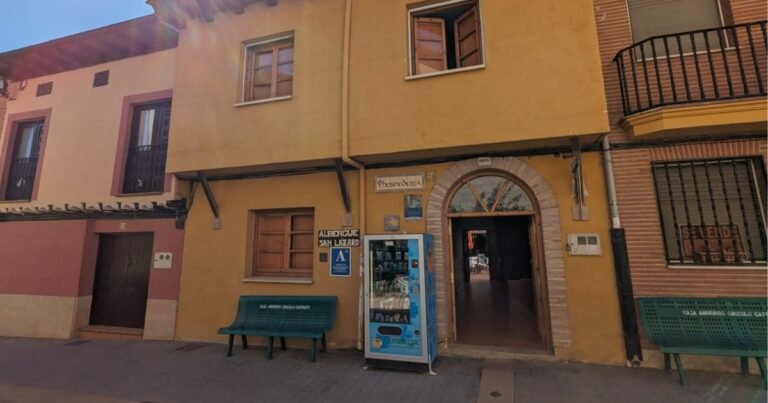
The village has a range of services aimed at pilgrims, which is well worth mentioning. Its hostel, which descends from the former Hospital de San Lázaro, has capacity for 40 people and offers all the services needed to ensure travellers’ comfort. This is essential for those setting out on the route to the Cathedral of Santiago, since hospitality is a key part of the pilgrim experience.
In a document dated 15 March in the year 863, the Cartulario de San Millán de la Cogolla contains a precise mention that reads: “Et septima decanía San Andres de Faiago cum suas uineas et defesas, in montibus et suis pomaribus…” This reference is considered the first mention of the place called Ayago, identifying it as a geographical location in the Montes de Ayago, which included its pasturelands, mountains and apple orchards.
In the year 945, the Count of Castile, Fernán González, granted San Millán the monastery of San Martín, located between the villages of Redecilla and Grañón. This act was of great importance for the area’s development.
Later, in the year 977, the monastery of San Millán de la Cogolla returned the town of Radicella to the monastery of San Miguel de Pedroso. This act also reflected the relations between the different religious institutions of the time.
With the fall of the Ancien Régime, the place was established as a constitutional municipality of the same name in the district of Belorado, which was then part of the region of Castilla la Vieja. At that time, the population was around 296 inhabitants, giving an idea of the settlement’s size in that period and highlighting its origins and importance over the centuries.
Festivals and Traditions of Redecilla del Camino
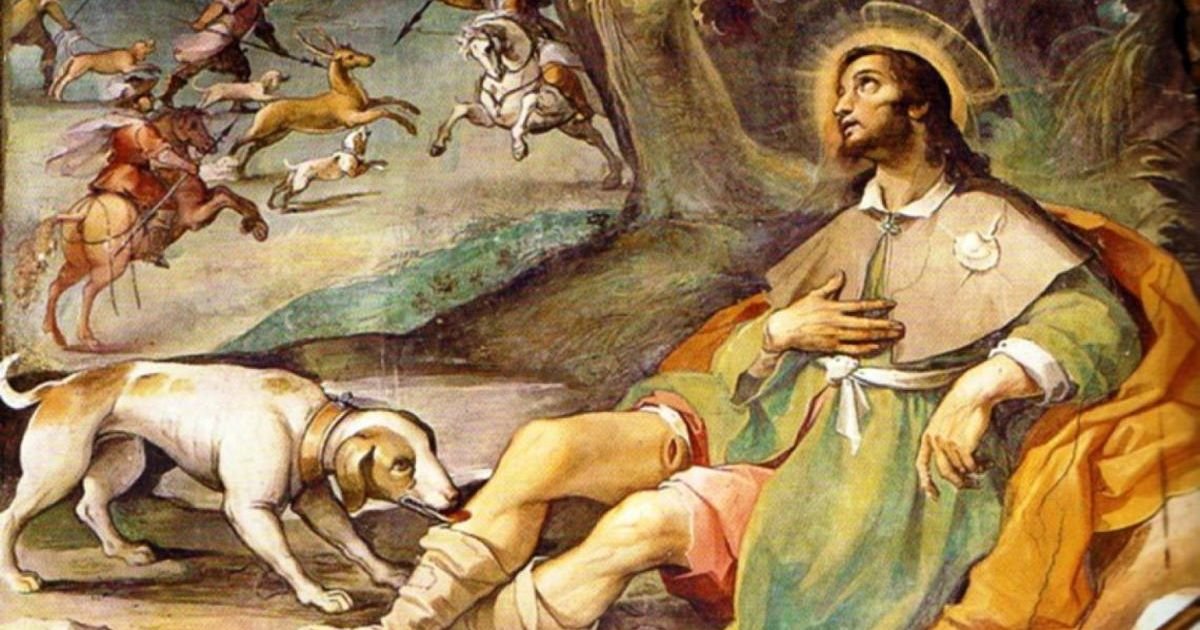
Redecilla del Camino celebrates its patron saint festivities in honour of the Virgen de Ayago and San Roque on 16 August. During these festivities, traditional dances are performed by twelve dancers accompanied by the “cahiburrio”, a festive figure that adds colour to the celebrations.
Another notable tradition is the pilgrimage to the hermitage of Nuestra Señora de Ayago, located about 5 km south of the village centre. This pilgrimage, held in late August, strengthens community bonds and the residents’ religious devotion.
Redecilla del Camino
| Country | Spain | |
|---|---|---|
| Autonomous community | Castilla y León | |
| Province | Burgos | |
| Comarca | Montes de Oca, Riojilla Burgalesa, Montes de Ayago | |
| Judicial district | Briviesca | |
| Location | 42°26′17″N 3°03′54″W | |
| Elevation | 741 m | |
| Area | 12.10 km² | |
| Population | 104 inh. (2023) | |
| Density | 9.26 inh./km² | |
| Demonym | redecillano, redecillana | |
| Postal code | 09259 | |
| Website | www.redecilladelcamino.es | |
See also: