Atapuerca
Located in the Province of Burgos, within the autonomous community of Castilla y León, Atapuerca lies just 20 kilometres from the city of Burgos and is part of the Camino Frances. Surrounded by mountain ranges and plains, this village, with barely two hundred inhabitants, has become a tourist and cultural landmark thanks to its exceptional archaeological sites, declared a UNESCO World Heritage Site.
Accommodation in Atapuerca


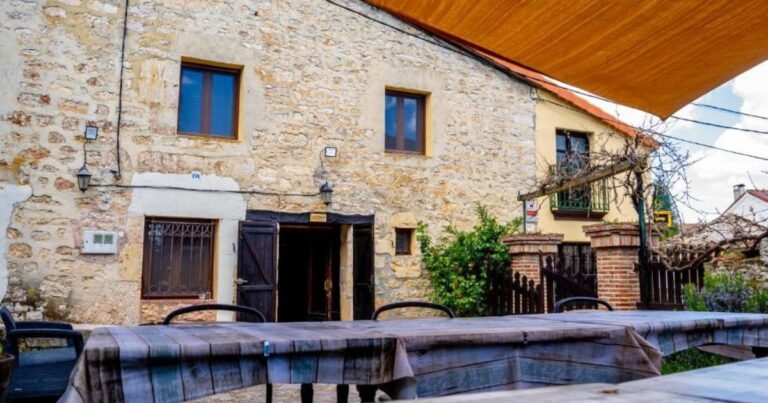
Hostels in Atapuerca
Atapuerca on the Camino Frances
The Camino Frances runs through Atapuerca, blending history, nature and spirituality. Pilgrims walking this route enjoy the climb up the Sierra de Atapuerca, a stretch of great scenic beauty leading to the Alto de Matagrande, from where a spectacular panorama of Burgos can be seen.
The route is marked by Camino waymarks, hermitages and farmland landscapes that evoke centuries of tradition. At the entrance to the village, travellers are welcomed with hospitality at hostels and rural houses that keep the spirit of pilgrim hospitality alive.
The Sites of the Sierra de Atapuerca
In the Sierra de Atapuerca, unique fossil remains have been discovered that tell the story of over a million years of human evolution. Excavations such as the Sima de los Huesos (Pit of Bones) and the Gran Dolina have revealed remains of key species such as Homo antecessor and Homo heidelbergensis. These finds place Atapuerca at the centre of global palaeoanthropological research and make it an essential site for understanding the origins of humankind.
In addition, the Museum of Human Evolution in Burgos and the Experimental Archaeology Centre (CAREX), located next to the site, complete the experience with exhibitions and re-enactments that let visitors relive the life of our ancestors.
Historical Heritage of Atapuerca
Beyond archaeology, Atapuerca holds a notable historical legacy:
- Iglesia de San Martín Obispo (Church of St Martin the Bishop): the parish church overlooking the village from a hilltop.
- Battle of Atapuerca (1054): a historic clash between the Kingdom of Castile and the Kingdom of Pamplona, commemorated each year with a medieval re-enactment that draws hundreds of visitors.
- Traditional architecture: stone farmhouses and old rural buildings that preserve the authentic flavour of medieval Castile.
Nature and Hiking
The Sierra de Atapuerca is not just archaeology, it is also living nature. Holm oak and oak woodlands and cereal fields offer an ideal setting for hiking and wildlife watching. Waymarked trails lead to caves, clear springs and unique landscapes, making the area a perfect destination for active tourism.
Traditions and Events in Atapuerca
Atapuerca keeps local traditions alive that enrich the visitor experience:
- Battle of Atapuerca: a historical re-enactment declared of Regional Tourist Interest.
- Atapuerca International Cross Country: an athletics event recognised as one of the best in Europe.
- Patron saint festivities in honour of St Martin the Bishop: held in November, combining liturgy, music and popular gastronomy.
Local Cuisine
A visit to Atapuerca is completed with a taste of Burgos cuisine:
- Morcilla de Burgos (Burgos blood sausage), made with rice and spices.
- Wood-oven roast lamb, typical of the Castilian region.
- Wines with the Denomination of Origin Ribera del Duero and Arlanza.
Many local restaurants offer special menus for pilgrims, keeping alive the pilgrim spirit of hospitality.
Economy and Tourism
The discovery and promotion of the sites has transformed the local economy. Today, cultural and nature tourism accounts for a key share of economic activity. The creation of hostels, restaurants and specialised services has curbed depopulation and enabled a demographic and social revival.
Atapuerca
Atapuerca is far more than a small village in Burgos: it is a living testimony to human evolution, a historic site linked to the Battle of 1054, and a mandatory waypoint on the Camino Frances. Its combination of archaeology, nature, hospitality and tradition make it an essential destination for pilgrims, travellers and history lovers.
| Country | Spain | |
|---|---|---|
| Autonomous community | Castilla y León | |
| Province | Province of Burgos | |
| Comarca | Alfoz de Burgos | |
| Judicial district | Burgos | |
| Association of municipalities | Comarca del Arlanzón | |
| Location | 42°22′36″N 3°30′33″W | |
| Elevation | 953 m | |
| Area | 24.75 km² | |
| Settlements | Atapuerca and Olmos de Atapuerca | |
| Population | 182 inh. (2024) | |
| Density | 7.27 inh./km² | |
| Postal code | 09199 | |
| Website | www.atapuerca.es | |