
What to see in Atapuerca?
Atapuerca on the Camino Frances
The Camino Frances crosses the village and, straight afterwards, tackles the climb into the Sierra de Atapuerca, a stony but very beautiful stretch that ends at the Alto de Matagrande, with its great wooden cross and, on clear days, Burgos in view.
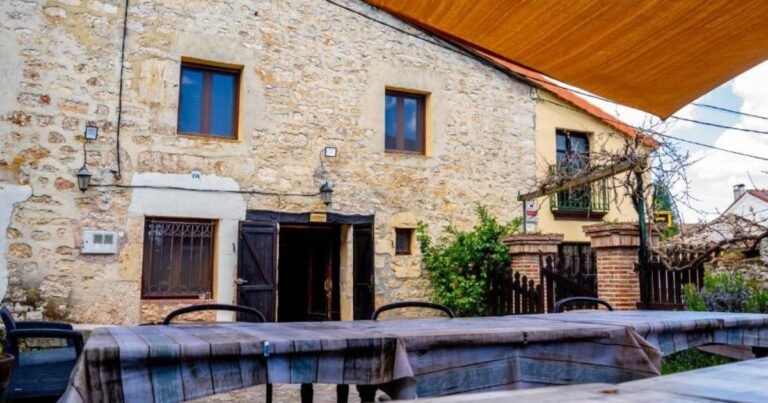
At the entrance to the village, hostels and rural houses keep up the tradition of hospitality, and the walk here from Agés is short and flat, perfect for arriving in time to visit the sites.
The sites of the Sierra de Atapuerca
In the Sierra de Atapuerca fossils have been found that tell over a million years of human evolution. Sites such as the Sima de los Huesos or the Gran Dolina have yielded remains of key species, among them Homo antecessor and Homo heidelbergensis, and have made this place a world reference for understanding the origins of our species.
The visit is completed by the Museum of Human Evolution in Burgos and the Experimental Archaeology Centre (CAREX), next to the site, where you can see how those first inhabitants lived.
History of Atapuerca
Beyond prehistory, the village has a history of its own:
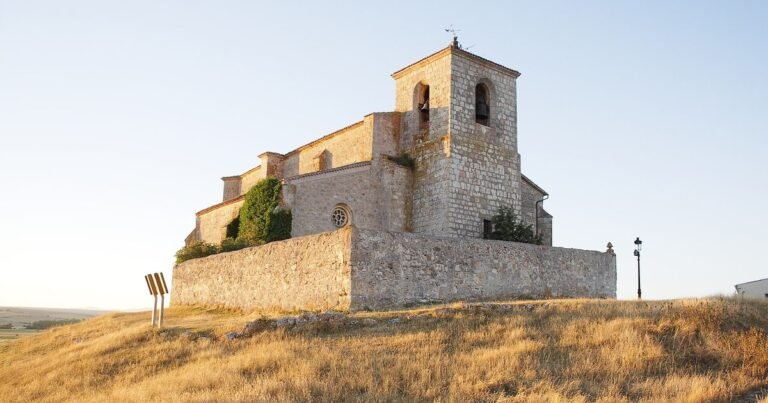
- Church of Saint Martin the Bishop: it overlooks the houses from the top of a hill.
- Battle of Atapuerca (1054): the kings of Castile and Pamplona, two brothers, fought here, and every year the battle is re-enacted with hundreds of participants.
- Traditional architecture: stone houses and farm buildings with the feel of old Castile.
Nature and Hiking
The sierra is not only archaeology: holm oak and oak woods and cereal fields make it a good place for walking and watching wildlife, with waymarked routes passing caves and springs.
Festivities and events
Atapuerca has a very lively calendar for its size:
- Re-enactment of the battle of Atapuerca, declared of Regional Tourist Interest.
- Atapuerca International Cross Country, one of the most prestigious cross-country races.
- Festivities of Saint Martin the Bishop, in November, with Mass, music and a communal meal.
What to eat
The food is that of Burgos, hearty and very much from the oven:
- Burgos black pudding, made with rice and spices.
- Roast suckling lamb from a wood-fired oven.
- Wines from the Ribera del Duero and Arlanza appellations.
Several restaurants offer a pilgrim menu, true to the Camino’s tradition of hospitality.
A village transformed by the sites
The discovery and promotion of the sites have changed the life of the village. Cultural and nature tourism is now key, and the opening of hostels, restaurants and services has slowed the depopulation suffered by so many villages in the area.
In short
Atapuerca is much more than a village you pass through: it holds some of the keys to human evolution, was the scene of the battle of 1054 and is a natural stop on the Camino Frances before crossing the sierra towards Burgos.
| Country | Spain | |
|---|---|---|
| Autonomous community | Castilla y León | |
| Province | Province of Burgos | |
| Comarca | Alfoz de Burgos | |
| Judicial district | Burgos | |
| Association of municipalities | Comarca del Arlanzón | |
| Location | 42°22′36″N 3°30′33″W | |
| Elevation | 953 m | |
| Area | 24.75 km² | |
| Settlements | Atapuerca and Olmos de Atapuerca | |
| Population | 182 inh. (2024) | |
| Density | 7.27 inh./km² | |
| Postal code | 09199 | |
| Website | www.atapuerca.es | |