Pieros
Pieros, a picturesque village belonging to the municipality of Cacabelos, lies in the northwest of the Province of León, in the heart of the El Bierzo region. Just 2 kilometres from the centre of Cacabelos, this hamlet sits in a privileged setting, surrounded by gentle hills planted with vines and olive trees. Its strategic location on the Camino Frances makes Pieros a must-pass point for thousands of pilgrims seeking spirituality, scenery and rural authenticity. Its moderate altitude and Atlantic climate with Mediterranean influence create a unique ecosystem, ideal for viticulture and peaceful living.
Pieros on the Camino de Santiago
Pieros is an integral part of the French Jacobean route, one of the best-preserved stretches of the route on the Iberian Peninsula. Its hospitality towards pilgrims has remained constant since the Middle Ages. The hamlet offers rest areas, fountains, hostels and supply points that respect the essence of the Camino. Many pilgrims choose Pieros as an overnight stop for its tranquillity and the authenticity of its services.
What to see in Pieros?

History of Pieros
The first documentary records of Pieros date back to the Middle Ages, although archaeological evidence suggests a much older occupation. Remains of Roman structures have been found near the Cúa river, indicating the possible existence of agricultural villas or wine estates during the Empire. In medieval times, Pieros gained importance as a stop on trade and pilgrim routes, consolidating its role as a centre of services and hospitality. Over the centuries, its population has moved between agrarian self-sufficiency and ties to the development of Cacabelos and Villafranca del Bierzo.
Architecture of Pieros
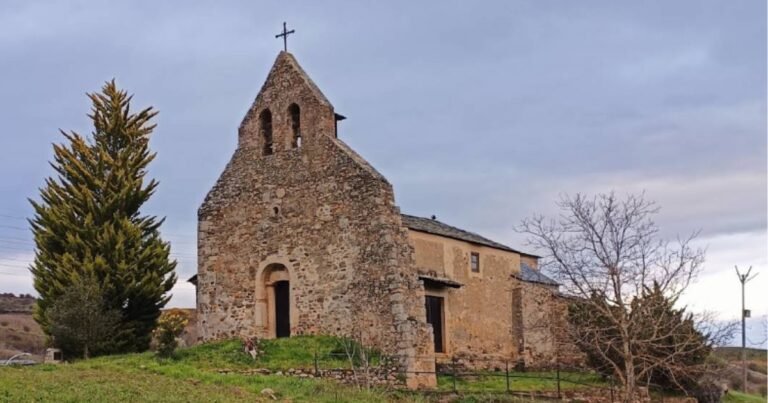
Pieros preserves a group of buildings typical of western El Bierzo. Its stone houses, roofed in slate, feature wooden balconies, interior courtyards and defensive elements such as perimeter walls. Particularly notable are several restored manor houses, now used as hostels, wineries or rural residences. The surrounding area is dotted with traditional granaries, wine presses and hay barns that still play a functional role in the local economy.
Monuments and points of architectural interest
- Iglesia de San Martín de Pieros: a church of medieval origin, renovated in the 17th and 18th centuries, which retains an interesting Baroque altarpiece and a strikingly beautiful bell tower.
- “El Serbal y la Luna” Pilgrims’ Hostel: an old manor house converted for guests, an example of architectural integration using traditional materials and sustainable design.
- Underground wine cellars: dug into hillsides near the village centre, offering a glimpse of the region’s ancestral wine-preservation techniques.
Traditions, folklore and community life in Pieros
Pieros keeps a rich festive and cultural tradition alive. Among its celebrations, the festivities honouring San Martín, the village’s patron saint, stand out, held in November with processions, solemn masses, traditional dances and culinary gatherings. In summer, the village also holds community get-togethers, open-air theatre performances and guided routes through the natural and ethnographic surroundings.
Pieros’ identity rests on its strong community cohesion and the passing down of rural knowledge across generations. Hand-picking grapes, artisanal winemaking and the traditional pig slaughter remain socially important rituals.
Local economy based on viticulture and rural tourism
Pieros’ economic driver is quality viticulture, tied to the Bierzo Denomination of Origin. Numerous small family wineries produce signature wines made from native varieties such as mencía and godello. These wines, recognised for their aromatic intensity and freshness, are exported to national and international markets.
The rise of wine tourism and the steady flow of pilgrims have encouraged the appearance of rural accommodation, restaurants and sustainable tourism services. Pieros has become a model for balancing heritage conservation, responsible farming and quality tourism.
Cultural landscape: harmony between nature and human footprint
The natural surroundings of Pieros are shaped by a protected cultural landscape, where human hands have carved farming terraces, cobbled paths and wooded areas that coexist with agricultural land. This territorial mosaic has been declared of ethnographic and scenic interest by regional institutions and is the subject of studies in agricultural sustainability and ecological restoration.
Visitors can walk trails connecting Pieros with other nearby hamlets such as Valtuille, Villadecanes and Villafranca, passing along old cart tracks, century-old vineyards and natural springs.
Environmental conservation and sustainable development projects
The village takes part in environmental and cultural initiatives led by the Cacabelos Town Council and residents’ associations. Some of the leading projects include:
- Restoration of historic trails and scenic signage.
- Restoration of traditional wineries for cultural use.
- Reforestation programmes with native species.
- Local produce fairs and farmers’ markets.
Pieros stands as a benchmark in sustainable rural development, combining agricultural tradition, ecological innovation and low-impact tourism.
Practical information for visitors
- Access: from Cacabelos via the LE-713 road, or on foot along the Camino de Santiago.
- Services: hostels, rural houses, restaurants serving Bierzo cuisine, guided winery tours.
- Best time to visit: spring and autumn, coinciding with the vineyards’ blossoming and the grape harvest.
- Nearby points of interest: Villafranca del Bierzo, Castro Ventosa, Cacabelos Archaeological Museum.
Pieros
Pieros is far more than a stop on the Camino de Santiago. It is a place of immense heritage, human and scenic richness that embodies the essence of the most authentic Bierzo. Its millennia-old history, traditional architecture, cultural vitality and commitment to sustainability make it a model of a living hamlet, connected to the past and looking to the future.
| Country | España | |
|---|---|---|
| Com. autónoma | Castile and León | |
| Province | Province of León | |
| Comarca | El Bierzo | |
| Municipality | Cacabelos | |
| Location | 42°36′24″N 6°44′56″O | |
| Population | 37 hab. (2023) | |
| Postal code | 24547 | |