Agés
Agés, nestled in the Montes de Oca comarca in the Province of Burgos, is a site of great historical and cultural significance. Its strategic location on the Camino Frances and its rich heritage make it a point of interest for pilgrims and history lovers.
Accommodation in Agés
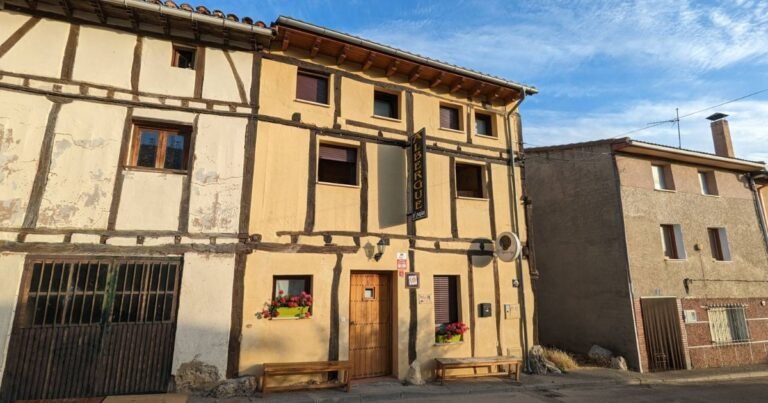

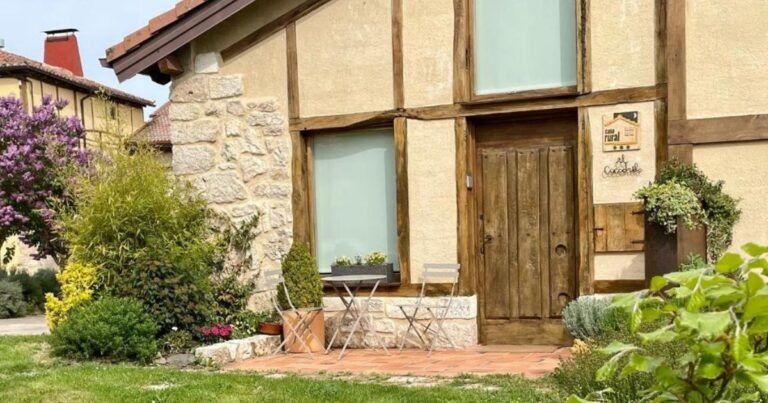

Hostels in Agés
Origin and Historical Evolution of Agés
Toponymy and Early References
The name “Agés” comes from the Arabic Ḥaǧǧāǧ, a personal name. The earliest documented mention of the town appears in the will of the priest Nunu, dated 1 May 972, where it is referred to as “Sancta Eugenia de Haggege“.
Middle Ages and Jurisdiction
During the Middle Ages, Agés was part of the Hermandad de Montes de Oca, within the Partido de Juarros, one of the divisions of the Intendancy of Burgos between 1785 and 1833. It held royal (realengo) jurisdiction with its own ordinary mayor.
Incorporation into Arlanzón
In the 19th century, Agés had 52 households and 207 inhabitants. Between the 1981 census and the previous one, it was incorporated into the municipality of Arlanzón, ceasing to exist as an independent entity.
Architectural and Cultural Heritage of Agés
Church of Santa Eulalia
The parish church of Santa Eulalia, built in the 16th century over an earlier Romanesque temple, is Gothic in style with a Greek-cross floor plan, ashlar stonework and ribbed vaulting. It was renovated in the 18th century, with a Baroque bell-gable added in 1757.
It is believed that the entrails of King García of Navarre, who died at the Battle of Atapuerca in 1054, were buried in this church.
Bridge of Agés
The Romanesque bridge of Agés, attributed to San Juan de Ortega, is a structure of great historical value. This bridge eased the passage of pilgrims and stands as a testament to the town’s Jacobean legacy.
Traditional Infrastructure
Agés retains traditional elements such as an old washhouse, a forge and a farrier’s frame (potro), reflecting the daily life of its inhabitants in past eras.
Services in Agés
- Pilgrim information: Not available
- Telephone box: Not available
- ATM: Not available
- Medical assistance: Tuesdays and Thursdays at 1:00 pm
- Pharmacy: Not available
- Repair shop: Not available
- Grocery store: Small shop in the village bar
- Butcher’s: Not available
- Bakery: Not available; bread sold at the bar
- Bar-Restaurant: Yes
- Mobile coverage: Variable depending on the area
Agés on the Camino Frances
Agés is a significant stop on the Camino Frances. From the 12th century, with the intervention of King Fernando VII, the route was diverted to pass through Agés, consolidating its role in the pilgrimage.
The town offers hostels and services for pilgrims, keeping alive the hospitable tradition that has characterised it since the Middle Ages.
Natural and Scenic Surroundings of Agés
Located in the Montes de Oca comarca, Agés lies in a privileged natural setting, with beech and oak woodlands and diverse wildlife such as roe deer, wild boar and foxes.
The gorge of the Oca River, more than 5 km long, is one of the area’s main scenic attractions, offering hiking routes and opportunities for nature watching.
Agés
Agés is a town that, despite its small size, holds remarkable historical and cultural wealth. Its architectural heritage, its role on the Camino de Santiago and its natural surroundings make it a destination of interest for pilgrims, historians and nature lovers.
Visiting Agés means stepping into a living chapter of the history of Castile and León, where every stone and every path tells stories of faith, struggle and tradition.
| Country | Spain | |
|---|---|---|
| Autonomous community | Castile and León | |
| Province | Burgos | |
| Comarca | Montes de Oca | |
| Judicial district | Burgos | |
| Municipality | Arlanzón | |
| Mancomunidad | Comarca del Arlanzón | |
| Location | 42°22′11″N 3°28′46″O | |
| Elevation | 1101 m | |
| Area | 16.12 km² | |
| Population | 60 inhabitants (INE 2023) | |
| Density | 3.72 inhab./km² | |
| Predom. language | Spanish (Castilian) | |
| Postal code | 09199 | |
| Telephone prefix | 947 | |