Logroño
In the heart of the Ebro Valley, the city of Logroño lies in northern Spain, as the capital of La Rioja and a natural hub between Navarra, Álava and the Rioja region itself. The Ebro River runs along its northern edge, and the Camino de Santiago Frances crosses it from east to west, running through its historic centre and everyday life.
Accommodation in Logroño
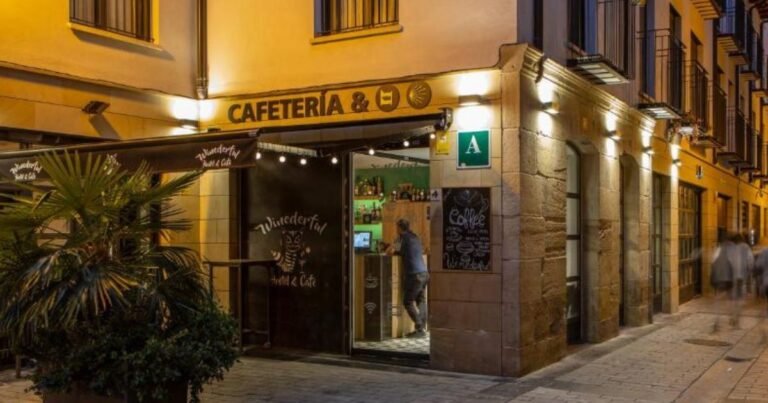


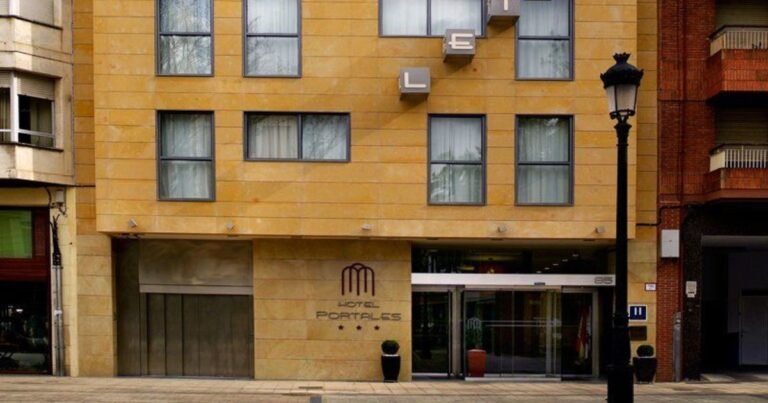

Logroño on the Camino de Santiago Frances
Logroño serves as the gateway to La Rioja for pilgrims arriving from Viana and heading towards Navarrete. The Puente de Piedra marks the monumental entrance to the old town; from Pozo Cubillas, a green walkway leads to the Pilgrim’s Office, the municipal hostel and the Puerta del Revellín, the last remaining trace of the city walls. The pilgrim route runs through Ruavieja and Barriocepo, streets where cellars and underground wine vaults recall the city’s winemaking heritage.
Hostels in Logroño

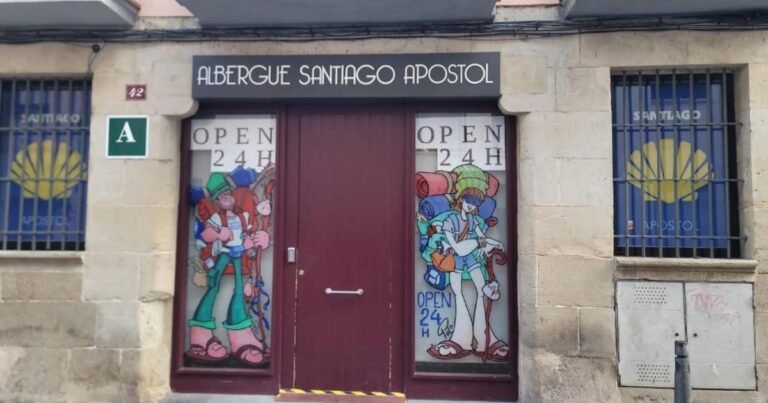
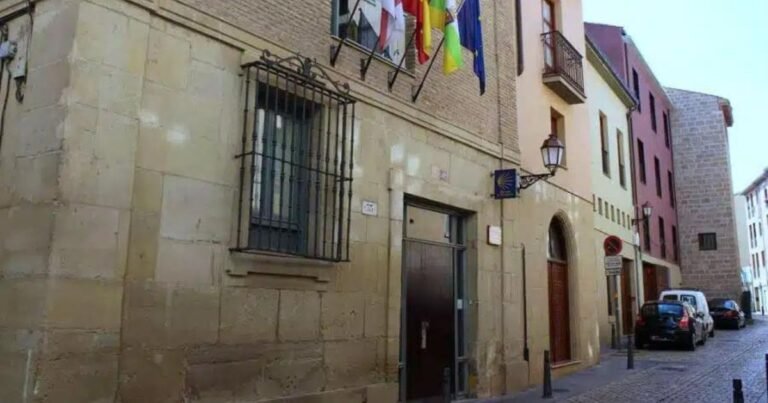
What to See in Logroño?
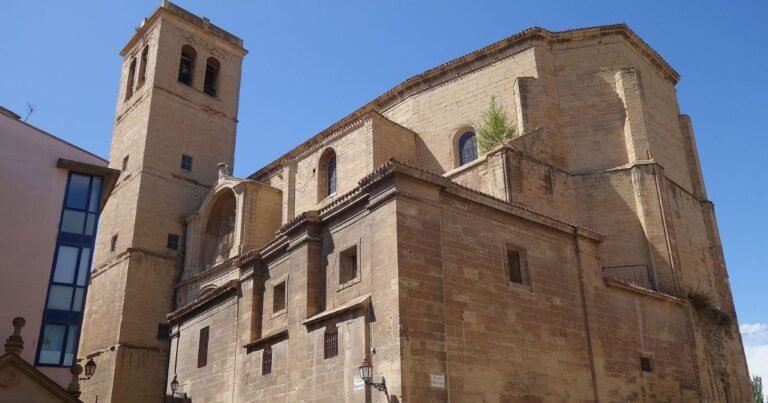


Essential Heritage on the Route in Logroño
Co-Cathedral of Santa María de la Redonda
A long time in the making (15th–18th centuries), with iconic twin towers. Inside, highlights include the choir stalls, the Baroque main altarpiece and the famous Crucifixion attributed to Michelangelo.
Church of San Bartolomé
The oldest church (13th century), attached to the old city wall, with an exceptional Gothic doorway — the finest in La Rioja — and a Romanesque triple apse.
Church of Santiago el Real
The quintessential Jacobean landmark, with a Baroque facade presided over by Santiago Matamoros and the Pilgrim’s Fountain beside the square of the same name.
Santa María de Palacio
A former priory of the Holy Sepulchre, recognisable by its pyramidal Gothic spire; home to historic liturgies and collections.
Defensive and Civil Architecture
The Cubo del Revellín and a stretch of city wall illustrate the city’s military past. The bridges —de Piedra, de Hierro and de Sagasta— connect neighbourhoods and riverside parks; the Palacio de Espartero houses the Museum of La Rioja.
Wine Tourism and Wine Culture
The Rioja capital offers visits to urban wineries (such as Franco Españolas, on the banks of the Ebro) and to cutting-edge wineries nearby. At the Rioja Culture Centre and Espacio Lagares, visitors explore historic cellars, learn about grape varieties such as Tempranillo, Garnacha and Viura, and discover the direct link between the Camino, trade and wine.
Gastronomy and Tapas Streets
The tapas routes along Calle Laurel and Calle San Juan offer a map of pintxos as recognisable as it is varied: grilled mushrooms, zapatillas, suckling pig, stuffed omelettes and seasonal vegetables, always paired with DOCa Rioja. Signature dishes: patatas a la riojana, chuletillas al sarmiento, migas de pastor, bacalao a la riojana and pears in wine.
River Parks and the Rhythm of the Ebro
The Parque del Ebro, the Ribera park and the Iregua park form a green belt ideal for jogging, cycling or strolling after the day’s stage. Viewpoints, footbridges and riverside groves offer unusual angles on the city’s skyline of towers and domes.
Museums and Venues
Besides the Museum of La Rioja, the Casa de las Ciencias and Sala Amós Salvador host exhibitions and workshops. The Teatro Bretón de los Herreros runs a steady programme and hosts events such as Actual, a festival of contemporary music and arts.
Festivals with Their Own Character
- San Bernabé (11 June): a historic vow with re-enactments of the siege and the distribution of bread, fish and wine.
- San Mateo – Grape Harvest Festival (September): grape treading and the offering of the first must to the Virgen de Valvanera, with concerts and tastings.
Recommended Itinerary (Logroño Stage)
- Pozo Cubillas → Puente de Piedra: a Jacobean welcome and panoramic views of the Ebro.
- Pilgrim’s Office → Ruavieja/Barriocepo: wine cellars, Santa María de Palacio and San Gregorio.
- Plaza del Parlamento → Revellín: reading the city walls and their gate.
- Redonda – San Bartolomé – Santiago el Real: a monumental triangle.
- Laurel / San Juan: a food stop before continuing along Avenida de Murrieta towards Navarrete.
Useful Information
- Altitude: 386 m | Climate: interior Mediterranean, approx. 14°C average annual temperature.
- Pilgrim services: municipal hostel, credential stamping, specialist shops, intercity transport.
- Access: N-111, A-12, AP-68 roads; train and bus stations a short distance from the historic centre.
Logroño
Logroño brings together Gothic, Renaissance and Baroque art, Jacobean heritage, river parks and wine culture within a few kilometres. It is a strategic stop and a complete experience: heritage, gastronomy and hospitality that accompany pilgrims before they head into the vineyards on the way to Navarrete, Nájera and Santo Domingo de la Calzada.
| Country | Spain | |
|---|---|---|
| Autonomous Community | La Rioja | |
| Province | La Rioja | |
| District | Logroño | |
| Judicial district | Logroño | |
| Location | 42°28′12″N 2°26′44″W | |
| Elevation | 384 m (min: 349 , max: 584 ) | |
| Area | 79.55 km² | |
| Founded | Small village until 1095 (930 years ago) (city charter) | |
| Population | 151,164 inhab. (2024) | |
| Density | 1,900.24 inhab./km² | |
| Demonym | logroñés, logroñesa lucroniense jacarero, jacarera | |
| Postal code | 26001-26009 | |
| Dialling code | 941 | |
| Twinned with | 11 cities | |
| Patron Saint | San Bernabé | |
| Patron Saint (f) | Virgen de la Esperanza | |
| Website | www.logroño.es | |