Villalcázar de Sirga
Villalcázar de Sirga, nestled on the vast plain of Tierra de Campos in the Provincia de Palencia, is an essential destination for lovers of medieval art, Templar history and the Camino Frances. This small municipality, formerly known as Villasirga, holds architectural treasures and traditions that make it a cultural and spiritual landmark.
Accommodation in Villalcázar de Sirga
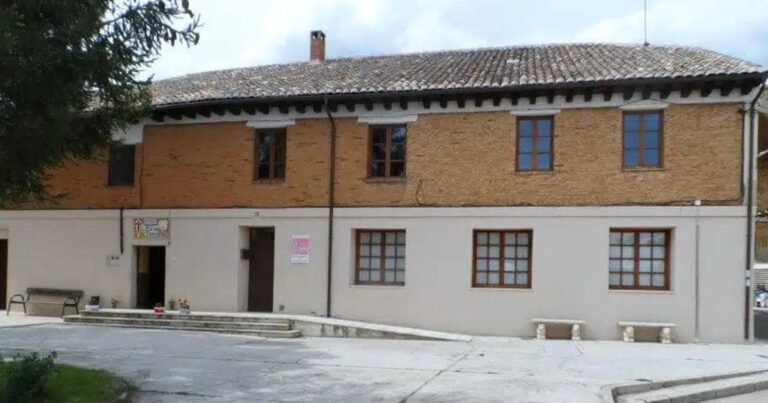

Strategic Location in Tierra de Campos
Located in the Tierra de Campos region, Villalcázar de Sirga sits at an altitude of 830 metres and covers an area of 25.41 km². It borders San Mamés de Campos to the north, Arconada and Villovieco to the east, Lomas de Campos and Villarmentero de Campos to the south, and Carrión de los Condes to the west. Its strategic position on the Camino Frances has made it a meeting point for pilgrims since the Middle Ages
What to See in Villalcázar de Sirga?



History: From the Templars to Marian Devotion
Origin of the Place Name
The name “Villalcázar de Sirga” comes from the combination of “villa” (from the Latin, farm or settlement), “alcázar” (from the Arabic al-qaṣr, castle or fortress) and “sirga” (a path or track beside a river). This last term refers to the old path that ran alongside the Ucieza River, used by early pilgrims who were diverted from the Roman road.
Influence of the Order of the Temple
In the 13th century, the village was entrusted to the Order of the Temple, which built the imposing Church of Santa María la Blanca. This church served not only as a religious centre but also as a fortress and shelter for pilgrims. After the order’s dissolution in 1312, the village passed into the hands of the Order of Santiago.
Miracles and the Cantigas de Santa María
The church of Santa María la Blanca was the setting for numerous Marian miracles, many of which were recorded by Alfonso X the Wise in his “Cantigas de Santa María“. These accounts contributed to the sanctuary’s fame, drawing pilgrims from all over Europe.
Monumental Heritage of Villalcázar de Sirga
Church of Santa María la Blanca
This fortress-church, built during the transition from Romanesque to Gothic, stands out for its southern portal decorated with archivolts and friezes depicting Marian and apostolic scenes. Inside it has three naves and five chapels, the most notable being the Chapel of Santiago, where the remains of Infante Felipe, brother of Alfonso X, and his wife Inés Rodríguez Girón lie.
Hermitage of Nuestra Señora del Río
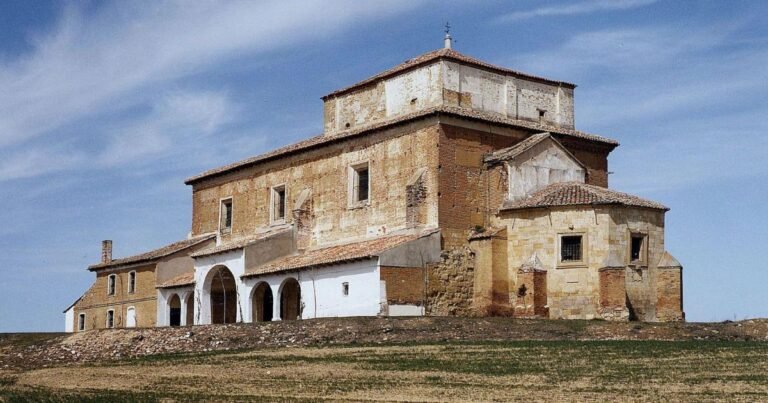
Located one kilometre from the town centre, this 18th-century hermitage stands on Romanesque remains. It houses a polychrome carving of the Virgin and a 16th-century bust of Santiago Peregrino (St James the Pilgrim). Its origin dates back to a flood in 1101 that swept in an image of the Virgin, considered miraculous by the inhabitants.
Other Monuments of Interest
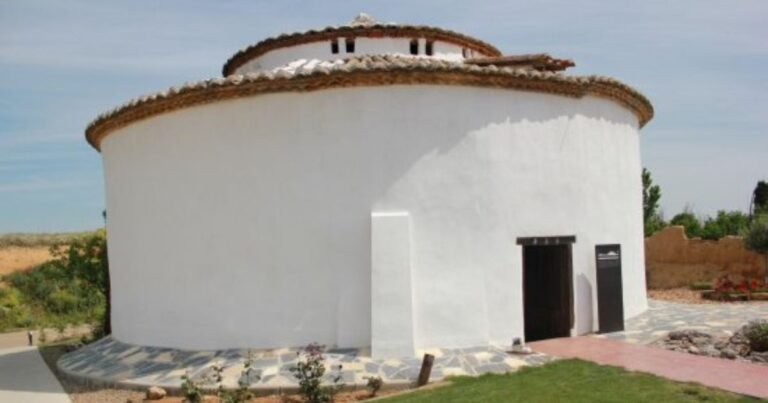
- Palomar del Camino: Espacio museístico que refleja la arquitectura tradicional de la zona.
- Palacio de los Condes de Villasirga: Edificio del siglo XVI convertido en casa consistorial, con cabezas góticas en su fachada.
- Hospital Real de las Tiendas o de Santiago: Restos del antiguo hospital de peregrinos, con un escudo de la Cruz de Santiago.
- Antigua Parroquia de San Pedro: Iglesia del siglo XII, absorbida por Santa María la Blanca en 1560.
Traditions and Popular Culture of Villalcázar de Sirga
Rigodón de Villasirga
The rigodón is the traditional dance of Villalcázar de Sirga, performed every 5 August in honour of the Virgen Blanca. Eight couples, accompanied by an accordionist, perform a series of steps and bows in a ritual symbolising the unity and devotion of the village.
Natural Environment and Climate
The municipality has a continentalised Mediterranean climate, with cold winters and warm, dry summers. Rainfall is scarce and concentrated in autumn and winter. The Tierra de Campos landscape, characterised by broad plains and cereal fields, offers a serene setting conducive to pilgrims’ reflection and rest.
Villalcázar de Sirga
Villalcázar de Sirga is a site of immeasurable historical and spiritual value on the Camino de Santiago. Its rich Templar heritage, artistic patrimony and living traditions make it a destination that transcends time, offering visitors a unique experience of connection with history and faith.
| Country | Spain | |
|---|---|---|
| Autonomous community | Castile and León | |
| Province | Provincia de Palencia | |
| Region | Tierra de Campos | |
| Judicial district | Carrión de los Condes | |
| Location | 42°19′00″N 4°32′35″W | |
| Altitude | 808 m | |
| Area | 25.41 km² | |
| Population | 174 inhab. (2023) | |
| Density | 6.77 inhab./km² | |
| Demonym | alcazareño, alcazareña | |
| Postal code | 34449 | |
| Telephone prefix | 979 | |
| Website | www.villalcazardesirga.es | |