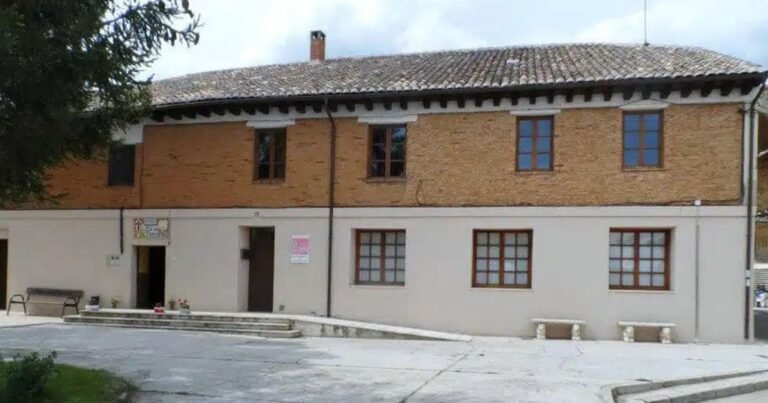


The village
At 830 metres above sea level and with a municipal area of 25 km², Villalcázar borders San Mamés de Campos, Arconada, Villovieco, Lomas, Villarmentero de Campos and Carrión de los Condes. The two variants of the Camino that leave Población de Campos meet here.
What to See in Villalcázar de Sirga?



History
The name
The name brings together three words: «villa», town, «alcázar» (from the Arabic al-qasr, fortress) and «sirga», the path running alongside a river. For centuries it was known simply as Villasirga.
The Templars
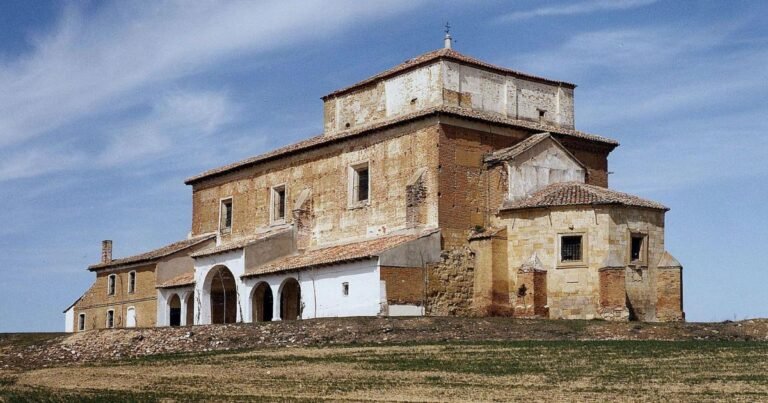
Tradition attributes to the Order of the Temple the building, in the 13th century, of the Church of Santa María la Blanca, church and fortress at once, which also took in pilgrims. After the dissolution of the Temple in 1312 the town passed to the Order of Santiago.
The miracles of the Cantigas
The Virgen Blanca of Villasirga was so famous in the 13th century that Alfonso X devoted a dozen of his Cantigas de Santa María to her, with miracles that drew pilgrims from all over Europe and made the sanctuary an almost obligatory stop.
Heritage
Church of Santa María la Blanca
It is one of the great churches of the Camino, in the transition from Romanesque to Gothic. The south portal, with a frieze of the Pantocrator and the apostles, is spectacular. Inside, the chapel of Santiago holds the polychrome Gothic tombs of the infante Don Felipe, brother of Alfonso X, and his wife Doña Inés Rodríguez Girón.
Other places of interest
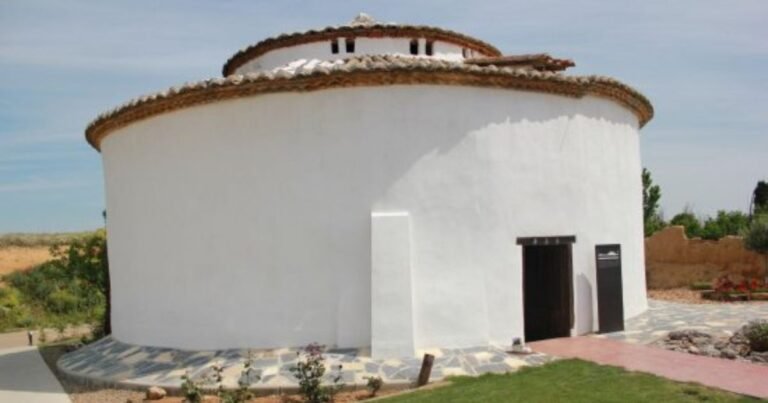
- Palomar del Camino: a traditional dovecote turned into a small museum space.
- Palacio de los Condes de Villasirga: a 16th-century noble house, now the town hall.
- Hospital Real de las Tiendas or de Santiago: remains of the old pilgrim hospital, with the cross of Saint James on its coat of arms.
- Antigua Parroquia de San Pedro: a 12th-century church that was joined to Santa María la Blanca in 1560.
Traditions
The rigodón
The village’s own dance is the rigodón, danced by eight couples in honour of the Virgen Blanca to the sound of an accordion, with steps and bows handed down from generation to generation.
Landscape and climate
The climate is continental, with cold winters and dry summers. All around stretches the cereal plain of Tierra de Campos, an open landscape that in summer makes an early start essential.
In short
Villalcázar de Sirga is a stop not to be missed: Santa María la Blanca, the tombs of the infante Don Felipe and the echo of the Cantigas are well worth a pause before reaching Carrión.
| Country | Spain | |
|---|---|---|
| Autonomous community | Castile and León | |
| Province | Palencia Province | |
| Region | Tierra de Campos | |
| Judicial district | Carrión de los Condes | |
| Location | 42°19′00″N 4°32′35″W | |
| Altitude | 808 m | |
| Area | 25.41 km² | |
| Population | 174 inhab. (2023) | |
| Density | 6.77 inhab./km² | |
| Demonym | alcazareño, alcazareña | |
| Postal code | 34449 | |
| Telephone prefix | 979 | |
| Website | www.villalcazardesirga.es | |