

Services
As the district centre, Carrión de los Condes has everything the pilgrim needs:
What are the locals called?
Its people are carrioneses (masculine) or carrionesas (feminine).
What to see in Carrión de los Condes?

History
Origins and the Middle Ages
There were Vaccaean and Roman settlements, but Carrión grew in the Middle Ages as the seat of the powerful Banu Gómez counts, from whom it takes its suffix «de los Condes», of the counts. It was one of the important towns of the Kingdom of León and later of Castile: a council was held here in 1130, and the Cantar de mio Cid places the infantes of Carrión here. At its height it had a dozen churches and several pilgrim hospitals.
The Early Modern and modern era
Over time it lost weight to Palencia, but it remained the head of a judicial district and the centre of the district. At the end of the 19th century it was granted the title of city.
Heritage
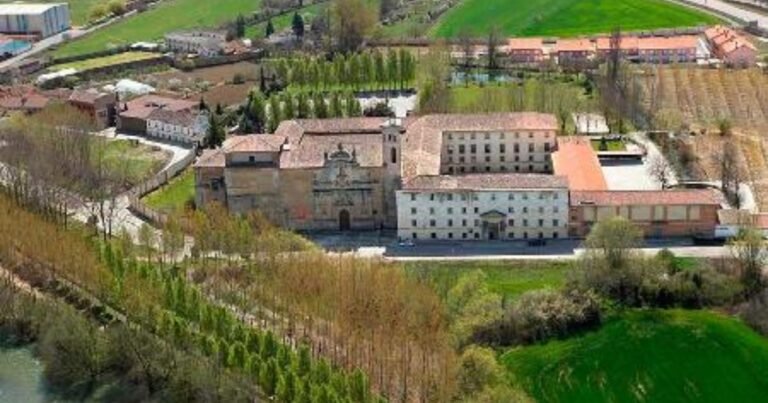
Monastery of San Zoilo
The Monastery of Saint Zoilus, Benedictine and founded in the 11th century, lies on the other side of the river. Its Renaissance cloister, with vaults full of medallions, is a marvel. For centuries it took in pilgrims; today it is a hotel and holds the tombs of the counts.
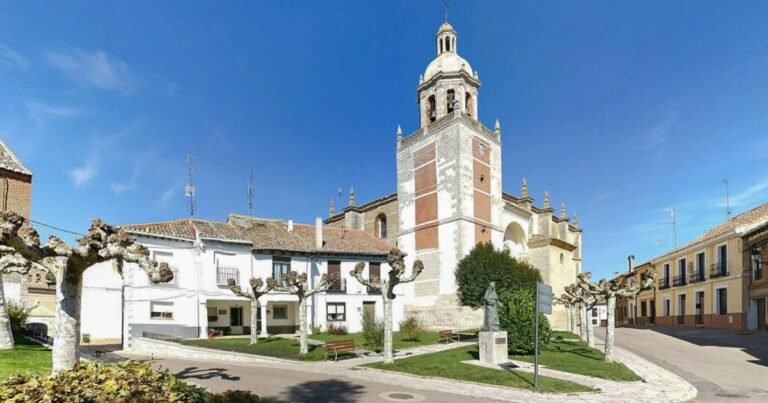
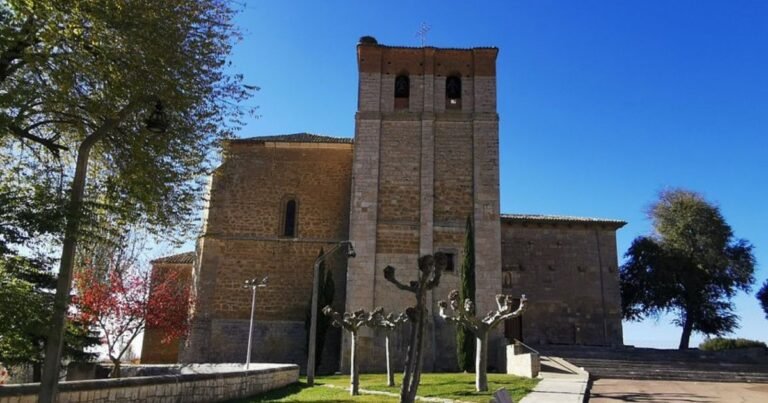
Church of Santa María del Camino
The Church of Saint Mary of the Way, 12th-century Romanesque, welcomes the pilgrim at the entrance to the town. On its portal, some bulls recall the legend of the tribute of the hundred maidens, who according to tradition were spared being handed over to the Muslims thanks to the Virgin.
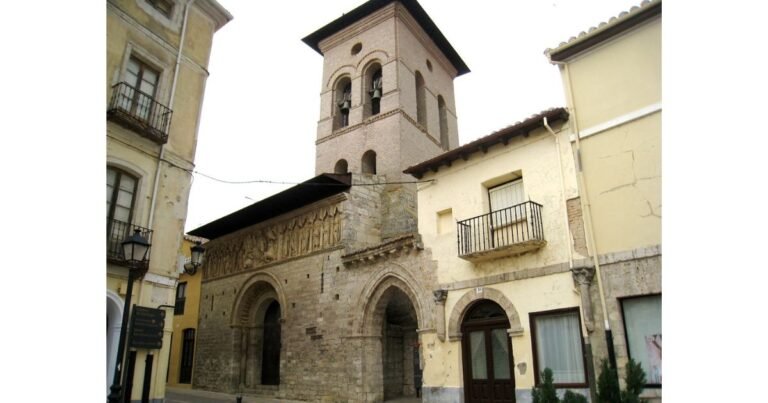
Church of Santiago
Its facade holds one of the great friezes of Spanish Romanesque: a Pantocrator surrounded by the apostles and by figures representing the trades of the time. Inside there is a small museum of sacred art.
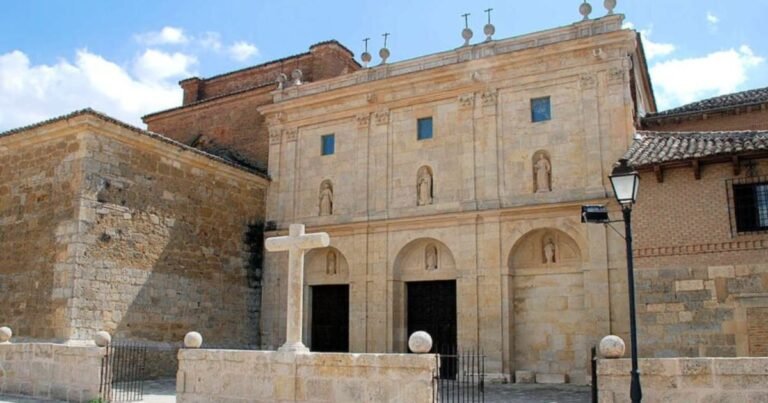
Monastery of Santa Clara
The 13th-century Monastery of Saint Clare of Assisi is still home to the Poor Clares. It has a museum of sacred art, and tradition says that Saint Francis of Assisi stayed here on his pilgrimage to Santiago.
Festivities
Corpus Christi
The streets along the procession route are covered with carpets of flowers. It is a festival of Regional Tourist Interest.
Saint Zoilus
The patron saint’s festivities bring processions, music and cultural activities.
Holy Week
The local brotherhoods keep up processions with a long tradition.
Carrión on the Camino
On the Camino Frances, Carrión is the end of a stage and a place to prepare: on the way out begin the 17 km without services to Calzadilla de la Cueza, so pilgrims usually stock up on water and food here. The religious hostels are famous for their welcome and their singing.
The river and the surroundings
The Carrión river runs through the town. El Plantío park, on the riverbank, is the best place to rest in the shade, and walking and cycling routes leave Carrión for the surrounding area.
In short
Carrión de los Condes is one of the great stops on the Camino in Palencia: first-rate Romanesque, a monastery that was the pantheon of counts and a pilgrim atmosphere you can feel in every street.
| Country | Spain | |
|---|---|---|
| Autonomous community | Castile and León | |
| Province | Province of Palencia | |
| Comarca | Tierra de Campos | |
| Judicial district | Carrión de los Condes | |
| Association | Camino de Santiago | |
| Location | 42°20′20″N 4°36′07″W | |
| Elevation | 838 m | |
| Area | 63.37 km² | |
| Population centres | Carrión de los Condes Torre de los Molinos | |
| Population | 2005 inh. (2023) | |
| Density | 33.42 inh./km² | |
| Demonym | carrionés, carrionesa | |
| Postal code | 34120 | |
| Twinned with | El pueblo de Filipinas Carrión de los Céspedes Carrión de Calatrava | |
| Patron | Saint Zoilus | |
| Patroness | Nuestra Señora de Belén | |
| Website | www.carriondeloscondes.org | |