San Telmo: Patron Saint of Sailors and His Connection to the Camino de Santiago
Did you know that San Telmo, besides being the patron saint of sailors, has a special connection to the Camino de Santiago? Join us on this journey through the life of Pedro González Telmo and discover his legacy on the Camino Frances.
Origins of San Telmo
Birth and Education
Pedro González, popularly known as San Telmo, was born around 9 March 1190 in Frómista, a town in the Province of Palencia.
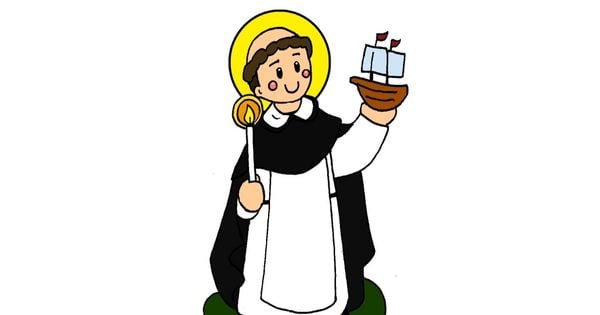
He came from a noble family and received a distinguished education, studying at the University of Palencia. Thanks to the influence of his uncle, Bishop Tello Téllez de Meneses, he was appointed dean of Palencia Cathedral at a young age. However, an incident during his investiture led him to reconsider his life and join the Order of Preachers, known as the Dominicans.
Religious Career and Apostolate
Royal Chaplain and Preacher
As a Dominican friar, Pedro stood out for his eloquence and fervour in preaching. His reputation reached the ears of King Ferdinand III of Castile, who appointed him royal chaplain and confessor. He accompanied the monarch on military campaigns, taking part in the reconquest of cities such as Córdoba and Seville, where he converted mosques into churches.
Mission in Northern Spain and Portugal
After his service at court, Pedro decided to devote himself to evangelisation in regions of northern Spain and Portugal. He focused especially on fishing and sailing communities, offering them spiritual and material support. His closeness to these groups earned him recognition as their patron and protector.
Death and Cult of San Telmo
Pedro González Telmo died on 15 April 1246 in Tuy, Galicia, while on pilgrimage towards the tomb of the Apostle Santiago. He was buried in Tuy Cathedral, and his tomb became a place of pilgrimage. Over the years, numerous miracles were attributed to him, especially those related to protecting sailors at sea.
San Telmo and the Camino de Santiago Frances
Frómista: A Key Point on the Camino Frances
Frómista, San Telmo’s birthplace, is a notable stop on the Camino Frances. This town is famous for its impressive Romanesque architecture, particularly the Church of San Martín. Pilgrims passing through Frómista can sense San Telmo’s historical presence and reflect on his legacy.
Tuy: City of Final Rest
Tuy, where San Telmo spent his final days, is another significant point on the Camino Portugués to Santiago. Tuy Cathedral houses his tomb, making it a place of veneration for pilgrims and sailors seeking his intercession. citeturn0search0
The Fire of San Telmo (known in English as St. Elmo’s Fire): Between Science and Faith
One of the most intriguing phenomena associated with San Telmo is the “Fire of San Telmo”. This is a blue or violet glow that appears on pointed objects during electrical storms, especially on ships’ masts. Although science explains it as a corona discharge, sailors historically interpreted it as a sign of divine protection from their patron saint, San Telmo.
San Telmo
San Telmo is an emblematic figure who unites the spirituality of the Camino de Santiago with maritime tradition. His life devoted to service and his connection with pilgrims and sailors make him a symbol of protection and guidance. Walking the Camino Frances, especially through towns such as Frómista and Tuy, pilgrims have the opportunity to draw closer to his legacy and find inspiration in his example.
We hope this content is useful for your website and enriches the experience of pilgrims and visitors interested in the figure of San Telmo.
San Telmo
| Birth | c. 9 March 1190 – Frómista, Province of Palencia |
|---|---|
| Death | 15 April 1246 – Tuy |
| Nationality | Spanish |
| Religion | Catholic Church |
| Occupation | Dominican friar |
| Beatification | 1254 by Pope Innocent IV |
| Canonisation | Has not been officially canonised. On 13 December 1741, his cult was confirmed as blessed by Benedict XIV. |
| Feast day | 15 April or the Monday after the second week of Easter |
| Venerated in | Catholic Church |
| Patronage | Sailors, Tui, Diocese of Tui-Vigo, Frómista |
| Religious order | Order of Preachers |
San Telmo Frequently Asked Questions (FAQs)
- Why is San Telmo considered the patron saint of sailors? San Telmo devoted much of his life to providing spiritual support to sailors and fishermen, earning their devotion and recognition as their protector. citeturn0search0
- What is San Telmo’s connection to the Camino de Santiago? He was born in Frómista, an important stop on the Camino Frances, and died in Tuy, a key city on the Camino Portugués, establishing a direct connection with the pilgrimage route. citeturn0search0
- What is the Fire of San Telmo? It is an electrical phenomenon that produces a glow on pointed objects during storms, historically seen by sailors as a sign of San Telmo’s protection. It is known in English as St. Elmo’s Fire. citeturn0search2
- Where are the main celebrations in honour of San Telmo held? The main festivities take place in Frómista and Tuy, cities linked to his life and legacy. citeturn0search0
- Has San Telmo been officially canonised? Although he is venerated as a saint, he was officially beatified by Pope Benedict XIV in 1741 and has not yet been formally canonised. citeturn0search0
See also:
