San Fermin de Amiens
San Fermin de Amiens (in Latin, Firminus) (Pamplona, c. 272-Amiens, 25 September 303) was a Christian missionary, the first bishop of Amiens, whose church he had built, and by oral tradition is also considered the first bishop of Pamplona, although there is no documentary evidence for this and it is even questioned whether he existed.
San Fermin de Amiens
He is the patron saint of Amiens and Lesaca, and patron saint of the diocese of Pamplona-Tudela, and by Papal Brief of 1657, co-patron saint of Navarra together with San Francisco Javier (who, more precisely, is formally the patron saint of the Deputation of the Kingdom of Navarre by an agreement adopted after his canonisation, 12 March 1622, and solemnly sworn on 2 August that same year).
He is venerated on 7 July, and his feast is celebrated locally in Lesaca, with its patron festivities, and in Pamplona, with the start of the Fiestas de San Fermin (San Fermin festival).
Between legend and reality: San Fermin
According to tradition, he was born in the 3rd century in Pompaelo (present-day Pamplona). He was the son of a pagan senator named Firmo, probably a senior official in the Roman administration of Pamplona, and of a noblewoman named Eugenia.
The preaching of San Honesto, who had travelled to the peninsula after being miraculously freed from his imprisonment in Carcassonne, moved his parents, who nevertheless did not convert until they heard San Saturnino de Tolosa. The saint is said to have baptised Fermin and his parents at the place popularly known today as the pocico de San Cernin.
Under the tutelage of the young Honesto, Fermin learned religion and the art of evangelisation. At the age of 18 he was sent to Tolosa, where he was ordained. After preaching in Navarra, he travelled to Gaul (present-day France) and settled in Amiens. After organising the local church, he was appointed bishop at the age of 24. Official opposition to Christian doctrine led to his imprisonment, where, after refusing to stop preaching, he was beheaded.
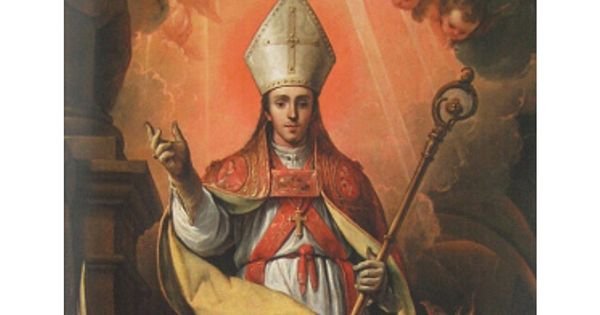
In 1186, Bishop Pedro de Paris brought a relic of Fermin’s head from Amiens to Pamplona.
Today his feast is celebrated on 7 July. In Pamplona it is commemorated with internationally famous festivities, the Sanfermines, which feature the encierros (bull runs), as well as bullfights belonging to the bullfighting fair, one of the most prestigious events on the world bullfighting calendar.
He is also the patron saint of the guilds of coopers, wine merchants and bakers.
San Fermin
| Birth name | Fermin |
|---|---|
| Born | c. 272 Pompaelo, Hispania, Roman Empire |
| Died | c. 303 Amiens, Gaul, Roman Empire |
| Cause of death | Decapitation |
| Religion | Catholic Church |
| Occupation | Catholic priest and Christian clergyman |
| Positions held | Bishop of Amiens |
| Canonisation | Hieromartyr and Catholic saint |
| Feast day | 25 September, 7 July (official) |
| Attributes | Bishop in episcopal vestments; spear |
| Venerated in | Catholic Church |
| Patronage | Navarra; Lesaca Amiens Guilds of coopers Wine merchants Bakers |
See also: