Belorado
Belorado stands out as a leading Jacobean town in the east of the Province of Burgos (Castile and León), 47 km from the provincial capital, in the comarca of Montes de Oca and at the foot of the Sierra de la Demanda. It sits in the valley of the Tirón river, a tributary of the Ebro, and serves as the historic capital of La Riojilla Burgalesa. Its location explains its character as a crossroads: a natural bridge between the Meseta and the Ebro Valley, and an obligatory point of passage on the Camino de Santiago Frances.
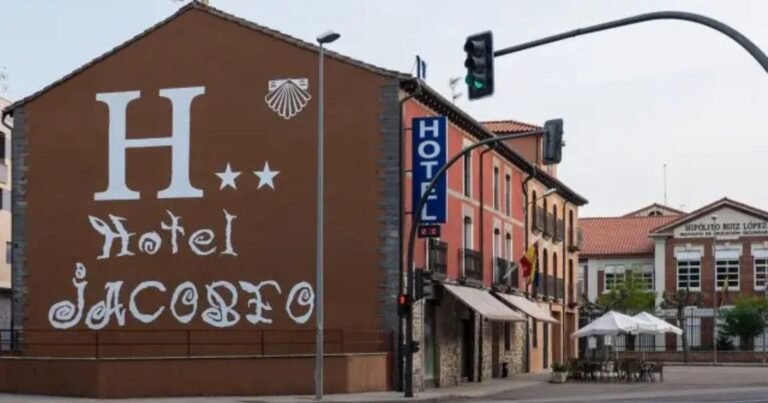
Accommodation in Belorado


Belorado on the Camino de Santiago Frances
As a Jacobean hub, Belorado links the route between Redecilla del Camino, Castildelgado, Viloria de Rioja and Villamayor del Río and Villafranca Montes de Oca. The stage combines urban stretches, the Tirón river meadows and gentle slopes towards the Montes de Ayago. The town has the Albergue Municipal El Corro, open all year round, several private hostels, hotels, guesthouses, bars and restaurants, ensuring rest and supplies. The historic centre is dotted with Jacobean signage, fountains and essential shops, keeping alive a tradition of hospitality documented since the Middle Ages.
Hostels in Belorado
Demonym of Belorado
The demonym of Belorado is beliforano or beliforana.
Historical Overview: From Autrigonian Oppidum to Chartered Town
Belorado’s roots go back to Celtic (Autrigonian) settlements and an early Roman outpost. The medieval town grew up in the shadow of a hilltop castle that watched over the natural Tirón corridor. In 1116, Alfonso I the Battler granted the town its charter (fuero), a boost that established its market and its role as a border town between Castile and Navarre. Throughout the 13th century, under Alfonso VIII and Alfonso X the Wise, the town reached its economic and legal peak, with a documented town council seal, fairs and a thriving Jewish quarter at the foot of the hill. Over the following centuries, the lordship of the Constables of Castile marked the Early Modern period, while the contemporary era has established Belorado as a hub of services for the surrounding area.
What to See in Belorado?
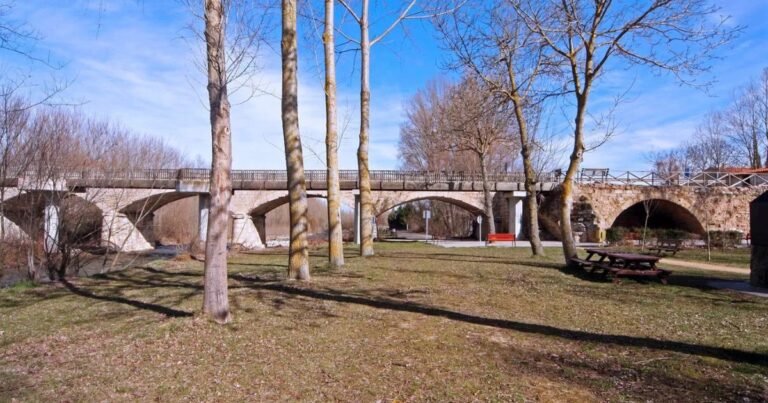
Historic Centre: Medieval Layout, Passageways and Arcaded Square
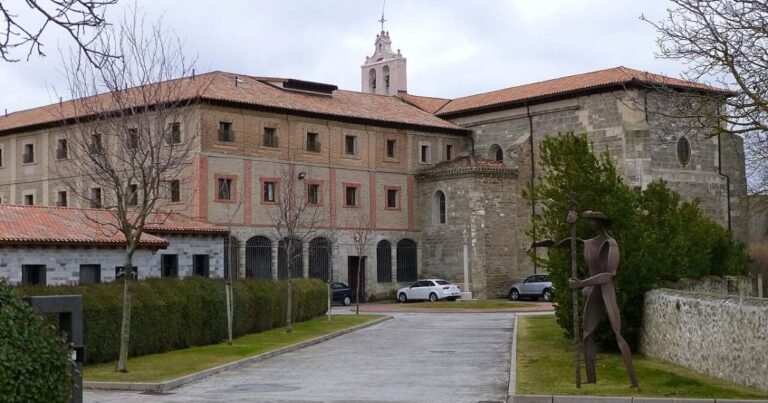
The urban route allows visitors to read the past in its narrow streets and passageways that branch off the old walled layout. The Plaza Mayor, arcaded and typically Castilian, still hosts the age-old Monday market, a custom rooted in medieval privileges. Bars, shops and festive events are concentrated here, making it the ideal spot for pilgrims to rest before tackling the following kilometres.
Castle and Walls: Watchtower of the Historic Frontier
Remains of the old Belorado castle survive along with an imposing earthen wall that stands out against the town’s skyline. This stronghold, already documented during the Reconquest, controlled access to the valley and formed part of the town’s defences. At its foot once lay the Jewish quarter, whose Corro district retains picturesque echoes of that past. The medieval wall remains complete the defensive profile and are well worth the short climb for a privileged view over the Tirón meadows and the mountains.
Churches and Chapels: Santa María, San Pedro and Belén
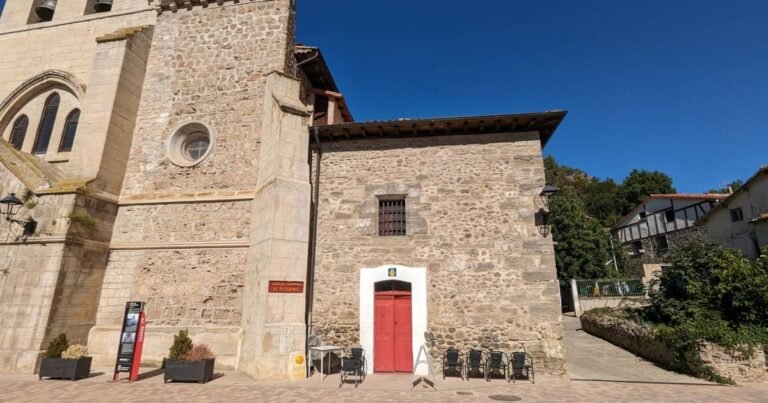
Chapel of Nuestra Señora de Belén: the only remaining trace of the old pilgrims’ hospital; its 18th-century reconstruction preserves Belorado’s charitable heritage, key to understanding the Camino’s network of care for pilgrims.
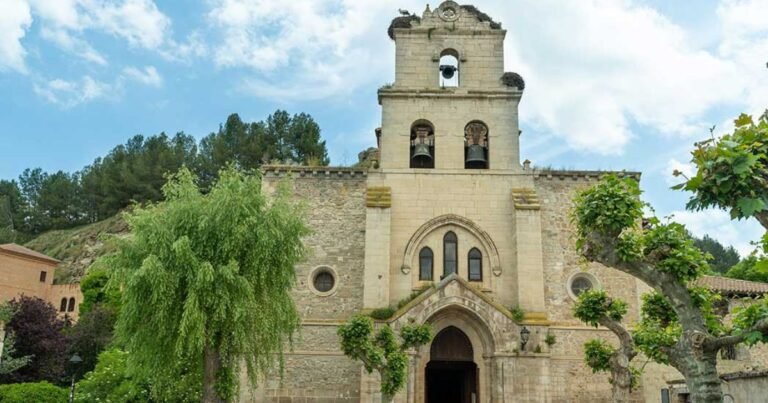
Church of Santa María: a landmark church with a Jacobean chapel and a 16th-century altarpiece of notable quality. It houses tombs of interest and devotional works connected to the history of the Camino.
Church of San Pedro (17th century): classicist architecture reflecting the town’s parish continuity through the Early Modern period.
Local Gastronomy of Belorado: Cuisine of Valleys and Mountains
Belorado’s culinary repertoire combines dryland and upland produce: cereals (wheat and traditional artisan preparations), seasonal garden vegetables, wild mushrooms from the Demanda, small game, home-cured cold meats and Castilian lamb. The proximity of La Rioja multiplies the wine-tourism options, with red and white wines that pair well with stews, roasts and everyday bar food designed for pilgrims: energising set menus, tapas and hearty stews.
Services for Pilgrims: Where to Sleep, Where to Eat, What to Expect
Belorado offers a diverse range of tourist facilities:
- Alojamientos: Albergue Municipal El Corro (abierto todo el año), albergues privados, hoteles y pensiones.
- Restauración: bares, restaurantes y cafés en torno a la Plaza Mayor y calles adyacentes.
- Comercios y asistencia: supermercados, farmacias, centro de salud con urgencias, cajeros y pequeño comercio especializado que facilita logística (piensos energéticos, curas leves, reabastecimiento).
Se recomienda reservar en temporada alta (mayo–septiembre) y consultar horarios de museo, minas y templos para integrar cultura y descanso sin prisas.
Belorado
Those walking the Camino Frances find in Belorado a complete stop: history carved in stone, well-attended rest, surprising culture and nearby nature. From the Plaza Mayor to the castle, from Santa María to the Museum of Radiocommunication, from the Puras mines to the banks of the Tirón, the town offers just the right mix of authenticity and services that makes a stage memorable.
| Country | Spain | |
|---|---|---|
| Autonomous community | Castile and León | |
| Province | Province of Burgos | |
| Comarca | Montes de Oca | |
| Judicial district | Briviesca | |
| Municipality | Belorado | |
| Mancomunidad | Las Lomas de Bureba Oca-Tirón | |
| Location | 42°25′14″N 3°11′25″W | |
| Elevation | 772 m (min: 707, max: 1184 at Cabeza de Muladardo) | |
| Area | 133.41 km² | |
| Demonym | beliforano, beliforana | |
| Predominant language | Spanish | |
| Postal code | 09250 | |
| Dialling code | 947 | |
| Patron saint | San Vitores | |
| Patron saint (female) | Virgen de Belén | |
| Website | www.belorado.org | |