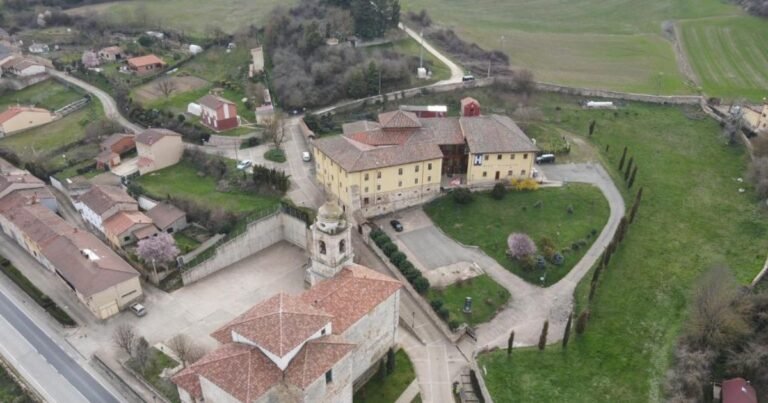

What to see in Villafranca Montes de Oca?
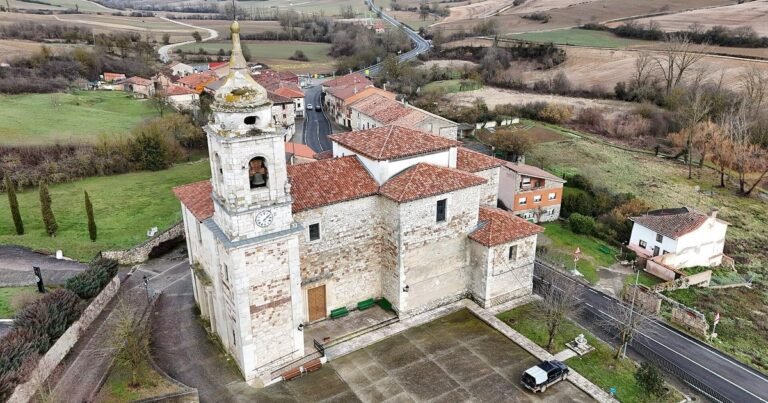
Villafranca on the Camino Frances
Villafranca closes the stage that comes from Belorado and is the last stop before the hard crossing of the Montes de Oca to San Juan de Ortega. For the medieval pilgrim it was a kind of threshold: here you regained your strength before some lonely hills with a bad reputation, which is why the town has a tradition of hospitality documented since the Middle Ages.
Between valley and mountains
The Oca river, a tributary of the Ebro, crosses the village from south to north and gives its name to the town and the whole district. All around are oak, pine and beech woods, dotted with cereal fields, with wildlife such as wild boar, roe deer, rabbits, partridges and waterfowl. The mountain climate brings mild summers and harsh, snowy winters that shape the life of the village and the fields.
History: from Auca to seat of bishops
- Roman times: the city of Auca, a little south of the present village.
- 8th century: destroyed in the Muslim invasion, the population gradually moved north, into the Oca valley.
- Middle Ages: Villafranca was the seat of a bishopric until the diocese moved to Gamonal in 1075, before reaching Burgos.
- 14th century: pilgrim hospitals multiply, led by that of San Antonio Abad (1380).
- Early Modern period: a royal town and head of the Hermandad de Villafranca Montes de Oca, in the Juarros district.
- 19th century: with the end of the Ancien Régime, a constitutional municipality in the district of Belorado.
The village today
Around 120 people live here, fewer in winter. The village lives from farming, livestock and forestry, and increasingly from passing pilgrims.
Heritage
Church of Saint James the Apostle
Built at the end of the 18th century, it is the parish church. Beside the entrance, a surprising giant tropical clam shell (Tridacna gigas) of about 65 kilos serves as a holy water font. Inside there are Baroque altarpieces and images of devotion to Saint James; it is usually open at service times and, in summer, with pilgrims in mind.
Hermitage of San Felices
A kilometre from the village are the remains of this old pre-Romanesque church, which tradition links to Count Diego Porcelos, founder of Burgos, said to be buried here.
Hermitage of Oca
It is the great place of popular devotion and the setting for the August pilgrimage, with a procession, dances and an open-air meal.
Hospital of San Antonio Abad
It was founded in 1380 to look after pilgrims and travellers before they crossed the hills, and its building still provides accommodation today, a continuity few places on the Camino can boast of.
Fountain of San Indalecio
By the river, this fountain is linked to the legend of the martyrdom of San Indalecio, one of the apostolic men. It is a usual stop to cool off and fill your water bottle.
Memorials
Next to the church is the Monument to the Farmer, a tribute to the farming life of the district. And about three kilometres on, already in the hills, at the highest point of the Camino in the province, a monument remembers those shot during the Civil War, with a phrase that makes you think: «Their death was not in vain, their execution was».
Festivities
- 17 January, San Antón: blessing of animals and a festive atmosphere.
- August, pilgrimage to the hermitage of Oca: procession, dances, an open-air dance and meals among groups of friends.
These are the events that keep the village together throughout the year.
Services for pilgrims
For a small village, Villafranca has bars, restaurants, rural houses and guesthouses, as well as a shop or two. The N-120 road runs along the main street and traffic is constant, something that should change when the A-12 motorway is completed. Hospitality is still its hallmark.
Nature in the Montes de Oca
The Montes de Oca have paths among oaks, pines and beeches, with viewpoints and very quiet corners. The contrast between the cereal plain left behind and these woods makes the climb one of the most beautiful, and also most demanding, stretches of the Camino in Burgos.
Tips
- Best time: spring and autumn, with pleasant temperatures and the woods at their best.
- Access: via the N-120, between Logroño and Burgos.
- For pilgrims: fill up with water at the fountain of San Indalecio, step into the church of Saint James and leave well rested, because the climb to San Juan de Ortega is long and has no services.
In short
Villafranca Montes de Oca is a small village with enormous weight in the history of the Camino: a former seat of bishops, a pilgrim hospital since 1380 and the gateway to the Montes de Oca. Few stops on the Camino Frances sum up centuries of hospitality so well.
| Country | Spain | |
|---|---|---|
| Autonomous community | Castilla y Leon | |
| Province | Burgos Province | |
| Comarca | Montes de Oca | |
| Judicial district | Briviesca | |
| Municipality | Villafranca Montes de Oca | |
| Association of municipalities | Oca-Tirón | |
| Location | 42°23′11″N 3°18′33″W | |
| Elevation | 948 m | |
| Area | 52.45 km² | |
| Population | 122 inhabitants (2024) | |
| Density | 2.33 inhabitants/km² | |
| Demonym | aucense | |
| Postal code | 09257 | |
| Telephone prefix | 947 | |
| Mayor (2023) | Jimena Barrio Guerra (Vecinos por Villafranca) | |
| Website | www.villafrancamontesdeoca.es | |