
San Roque: The Patron Saint and Protector of Pilgrims on the Camino de Santiago Francés
When walking the Camino de Santiago Francés, it is common to come across references to various saints who have shaped the history of the pilgrimage. One of the most emblematic is San Roque, known for his dedication to the sick and his role as protector of pilgrims. But who was San Roque really, and what is his connection to the Camino de Santiago? Join us on this journey through his life, miracles, and legacy.
Who Was San Roque?
Origins and Youth
San Roque was born in Montpellier, France, around the year 1295. Coming from a well-off family, he is said to have shown signs of holiness from birth, such as a mark in the shape of a red cross on his chest. After the death of his parents, he decided to sell all his possessions, distribute the money among the poor, and embark on a life of pilgrimage and service to those in need.
Pilgrimage to Rome and Service to the Sick
During his pilgrimage to Rome, San Roque came upon cities devastated by the plague. Moved by his faith and compassion, he devoted himself to caring for the sick, achieving, according to tradition, miraculous cures simply by making the sign of the cross over those afflicted.
The Dog of San Roque: A Faithful Companion
Stricken with the plague and seeking not to infect others, San Roque withdrew into a forest. There, according to legend, a dog began bringing him bread daily and licking his wounds, contributing to his recovery. This act of fidelity has immortalised the dog as an inseparable symbol of San Roque in Christian art and iconography.
San Roque and the Camino de Santiago Francés
Patron Saint of Pilgrims
Although there is no evidence that San Roque ever made the pilgrimage to Santiago de Compostela, his life of pilgrimage and service made him a model for walkers. He is recognised as one of the patron saints of pilgrims, and his figure is venerated along various Jacobean routes.
Alto de San Roque: A Tribute on the Camino
At Alto de San Roque, near O Cebreiro in the Provincia de Lugo in Galicia, stands an imposing bronze statue of a pilgrim battling the wind, the work of sculptor José María Acuña.
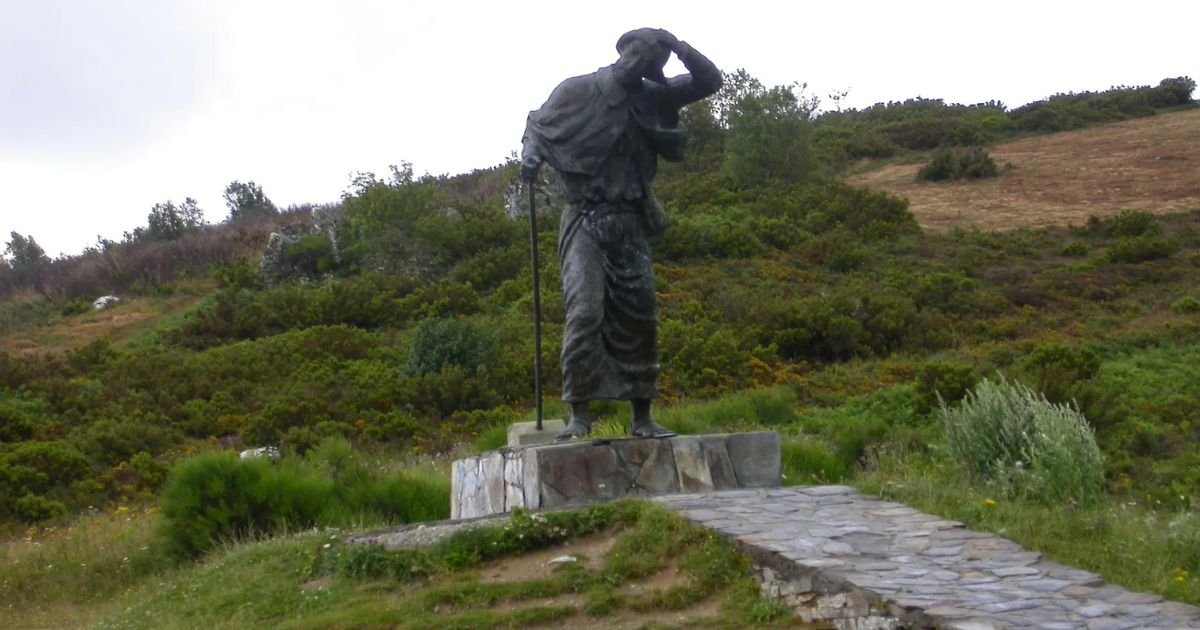


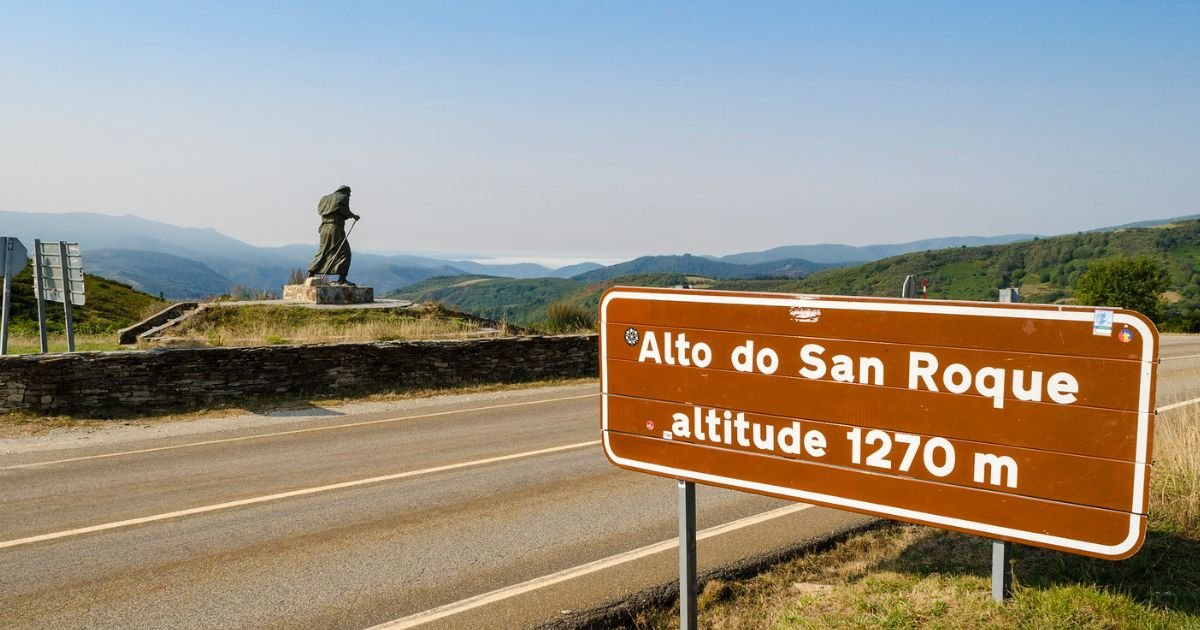
This sculpture, installed during the Xacobeo Holy Year of 1993, has become an emblematic symbol of the Camino Francés and a landmark for pilgrims passing through the region.
Iconography of San Roque on the Camino
It is common to find depictions of San Roque in churches, hostels, and monuments along the Camino Francés. He is generally shown as a pilgrim with a staff, hat, and cape, pointing to a sore on his leg and accompanied by the faithful dog that saved his life. This iconography reinforces his connection with walkers and his role as protector against illness.
The Relevance of San Roque for Modern Pilgrims
Protector in Times of Illness
San Roque’s story takes on special significance in times of health crises. His dedication to the sick and his own experience with the plague have established him as an intercessor in times of epidemics. Many pilgrims invoke his protection to stay healthy during the arduous journey of the Camino.
An Inspiration of Service and Humility
Beyond his role as a healer, San Roque’s life is a testament to humility, selflessness, and disinterested service. For pilgrims, his example serves as a reminder of the importance of solidarity and mutual support on the Camino.
Festivals and Celebrations in Honour of San Roque
The feast day of San Roque is celebrated on 16 August in numerous towns in Spain and other countries. These festivities usually include processions, masses, and cultural events highlighting his legacy. In the context of the Camino de Santiago, some towns along the route hold special celebrations in his honour.
The Influence of San Roque on the Jacobean Routes
Although devotion to San Roque is not exclusive to the Camino Francés, his influence extends throughout the whole network of routes to the Catedral de Santiago, especially in rural areas and villages where pilgrims rest. Numerous historic hospitals, hermitages, and hostels bore his name, functioning as shelters for travellers in need, which cemented his image as guardian of those who walk in faith.
Hospitals of San Roque
During the Middle Ages, numerous “hospitals of San Roque” were built in France, Spain, and Italy. These provided not only medical care but also spiritual shelter. Along many stretches of the Camino Francés — such as in Navarrete, Carrión de los Condes, or Sarria — there are traces or references to old spaces dedicated to the saint, where pilgrims could receive physical and moral assistance.
San Roque and Popular Devotion
Attributed Miracles
Oral tradition along the Camino includes stories of healings, “miraculous encounters”, and unexpected cures following prayers to San Roque. This miraculous dimension, reinforced by his past as a healer of the plague, made him one of the saints most invoked by walkers facing ailments, extreme fatigue, or sudden health problems along the route.
Amulets and Medals of the Saint
It is not uncommon to find pilgrims carrying medals bearing the image of San Roque as a symbol of protection. In many religious-goods shops or tourist spots along the Camino Francés, these medals are offered together with a short prayer or holy card. They usually include the saint with his staff, his dog, and the sore on his leg as symbols of suffering, loyalty, and faith in healing.
Lessons from the Camino: What San Roque Teaches Us Today
In an increasingly individualistic world, San Roque reminds us of the importance of service to others, humility, and total devotion to one’s neighbour. In the context of the Camino de Santiago, where every step is also a spiritual quest, his example can be interpreted as a call to stop, look around, and lend a hand to whoever is walking beside us. In modern words: “walk the path, but don’t just watch your feet”.
Moreover, his life also embodies resilience. Facing the plague, being cast out, surviving in solitude and without means… and still continuing to help others. Is that not the very same spirit of the pilgrim who overcomes blisters, fatigue, and loneliness to keep walking towards their goal?
The Pilgrim’s Prayer to San Roque
“Oh glorious San Roque, pilgrim of faith and protector of the sick, accompany us on this path. Give us strength to carry on, health in every step, and compassion to help those who also walk. Be our guide, our comfort, and our example. Amen.”
San Roque
San Roque, with his life of pilgrimage, service to the sick, and attributed miracles, has become a central figure in Jacobean tradition. His presence on the Camino de Santiago Francés, both in monuments and in popular devotion, offers pilgrims a source of inspiration and protection. Walking the Camino, remembering his story invites us to reflect on the true spirit of pilgrimage: devotion, faith, and solidarity.
Frequently Asked Questions about San Roque and His Connection to the Camino de Santiago
1. Why is San Roque considered the patron saint of pilgrims?
Although he never made the pilgrimage to Santiago, his life of pilgrimage and service to the sick made him a model for walkers, and he is recognised as the patron saint of pilgrims.
2. Where is the pilgrim statue at Alto de San Roque located?
The statue is located near O Cebreiro, in Galicia, and depicts a pilgrim facing into the wind, symbolising perseverance on the Camino.
3. What does the dog symbolise in depictions of San Roque?
The dog symbolises fidelity and divine help, recalling the dog that, according to legend, fed and helped him during his illness.
4. How is the feast of San Roque celebrated on the Camino de Santiago?
On 16 August, various towns along the Camino hold processions, masses, and cultural events in honour of San Ro