Foncebadón
Perched high in Provincia de León, more than 1,440 metres above sea level, Foncebadón emerges as a jewel rescued from oblivion, set within the legendary region of Maragatería. This settlement, once almost uninhabited, has recovered its pulse thanks to the constant flow of pilgrims on the Camino Frances, who find here not only rest, but also a living fragment of medieval history.
Accommodation in Foncebadón


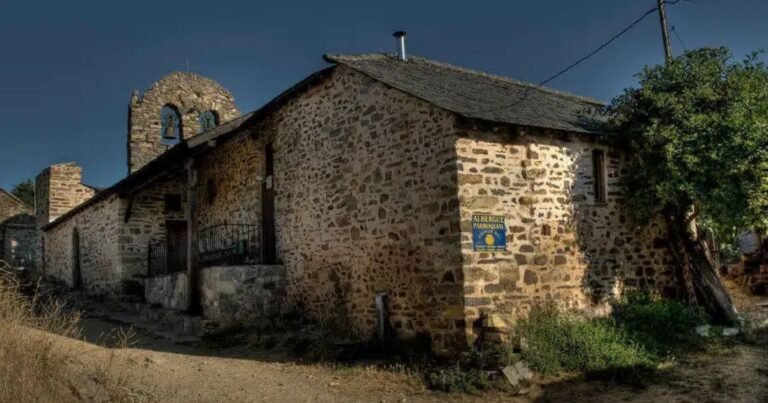
Hostels in Foncebadón
Origins and medieval splendour of Foncebadón
Foncebadón dates back to the 10th century, when it gained importance as the seat of a religious council. Bishop Gaucelmo, a key figure in the region’s Christian rise, founded a hospital and pilgrim hostel here, reinforcing its role as a nerve centre on the Camino de Santiago. This act was key to establishing the village’s hospitable vocation, which endures to this day.
Demographic decline and rural abandonment
From the late 1960s and throughout the 1970s, the traditional rural economy based on farming, livestock and mining collapsed in Foncebadón. The result was mass emigration to urban areas such as Madrid, leaving the village almost uninhabited. The physical deterioration of its buildings —ravaged by looting and neglect— led to structural collapse, with landmark buildings such as the parish church and the school falling into ruin.
Reconnecting with the Camino de Santiago
From the 1990s onward, the revival of the Camino de Santiago marked a radical turning point in Foncebadón’s history. The pilgrim route not only revitalised the local economy, but also encouraged former residents and new entrepreneurs to restore houses and open hostels and rural businesses.
What to see in Foncebadón?
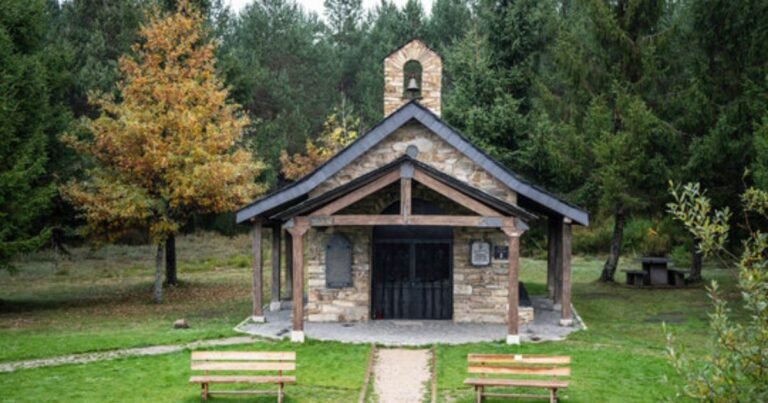
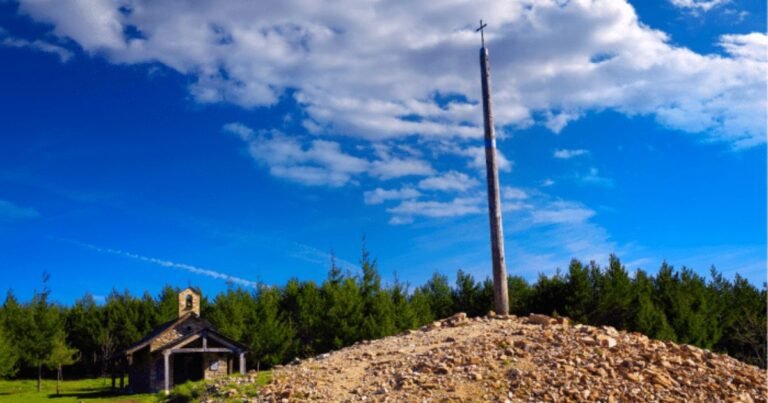
Symbolic heritage: the Cruz de Hierro and the Foncebadón mountain pass
A short distance from the village stands the iconic Cruz de Hierro (Cruz de Ferro), located at the highest point of the Camino Frances. Pilgrims leave stones here brought from their places of origin, as a symbol of emotional burdens set down. Foncebadón, sitting just before this summit, represents a symbolic and spiritual threshold.
The Foncebadón mountain pass, snow-covered for much of the year, offers spectacular views and turns the crossing into an unforgettable experience. Thick fog is part of the landscape, and part of the local legends too.
The bell episode: a symbol of tenacity
In the 1990s, an extraordinary event brought Foncebadón into the national media spotlight: one of its last remaining residents barricaded herself in the parish bell tower to stop the bells from being removed. Her gesture, driven by the need to keep an alert system in case of isolation, became a symbol of cultural and emotional resistance to abandonment.
Geography, climate and natural surroundings of Foncebadón
Foncebadón lies at coordinates 42°29′30″N 6°20′33″W, at an altitude that makes it one of the highest settlements on the Camino. Its mountain climate shapes its seasons harshly, especially the snowy winters, which give the landscape a stark, awe-inspiring beauty.
Surrounded by unspoiled nature, chestnut groves and oak woods, the surroundings offer many opportunities for sustainable rural tourism, hiking and quiet contemplation.
Services for pilgrims in Foncebadón
Although the registered population is just 18 inhabitants, Foncebadón offers essential services for the modern pilgrim, including:
- Phone coverage and 4G network
- Basic supplies at the shop-bar
- Clear waymarking along the Camino de Santiago
- Establishments open during peak season
The village currently has:
- Three bar-restaurants
- Four hostels, two of them recognised for their tourism character linked to the Camino
- One grocery shop-bar
- One traditional guesthouse
This micro-ecosystem serves thousands of pilgrims who, on their journey toward the Cathedral of Santiago in Santiago de Compostela seek rest and spirituality in Foncebadón.
Spiritual tourism and architectural conservation
Foncebadón is emerging as a model of rural revitalisation linked to spiritual tourism. The recovery of its architectural heritage, combined with energy sustainability projects and a cultural offering rooted in Camino history, could turn it into a benchmark of the 21st-century Camino de Santiago.
Foncebadón
Foncebadón, once forgotten, now thrives thanks to the Camino de Santiago, transformed into a spiritual beacon and economic driver. It stands as a living example of rural revival, deserving to be preserved, explored and promoted as one of the most authentic and significant places on the pilgrim route.
| Country | Spain | |
|---|---|---|
| Autonomous community | Castile and León | |
| Province | Provincia de León | |
| Region | Maragatería | |
| Judicial district | Astorga | |
| Municipality | Santa Colomba de Somoza | |
| Location | 42°29′30″N 6°20′33″W | |
| Elevation | 1,440 m | |
| Population | 18 inhabitants (INE 2017) | |
| Postal code | 24722 | |
| Dialling code | 987 | |
| Website | Santa Colomba de Somoza Town Council | |