



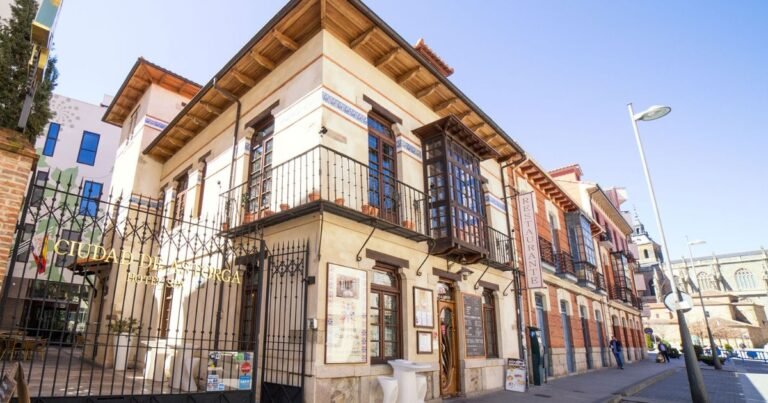
The name
The name comes from Asturica, the capital of the Astures, to which Augustus added his own name: Asturica Augusta.
Scholars of the 16th and 17th centuries invented fabulous origins, such as a squire of Memnon called Astyr or a supposed «city of the cult of Bacchus», which no longer carry any weight.
In medieval documents it appears as Astorica (878), and the Codex Calixtinus calls it Osturga or Austurga.
Asturica was the head of the Astur legal district (conventus), one of the great divisions of Roman Hispania, and controlled the gold from the mines of the northwest.
What to See in Astorga?



Roman Astorga
Main articles: Asturica Augusta and Walls of Astorga.
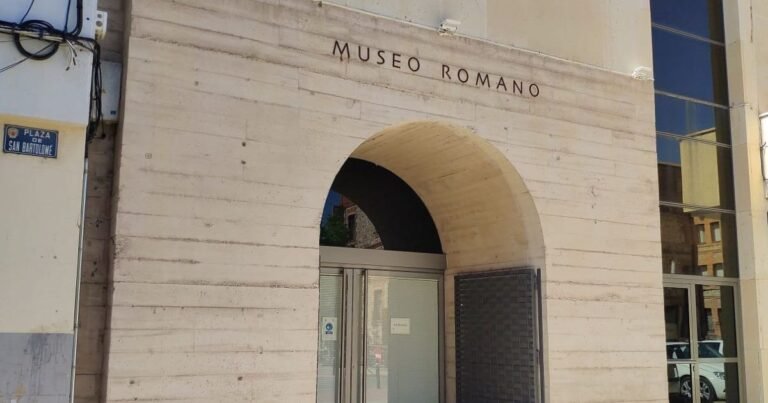
Excavations began in the 19th century and have made it possible to create a Roman Route through the city: the greater and lesser baths, the Roman sewers, still in use, the imperial temple (Aedes Augusti), the ergastulum on which the Roman Museum stands and the domus of the mosaic of the bear and the birds.
The wall, more than two kilometres long, was built in the 1st and 3rd centuries on the legion’s camp and reused in the Middle Ages. It suffered badly in the Peninsular War; of its gates only the street names remain: Puerta Obispo, Puerta del Rey, Puerta del Sol…
The cathedral
Main article: Astorga Cathedral
The cathedral of Santa María replaced earlier Romanesque churches. The present one was begun in 1471 and finished in the 18th century, so it mixes Gothic, Renaissance and Baroque. Highlights are the Churrigueresque facade, the main altarpiece by Gaspar Becerra, one of the great works of the Spanish Renaissance, and the 16th-century choir. The Cathedral Museum holds goldsmiths’ work and the Virgen de la Majestad.
Gaudí’s Episcopal Palace
Main article: Astorga Episcopal Palace
After the old palace burned down in 1886, Bishop Grau, a fellow Catalan of Gaudí’s, commissioned a new one from him. Work began in 1889, but on the bishop’s death Gaudí abandoned the project and other architects finished it in 1913. No bishop ever lived in it; today it is the Museum of the Ways.
It is a neo-Gothic building of white granite from El Bierzo, with towers, a moat and the air of a fairy-tale castle. Outside are three zinc angels designed by Gaudí that were never raised onto the roof.
Museums
Astorga has many museums for its size: the Cathedral Museum; the Museum of the Ways, in the Episcopal Palace; the Roman Museum, with objects from Asturica Augusta; the Chocolate Museum, a reminder that the city was a great chocolate producer; Casa Panero, devoted to the family of poets; and the Holy Week rooms.
The Municipal Historical Archive keeps documents dating back to 1253, and the Diocesan Archive those of the diocese since 898.
A crossroads
In Roman times Astorga was a great road junction: the Antonine Itinerary links it with Braga, Lugo, Mérida, Zaragoza, Tarragona and Bordeaux. Troops, merchants and the gold of Las Médulas travelled along those roads.
To the south the Vía de la Plata set off towards Mérida, which centuries later partly coincided with the Cañada Real de la Vizana, the route of the transhumant flocks. Astorga claims to be its true end, as opposed to the tourist extension to Gijón.
To the east, the road to Legio became the Camino Frances and later the N-120. To the west, the road to Lugo is the Camino that climbs to Foncebadón and descends to Ponferrada and Villafranca del Bierzo. The Camino Francés and the Vía de la Plata also meet here.
Astorga on the Camino
Astorga is one of the great stops on the way to the Cathedral of Santiago in Santiago de Compostela along the Camino Frances. From San Justo de la Vega, pilgrims cross the railway on a long footbridge and climb up to the city through the old Puerta del Sol.
The Camino runs through the old town: Calle San Francisco, the Plaza Mayor with its Baroque town hall and the Maragato figures of the clock, Calle Pío Gullón, the Episcopal Palace and the cathedral. Then it goes down to the Rectivía quarter and leaves towards Murias de Rechivaldo and the mountains of León.
In the Middle Ages Astorga had more than twenty pilgrim hospitals. According to tradition, Saint Francis of Assisi recovered from an illness in that of San Juan Bautista.
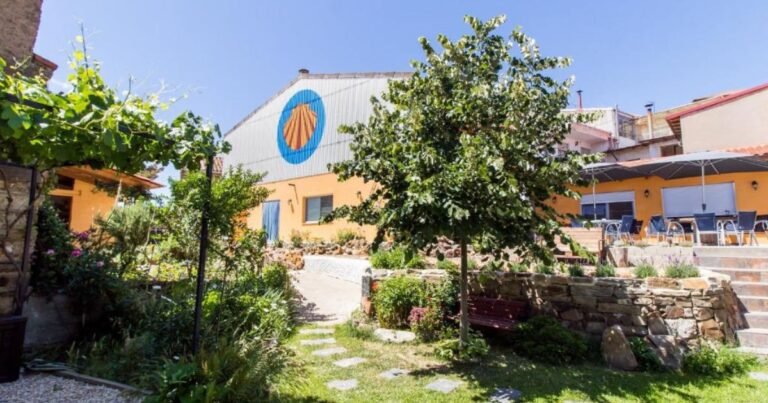
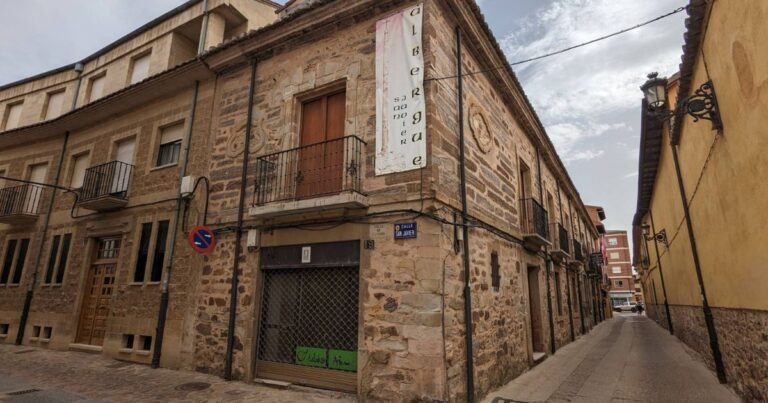
Today hospitality is in the hands of the Association of Friends of the Camino de Santiago of Astorga, which runs the large Siervas de María hostel, and of other hostels such as San Javier, beside the cathedral. There are beds for all pilgrims, even in summer.
Astorga
| Country | Spain | |
|---|---|---|
| Autonomous Community | Castilla y León | |
| Province | Province of León | |
| Comarca | Tierra de Astorga | |
| Judicial district | Astorga | |
| Location | 42°27′25″N 6°03′25″W | |
| Elevation | 869 m | |
| Area | 46.78 km² | |
| Population centres | Astorga, Castrillo de los Polvazares, Murias de Rechivaldo, Santa Catalina de Somoza and Valdeviejas | |
| Founded | Around 14 BC | |
| Population | 10,308 (2024) | |
| Density | 238.41 inhabitants/km² | |
| Demonym | astorgano, astorgana | |
| Postal code | 24700 | |
| Dialling code | 987 | |
| Twinned with | Reus (Tarragona) Moissac (France) Clavijo (La Rioja) Mérida (Badajoz) | |
| Patron saint | Saint Turibius of Astorga (16 April) | |
| Patron saint (female) | Santa Marta (23 February) | |
| Website | www.aytoastorga.es | |
See also

