Villadangos del Páramo
Villadangos del Páramo, located in the Provincia de León, Castilla y León, on the Camino Frances, is a municipality that combines a rich history, a notable natural environment and remarkable industrial development. With a population of 1,235 inhabitants according to the 2024 INE, this settlement has evolved from its Astur origins to become a logistics hub in north-west Spain.
Accommodation in Villadangos del Páramo
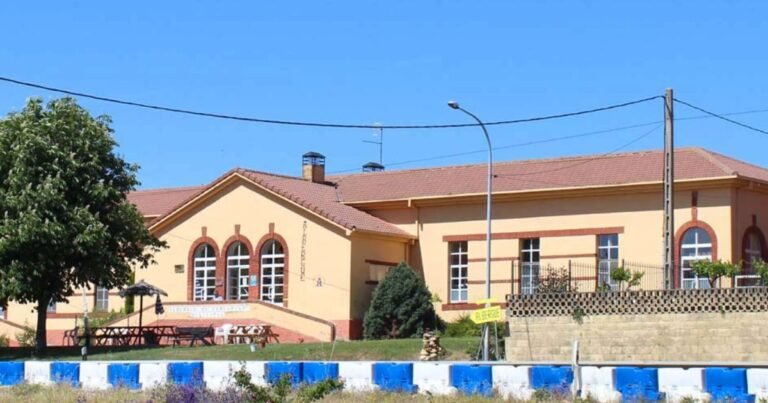

Villadangos del Páramo on the Camino de Santiago
Villadangos del Páramo is part of the Camino Frances, located 288 km from Santiago de Compostela. This stretch offers pilgrims a combination of cultural heritage and natural beauty.
What to see in Villadangos del Páramo?

Services for pilgrims in Villadangos del Páramo
The village offers a variety of essential services for pilgrims:
- Pilgrim information
- Telephone box
- ATM
- Medical assistance and pharmacy
- Grocery store, butcher’s and bakery
- Bar-restaurant
Toponymy of Villadangos del Páramo
The name Villadangos translates as the villa of Eneco. This name Eneco has Basque roots and is believed to correspond to the founder of this settlement or, at least, to one of its owners during the Reconquest period. There are also other versions that refer to the place as Villa de Angos or Ancos, a name of Frankish origin. This name is very likely related to the ancient route of the Camino de Santiago, which has attracted many pilgrims over the years. However, it is worth mentioning that there is another settlement called Viadangos de Arbas, located in the heart of the Cantabrian mountain range, with a similar name. This causes some confusion, as the two settlements, although different, can easily be associated due to the similarity of their names.
History of Villadangos del Páramo
The origin of Villadangos del Páramo dates back to an Astur settlement, later peacefully conquered by the Romans. During the Middle Ages, Muslim incursions caused it to be abandoned around the year 714. Resettlement took place in the late 9th or early 10th century by the kings of León through small family groups.
In September 1111, near what is now the Barrio de la Estación, the Battle of Villadangos took place, a clash between supporters of Queen Urraca and Alfonso I the Battler over custody of the young Alfonso VII. From 1112 to 1580, the municipality was an ecclesiastical lordship, later passing to civil jurisdiction. In 1788, Charles III created the title of Marquis of Villadangos, which remained in use until around 1837.
Natural Environment: La Laguna de Villadangos
The Laguna de Villadangos, locally known as “El Estanque“, lies at an altitude of about 880 metres and covers approximately 10 hectares. Originally a winter floodplain, it was dammed in the 1940s for irrigation. After the Villadangos canal was built, it lost its agricultural use and was abandoned in the 1980s. It is now an area of high ecological value, home to more than 135 species of waterfowl, including the province of León’s most important colony of black-crowned night herons and cattle egrets. It is included in the Catalogue of Wetlands of Castilla y León under the code LE-20.
Church of Santiago Apóstol
The parish church, dedicated to Santiago Apóstol, is notable for its espadaña bell-gable built between the late 17th and early 18th centuries. The main altarpiece, in Churrigueresque style, houses an equestrian carving of Santiago and various canvases depicting religious scenes.
Festivities of Villadangos del Páramo
- Fojedo del Páramo: San Miguel de Mayo (8 May) and Epiphany (6 January).
- Villadangos del Páramo: Easter Sunday and Santiago Apóstol (25 July). The Battle of Villadangos is commemorated on the second weekend of August.
- Celadilla del Páramo: San Blas (3 February) and the Beheading of St John (28 August).
Villadangos del Páramo
Villadangos del Páramo represents a fusion of history, nature and industrial progress. Its evolution from an Astur settlement into a key logistics hub in north-west Spain reflects this León municipality’s capacity for adaptation and growth.
| Country | Spain | |
|---|---|---|
| Autonomous community | Castilla y León | |
| Province | Provincia de León | |
| Comarca | El Páramo | |
| Judicial district | León | |
| Mancomunidad | Alto Órbigo | |
| Location | 42°31′03″N 5°45′59″O | |
| Elevation | 897 m | |
| Area | 44.93 km² | |
| Settlements | Barrio de la Estación, Celadilla del Páramo, Fojedo del Páramo y Villadangos del Páramo | |
| Population | 1222 inhabitants (2023) | |
| Density | 24.62 inhabitants/km² | |
| Demonym | villadangués, villadanguesa | |
| Postal code | 24392 | |
| Dialling code | 987 | |
| Patron saint | Santiago Apóstol (25 July) | |
| Website | www.aytovilladangosdelparamo.es | |