Villares de Órbigo
Villares de Órbigo, nestled in the fertile Ribera del Órbigo in the Provincia de León, is a municipality that combines history, culture and nature. This destination, crossed by the Camino de Santiago, offers visitors a unique experience in the heart of Castilla y León.
Villares de Órbigo on the Camino de Santiago
The municipality is a significant stop on the Camino de Santiago, offering hostels and services for pilgrims. In addition, its proximity to the Puente del Paso Honroso in Hospital de Órbigo, a medieval structure declared a National Monument, adds a historical attraction to the route.
What to see in Villares de Órbigo?

Geography and Natural Setting of Villares de Órbigo
Located at an altitude of 827 metres and with an area of 25.85 km², Villares de Órbigo benefits from the richness of the río Órbigo, which irrigates its land and sustains a varied agriculture. Crops of sugar beet, tobacco, legumes and vegetables have been fundamental to its economy since the 12th century.
History of Villares de Órbigo
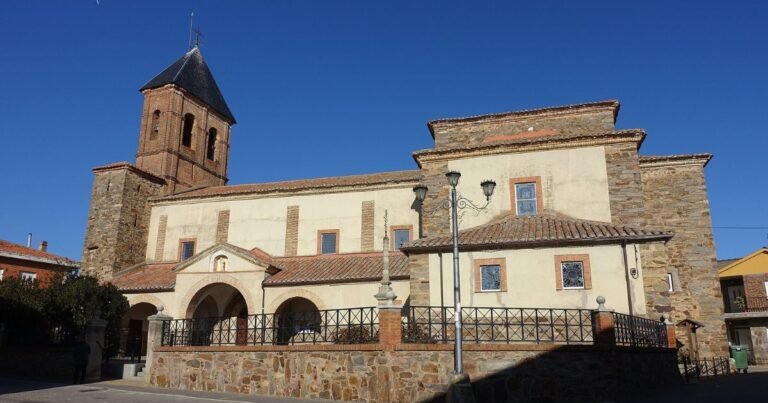
During the Middle Ages, the municipality was a lordship of the Quiñones family and formed part of the archpriesthood of Astorga. The Iglesia de Santiago Apóstol, built in the 18th century, stands out for its Latin-cross floor plan and houses altarpieces from the 17th and 18th centuries, including a Romanesque-style carving of the Virgen del Carmen.
Culture and Traditions of Villares de Órbigo
Villares de Órbigo keeps its traditions alive through cultural associations that organise local events and celebrations. The Feria del Ajo (Garlic Fair) in Veguellina de Órbigo, near the municipality, is one of the most notable festivities, celebrating local garlic production and other agricultural products.
Gastronomy of Villares de Órbigo
The cuisine of Villares de Órbigo reflects the richness of its land. Traditional dishes such as pote de garrofeces and mantecada de Villares are examples of the local gastronomy that delights residents and visitors alike.
Infrastructure and Services
The municipality has a municipal swimming pool and recreational areas offering leisure and rest spaces for families and visitors. In addition, the presence of historic canals and weirs, such as the Presa de Tierra and the Presa de Los Lláganos, highlights the importance of water in the life and development of the community.
Villares de Órbigo
Villares de Órbigo is a destination that combines history, culture, nature and spirituality. Its strategic location on the Camino de Santiago, together with its heritage and living traditions, make it an ideal place for those seeking an authentic experience in the heart of León.
| Country | Spain | |
|---|---|---|
| Autonomous community | Castilla y León | |
| Province | Provincia de León | |
| Comarca | Ribera del Órbigo | |
| Judicial district | Astorga | |
| Association of municipalities | Mancomunidad del Órbigo | |
| Location | 42°28′14″N 5°54′32″O | |
| Elevation | 827[ m | |
| Area | 25.85 km² | |
| Settlements | Moral de Órbigo, San Feliz de Órbigo, Santibáñez de Valdeiglesias, Valdeiglesias and Villares de Órbigo | |
| Population | 563 inh. (2024) | |
| Density | 24.87 inh./km² | |
| Postal code | 24288 | |
| Dialling code | 987 | |
| Website | www.aytovillaresdeorbigo.es | |