
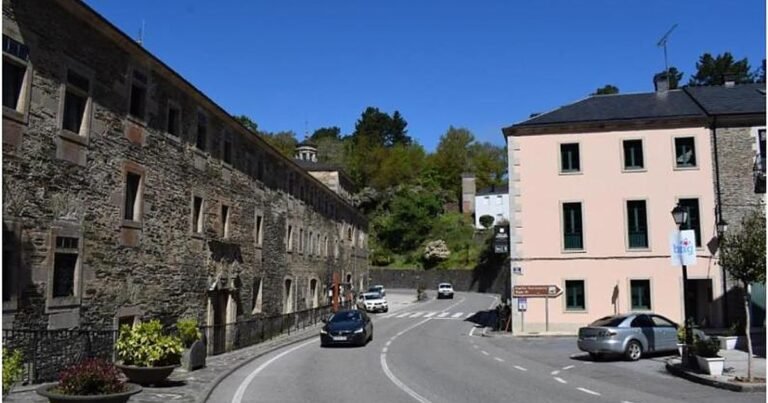

What to see in Samos?


Samos on the Camino
Samos lies about 11 km from Sarria, on the variant that leaves Triacastela along the valley of the Oribio river. Many pilgrims on their way to the Cathedral of Santiago in Santiago de Compostela choose this detour to see the monastery of San Julián y Santa Basilisa, one of the oldest in Spain, founded according to tradition in the 6th century. The Benedictine monks run a hostel for pilgrims.
The municipality
The municipality brings together more than a hundred places in twenty-four parishes:
- Carballo (San Xil)
- Castroncán (Santa Marta)
- Couto (San Mamede)
- Estragiz
- Formigueiros (Santiago)
- Freijo
- Frolláis
- Gundriz (San Andrés)
- Loureiro (Santa María)
- Lousada (San Martiño)
- Lózara (San Cristóbal)
- Montán (Santa María)
- Pascáis (Santa Eulalia)
- Real (San Cristóbal)
- Reiriz (San Estebo)
- Renche (Santiago)
- Romelle (San Martiño)
- Samos (Santa Xertrude)
- San Juan de Lózara (San Juan)
- San Martín de Real (San Martín)
- Santalla (San Xosé)
- Suñiz
- Teivillid
- Zoó (Santiago)
Festivals
- San Benito, on 11 July.
- Santa Basilisa, patroness of the monastery, on 9 January.
- Pilgrimage of San Roque in Santalla de Lóuzara, on 16 August.
The monastery of Samos
The Benedictine monastery of San Julián y Santa Basilisa, at the bottom of the Oribio valley, is one of the oldest in the peninsula: tradition dates its birth to the 6th century. What you see today is mostly from the 16th to the 18th centuries, with two great cloisters and a Baroque church, partly rebuilt after the fire of 1951. Father Feijoo took his vows here. Beside the monastery stands the Chapel of the Cypress, a small 10th-century pre-Romanesque gem. The monks offer guided tours.
Samos facts
| Country | Spain | |
|---|---|---|
| Autonomous community | Galicia | |
| Province | Lugo | |
| Comarca | Sarria | |
| Judicial district | Sarria | |
| Location | 42°43′50″N 7°19′36″W | |
| Elevation | 700 m | |
| Area | 136.77 km² | |
| Parishes | 24 | |
| Population | 1,210 inhab. (2023) | |
| Density | 9.82 inhab./km² | |
| Demonym | samiense sononense sononiense | |
| Postal code | 27620 | |
| Dialling code | 982 | |
| Mayor (2023) | María Jesús López López | |
| Website | www.concellosamos.es/ | |