San Zoilo de Córdoba
San Zoilo de Córdoba (d. 304), was the first of some twenty martyrs of Córdoba who perished at the dawn of the 4th century under the persecution of Diocletian.
History of San Zoilo
With the Roman Empire organised as a tetrarchy, Hispania fell within the region governed by the caesar Constantius I, who eased the persecution of Christians in the areas under his command — persecutions instigated elsewhere in the Empire by the caesar Galerius. Given this circumstance, it can be assumed that the collective martyrdom of Zoilo and his companions did not take place before the year 303, when the first three edicts appeared, and that it occurred in 304, when a new imperial edict condemned Christians indiscriminately.
The earliest record we have of Zoilo dates from the second half of the 4th century and comes from the Spaniard Prudentius in Hymn IV of the Peristephanon, in which he lists around 30 martyrs shortly before his own time, mostly Spanish; apart from the names, little historical substance can be drawn from this list (almost a litany), in which it says «Corduba Acisclum dabit, et Zoellum», since the forms Zoelo, Zoilo and Zoyl are used interchangeably. The Hieronymian Martyrology includes Zoilo and his fellow martyrs on 27 June, which agrees with most of the historical martyrologies, except for some of the oldest ones which cite Crescente first — something Henschen believed was due to the earlier discovery of Crescente’s body. Wandalbert used the word antistes to indicate that Zoilo was first among his companions (not to confer on him the dignity of bishop, of which there is no trace), which, together with Prudentius’s being the sole citation, the fact that only Zoilo has a martyrial record, and the confirmation provided by his cult in Spain, justifies regarding Zoilo as the chief figure among those martyred with him.
Discovery of San Zoilo’s remains
In the year 613, during the reign of Sisebut, the bishop of Córdoba, Agapius II, received a revelation of the martyr’s name and the place where his body lay. Accompanied by clergy and the faithful, he discovered the remains, which he had moved to the church of San Justo, which, in order to honour the martyr’s memory, was enlarged and had its dedication changed from then on to San Zoilo. In the 9th century, this church of San Zoilo had among its clergy San Eulogio, who places the temple in the centre of the city.
Account of San Zoilo’s martyrdom
The monk Usuard, who was in Córdoba in the year 858, includes Zoilo in his Martyrology, expressly recording the apparition to Agapius II, and from this Henschen deduces that the account of the martyrdom was also revealed to Bishop Agapius or Agapio. Later, el Cerratense recorded this account in the 13th century, and Father Flórez included it in España Sagrada, though he disputes the theory that Zoilo’s account is a late addition.

From the aforementioned account, at least literarily later, comes the legendary characterisation of Zoilo and the following account of his martyrdom: Zoilo was a young man from a distinguished family who openly displayed his Christian zeal. Denounced before the judge, the latter considered him the most notable among the other detainees, and so tried to make him apostatise so that his example would drag the others along with him. A dialogue takes place between judge and accused (which reaches us today filled with pious naivety) in which Zoilo refuses bribes, affirms his faith and attempts to evangelise his judge. The judge orders him whipped, but the torture has no effect, and then an executioner has the idea of removing Zoilo’s kidneys through his back, yet he does not die from this torment either. In despair, the judge draws his own sword and cuts off his head. He then orders the remaining prisoners beheaded and commands that they all be buried among the pagans so that other Christians could not find their bodies. Doubts have been raised over the number and identity of these other martyrs, since checking the historical martyrologies gives figures of 20 or 21, and among the names cited there are overlaps with those attributed to the children of Santa Sinforosa. Father Flórez lists 20 names: Crescente, Julián, Nemesio, Fratria, Primitivo, Justino, Statheo, Novaciano, Clemente, Marcelino, Zedino, Félix, Venusto, Marcelo, Itálica, Lello, Capitón, Tinno, Timarco or Tusco, and Silvano.
Translation of San Zoilo’s remains
In the 11th century, the Count of Carrión, Gómez Díaz, moved the martyr’s remains from Córdoba to the Benedictine monastery of San Juan Bautista in Carrión de los Condes, which from then on became known as the Monasterio de San Zoilo. El Cerratense lists the wonders of the translation and the known miracles of Zoilo, which were later transcribed by Flórez. The Mozarabic Breviary preserves a Gothic hymn which, glorifying Zoilo, reads:
«Martyrum nulli remanente vita,
Contigit terris habitare nostris;
Solus tu morti propriae superstes
Vivis in Orbe».
Patron San Zoilo
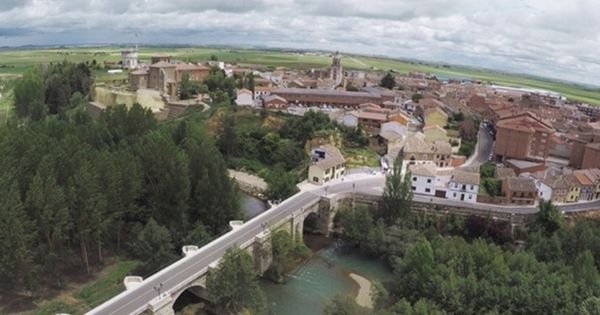
Today, San Zoilo is the patron saint of the city of Carrión de los Condes in the Province of Palencia, although the patronal festivities in his honour are not held on 27 June but in August, with the main day of the festival (San Zoilo’s day) falling on the second-to-last Monday of August. The most important event of that day is the procession of the saint, carried by the town’s young men of military age.
He is also the patron saint of other places:
- Morañega de Flores in Ávila (Ávila), whose feast day is celebrated on 27 June each year.
- Escalona del Prado (Segovia), notable for its Church of San Zoilo, which celebrates its feast day on 27 June.
- Sansol in the Chartered Community of Navarre, which celebrates festivities in honour of this saint and the Virgen de Nievas on the second weekend of August.
San Zoilo
| Birth | 3rd century, Córdoba |
|---|---|
| Death | 304 |
| Canonisation | Saint |
| Feast day | 27 June |
| Attributes | Sword in hand and a crown of laurel or flowers, sometimes placed on him by an angel. |
| Venerated in | Carrión de los Condes (Province of Palencia) and Sansol (Chartered Community of Navarre) |
See also: