Manjarín
Manjarín: Between History and Oblivion
Manjarín, situated at 1,460 metres above sea level, lies in the León comarca of La Maragatería, within the municipality of Santa Colomba de Somoza. Although now uninhabited, this mountain hamlet retains an air of mystery, spirituality and Jacobean heritage that makes it a singular point on the Camino Frances. Despite the passage of time and widespread rural depopulation, Manjarín remains alive in the collective memory of pilgrims, historians and the Maragato people.
Origin and Historical Context of Manjarín
The origin of Manjarín presumably dates back to the 11th century, linked to the hermit Gaucelmo, the monk who also built the hospital at Foncebadón. However, there are indications that its founding could be even earlier, during the resettlement drive led by Count Gatón in the 9th century, following the Christian reconquest of northern León.
From its beginnings, Manjarín was founded as a pilgrim hospice, playing a key role as a resting point and place of spiritual care high in the mountains of Irago. This function continued throughout the Middle Ages, making Manjarín one of the highest-altitude hospitaller waypoints on the Camino Frances.
Manjarín and the Camino de Santiago: An Inseparable Bond
Over the centuries, Manjarín was a key waypoint for pilgrims travelling toward the Cathedral of Santiago in Santiago de Compostela. Crossing Mount Irago was one of the most demanding stretches of the pilgrim route, and having a shelter at this location was vital for walkers. Through the original hospice, pilgrims were given shelter, food and assistance, keeping alive the medieval spirit of hospitality that characterises the Camino.
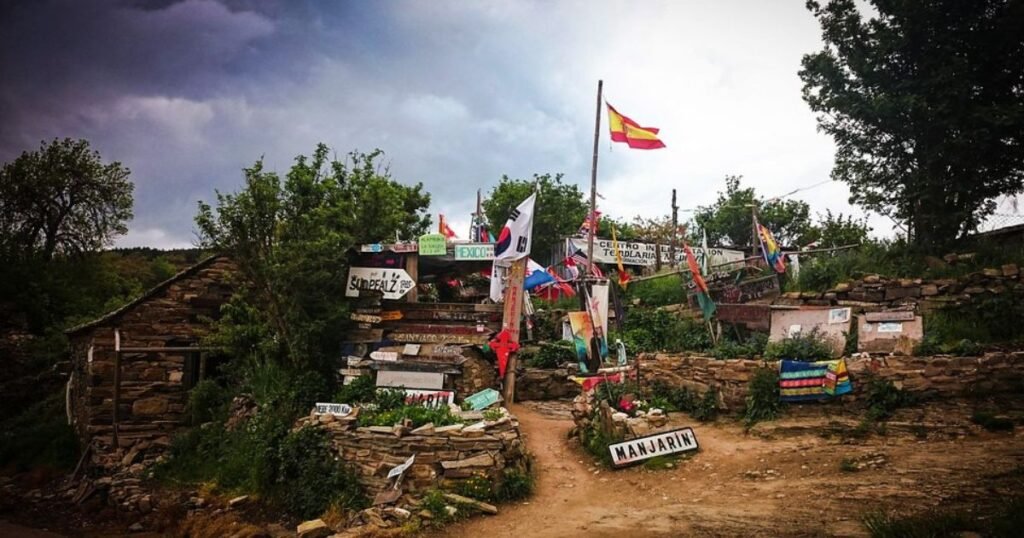
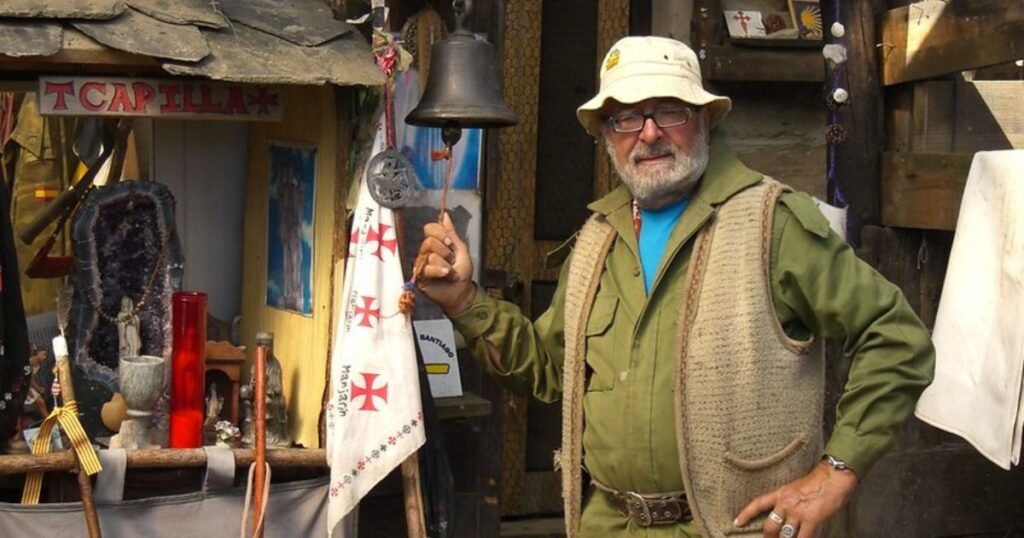
Even after the rural depopulation of the 20th century, Manjarín briefly rose again as a pilgrim refuge thanks to the work of Tomás Martínez de Paz, who in 1993 revived the hospitaller tradition with a rustic, deeply symbolic alternative. This refuge remained active for almost three decades, becoming an emblematic landmark for modern pilgrims, until its closure in 2022.
Geography and Nature: Manjarín on Mount Irago
Located on the foothills of Mount Irago, Manjarín lies within the Sil river basin. The rugged geography of the area, with steep slopes and native vegetation, forms a setting of great natural beauty and ecological richness. Extreme weather conditions, especially in winter, have been a decisive factor in the hamlet’s gradual abandonment.
Remains of Roman-era mining activity have also been identified in this mountainous area, adding significant archaeological value to the territory.
Spiritual and Cultural Heritage
Beyond its ruined buildings, Manjarín preserves a profound symbolic legacy. Its hospitaller tradition, its connection with the patron saints San Roque and Nuestra Señora de la Asunción, and its strategic location as a natural frontier between León and Galicia give it an almost mystical dimension within the imagery of the Camino.
During its contemporary reopening, the refuge became a place where the esoteric, the religious and the communal came together. Templar crosses, Jacobean symbols and international flags flying in the wind evoked a microcosm of peace, fellowship and reflection.
Rural Depopulation and Its Impact on Manjarín
The phenomenon of rural depopulation in the Province of León during the 20th century, heightened by migration to industrial areas and an ageing population, had an irreversible effect on villages like Manjarín. The lack of services, isolation and the harshness of the natural environment led to its total abandonment in the middle of the last century. Since then, Manjarín has been counted among León’s depopulated villages, though it has kept its memory alive thanks to the Camino.
The Future of Manjarín: Between Ruin and Hope
Despite the refuge’s closure in 2022, Manjarín remains an obligatory waypoint for pilgrims crossing Mount Irago. The waymarking, the ruins and the symbolic weight of the place keep its presence alive on the Camino. The current debate concerns the preservation of Manjarín’s intangible heritage: should it be restored as a Jacobean cultural centre? Is its rural recovery viable through sustainable initiatives?
Possibilities for revitalisation include responsible tourism projects, heritage protection and the promotion of international volunteering linked to the Camino de Santiago. The challenge is to preserve its authenticity without turning it into a theme park.
Manjarín as a Symbol of Spiritual Resistance
Manjarín is not just a place; it is an idea embodying the spirit of the Camino: welcome, history, effort and redemption. Through its ruins, its hospitaller history, and its eternal bond with pilgrims, it remains a beacon for those seeking something beyond the simple walk.
In an age of depopulation and lost points of reference, Manjarín represents a symbolic resistance to oblivion, an invitation to look back to our roots and rediscover the deeper meaning of the path, both physical and spiritual.