O Cebreiro
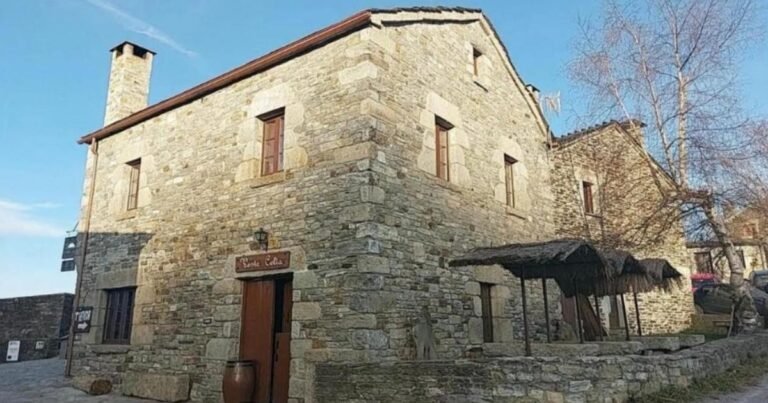
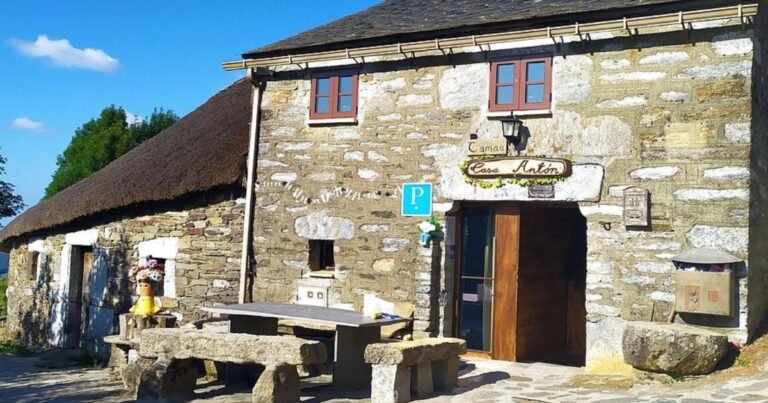
O Cebreiro (officially called Santa María do Cebreiro) is a Spanish parish and village in the municipality of Piedrafita, in the Provincia de Lugo, on the Camino Frances.
Accommodation in O Cebreiro
Hostels in O Cebreiro
What to see in O Cebreiro?
History of O Cebreiro
In the years following the discovery of the tomb of the Apóstol Santiago, an outpost was established at an inn that served as a hostelry, providing a place of shelter and rest for pilgrims travelling the Camino Frances. It is believed that this inn-sanctuary was founded around the year 863. Before this place was established, a small settlement may have existed, inhabited by people devoted to herding, with livestock grazing in the beautiful mountains of the region.
An important figure in this story is King Alfonso VI of León, a staunch supporter of the Orden de Cluny, a reform of the Benedictine Order that promoted monastic and spiritual life. Alfonso VI decided to entrust the main sites along the Way of St James to French abbeys. As a result, the administration of El Cebrero was transferred to the monks of the Abbey of Saint-Géraud, located in the city of Aurillac, France. These monks founded a monastery on the site that became known as Santa María del Cebrero in the ninth century. This would explain why the hostelry bears the name of Saint Géraud of Aurillac, in honour of the influence of the French monks.
Over the following years, O Cebreiro began to receive numerous privileges from the crown, including grants of land and tax exemptions. Thanks to these advantages, El Cebrero became the most important town in the Comarca during the Middle Ages, flourishing in trade and culture.
In 1486, the Catholic Monarchs decided to visit Santiago de Compostela. On their way back, the monarchs passed through El Cebrero, where they heard the account of a eucharistic miracle said to have taken place there. Moved by what they heard, they decided to give the church two crystal reliquaries in which to preserve the sacred relics related to the miracle. Later, as part of the reform of the religious orders in Spain, and with the aim of preventing any foreign influence on their lands, the Catholic Monarchs decided to hand over control of the area to the monastery, intending it to become their priory.
El Cebrero maintained its importance and splendour over the following centuries, reaching its peak up to the 16th century. From that point on, however, the priory began a process of decline, a decline that would culminate in the 19th century with the Mendizábal Confiscation. This process led to the departure of the monks from the monastery, marking a new era in the history of O Cebreiro that profoundly affected the spiritual and social life of the region.
The Holy Grail of O Cebreiro
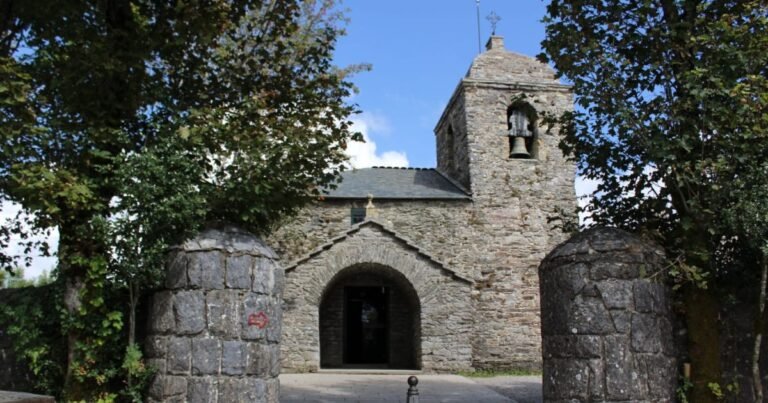
The Holy Grail of El Cebrero is kept in the beautiful church of Santa María, located in El Cebrero, a parish in the municipality of Piedrafita in the Provincia de Lugo, on the famous pilgrimage route known as the Camino Frances. This Grail holds deep religious significance, reinforced throughout Europe thanks to a legendary miracle said to have occurred at the ancient monastery of San Geraldo de Aurillac, established in the area from the year 836. This monastery was overseen by Benedictine monks from France. The chalice appears to date from the twelfth century and bears inscriptions on its surface reading: Hoc sacratur quo cuntis vita parabatur, and In nomine nostri christi et beate Marie Virgine.
Strong traditions, supported by various historical sources and archaeological findings, suggest that, at the altar of the church’s side chapel, a monk was celebrating the Eucharist. It was a harsh winter’s day, with snow piling up and the wind blowing fiercely, and the monk thought that no one would come to Mass in such conditions. However, a devout local man named Juan Santín, from the village of Barjamayor, decided to attend. The monk, who had little faith, dismissed the peasant’s sacrifice, saying something about “a bit of bread and wine”. But, at a crucial moment, during the act of Consecration, the Host in his hands was miraculously transformed into visible flesh. At the same time, the chalice in front of him gushed blood, which began to boil and stained the corporals red. The blood-soaked corporals remained in the chalice, and the Host on the paten.
Years later, in 1486, the Catholic Monarchs, on pilgrimage to Santiago de Compostela, stopped at the monastery and donated reliquary lanterns in which the relics of the aforementioned miracle are kept. The Holy Grail of El Cebrero became a symbol and features on the coat of arms of Galicia. Over time, the miracle turned into legend and spread throughout Europe, especially thanks to the peregrinos from Germany and France, who told and shared it. Interestingly, the famous opera Parsifal, composed by Richard Wagner, was inspired by this tale.
However, medievalist Mathew Kuefler concluded that the belief that the Chalice of El Cebrero is, in fact, the Holy Grail stems from a simple linguistic mix-up. The hostelry of El Cebrero was dedicated to Saint Géraud of Aurillac, whose name was pronounced Guiral in Occitan. This difference in pronunciation led to confusion, giving rise to the association between the miraculous cup kept at the hostelry of San Guiral and the Holy Grail, a sacred object full of meaning and mystery in the Christian tradition.


