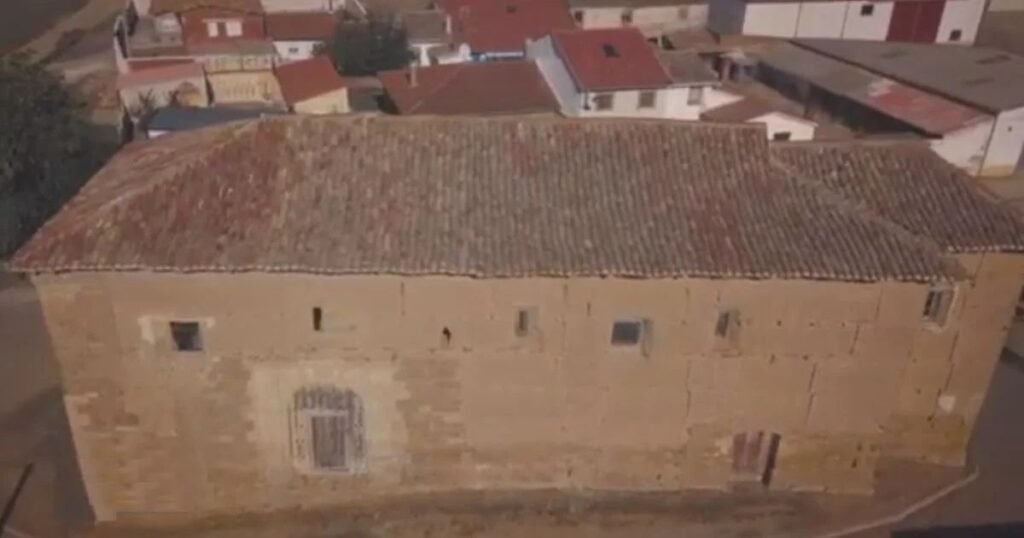
San Pedro de Villasirga: The Rebirth of a Historic Landmark on the Camino de Santiago
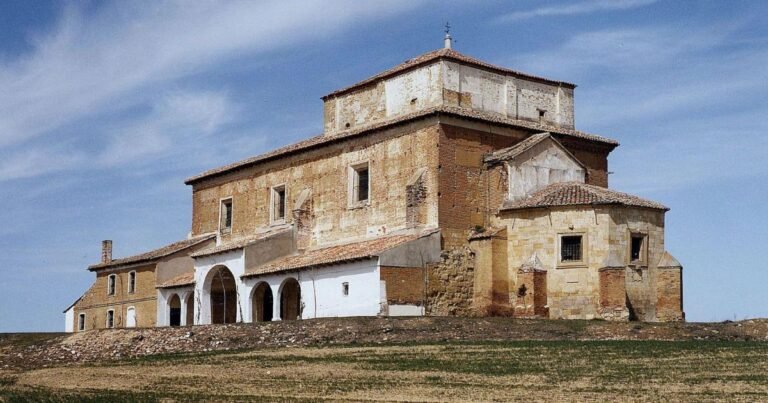
On 20 and 21 August 2025, the Villalcázar de Sirga Municipal Cultural Centre will host a special conference under the title “San Pedro de Villasirga – The Rebirth of a Landmark on the Camino”, organised by the Spanish Federation of Associations of Friends of the Camino de Santiago (FEAACS). The event aims to recover the memory, history and future of the church of San Pedro de Villasirga, one of the most distinctive churches on the Jacobean route through Tierra de Campos.
San Pedro de Villasirga: A Church with Over a Thousand Years of History
The church’s origins date back to the 9th century, likely with Mozarabic roots, linked to the route of the cordel cerverano (a historic drovers’ road). In later centuries, it became a church of the Order of Cluny, which reinforced its spiritual and cultural importance on the Camino de Santiago.
During the 11th century, San Pedro de Villasirga came under the authority of the Monastery of San Zoilo in Carrión de los Condes, along with its holdings and tithes, a situation that continued until the 18th century. It functioned as a parish church until the mid-17th century, when all the parishes of Villalcázar were merged into Santa María la Blanca. That church still preserves its 16th-century baptismal font, along with other elements such as holy water stoups made from old capitals.
In the 19th century, the church suffered the effects of the ecclesiastical confiscations (desamortización), passing into private hands and taking on various civil uses: from a school to a granary and a wine press. This period of neglect led to the loss of much of its original function, but it also fuelled the desire to see it restored today.
A Restoration Project with a Jacobean Vision
On 18 January 2025, an ambitious project was presented in Villalcázar de Sirga: converting the church of San Pedro de Villasirga into a Centre for Jacobean Studies and a pilgrim hostel. This initiative seeks not only to preserve the building architecturally, but also to give it new life and purpose within the Camino de Santiago, restoring its historic role of welcome, spirituality and community service.
Restoring this church will once again establish it as a cultural and spiritual landmark for the thousands of walkers who travel the Camino de Santiago Francés every year.
Lectures by Internationally Renowned Speakers
The conference programme offers a range of lectures of great academic and educational value:
Wednesday, 20 August – 7:30 pm
- Official opening by Juan Guerrero Gil, president of the Spanish Federation of Associations of Friends of the Camino de Santiago.
- Paolo Caucci Von Saucken, rector of the Confraternita di San Jacopo di Compostela in Perugia (Italy) and founder of the Puente Fitero pilgrim hostel, with the lecture “Rome and Santiago: The Meaning and Value of Their Jubilees”.
- Jorge Martínez-Cava, board member of FEAACS for Camino Europa Compostela, with the talk “The Camino de Santiago and Europe”, focusing on the continental dimension of the Jacobean route.
Thursday, 21 August – 8:00 pm
- A lecture by Fernando Santos Urbaneja, a writer from Carrión and author of the book “Ten Ideas About the Camino de Santiago”, who will reflect on the reasons for undertaking the Jacobean pilgrimage in the 21st century.
Villalcázar de Sirga: An Essential Stop on the Camino Francés
The town of Villalcázar de Sirga, in the Province of Palencia, is one of the best-known stops on the Camino Francés. Its religious and cultural heritage, led by the imposing Church of Santa María la Blanca, is now further enriched by the restoration of San Pedro de Villasirga, strengthening the town’s position as a Jacobean landmark.
A Space Open to All Pilgrims
The conference will have free admission until capacity is reached, ensuring open participation for local residents, pilgrims and scholars of the Camino de Santiago. This event offers a unique opportunity to learn first-hand about the past, present and future of a historic site which, after centuries of change, is preparing to be reborn as a place of welcome and study of the Camino de Santiago.
See also: