San Marcos

Loading…

San Marcos

San Marcos is a picturesque village located within the municipal boundary of Santiago de Compostela, right at the gateway to the city’s triumphal entrance for peregrinos travelling the Camino Frances. Located a short distance from the emblematic Monte do Gozo and just over 4 kilometres from the Catedral de Santiago, this small locality represents one of the final stretches of emotion, reflection and anticipation before reaching the Camino’s spiritual goal.

Accommodation in San Marcos

Hotel
Author Image

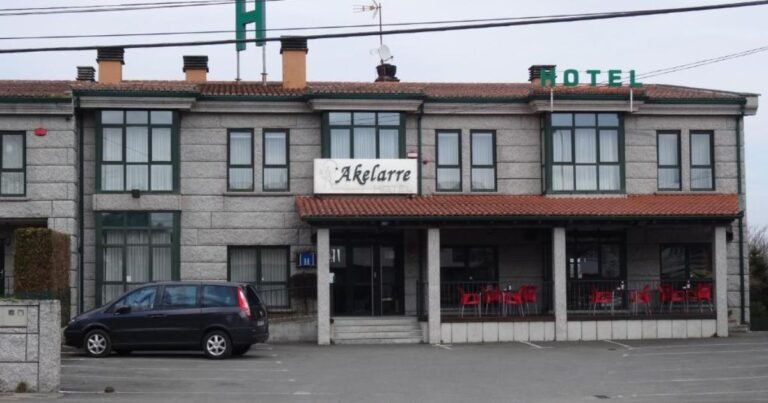
Hotel Akelarre San Marcos


A Stop on the Camino: San Marcos as a Key Point of the Route

San Marcos stands out as a symbolic stage within the Jacobean pilgrimage. From its surroundings, walkers get one of their first views of the Santiago de Compostela skyline, a deeply moving experience for those who have travelled hundreds of kilometres from the Pyrenees.

Despite its small size, the village holds notable importance due to its strategic location on the official route of the Camino Frances, just before entering the urban area of Santiago. Here, many peregrinos stop to reflect, to prepare emotionally for the end of their journey, or even to spend the night in one of the available rural accommodations.

What to see in San Marcos?

Capilla
Author Image

Capilla de San Marcos


The Chapel of San Marcos: Spiritual Heritage of the Area

At the heart of the village stands the small but significant Capilla de San Marcos, a building of simple architecture but rich in symbolism. Dedicated to Saint Mark the Evangelist, the chapel serves as a place of reflection and prayer for those wishing to pause before completing the final stretch to the Compostela cathedral.

The chapel, which combines elements of rural Galician Romanesque style with later additions, offers an intimate and authentic experience. Its stone walls, the cross of Santiago at the entrance and its landscaped surroundings invite contemplation and silence.

Unique Views from the Alto de San Marcos

One of San Marcos’s greatest attractions is its elevated position, which offers extensive views of the Compostela valley. From this point, both the outlying neighbourhoods and the silhouette of the cathedral towers can be seen on the horizon — a sight that is especially moving for pilgrims catching their first glimpse of their final destination.

This privileged setting has been equipped with rest areas, benches and information panels that provide insight into the geography and symbolism of the place, all set within the Atlantic vegetation characteristic of Galicia.

Services for Pilgrims in San Marcos

San Marcos, despite its modest size, offers basic services aimed at facilitating the passage and wellbeing of walkers. These include:

  • Shaded, well-equipped rest areas.
  • Rural accommodation and guesthouses with traditional Galician charm.
  • Small shops and bars where you can buy provisions or try homemade food.
  • Well-signposted and maintained access routes, for both walkers and cyclists.

In addition, San Marcos provides easy access to the Monte do Gozo hostel, one of the largest and most emblematic on the entire Camino de Santiago.

Connections with the Surroundings: Monte do Gozo and Lavacolla

San Marcos is part of a Jacobean corridor steeped in history and meaning. Just a few minutes’ walk away is Monte do Gozo, where peregrinos traditionally get their first view of the cathedral towers. Further back along the route lies A Lavacolla, another symbolic spot where walkers used to purify themselves in the stream before entering Santiago.

This sequence of places charged with spirituality forms an intense final stretch, in which San Marcos occupies a privileged position as a transition point between the rural surroundings of the Camino and the urban centre of Compostela.

San Marcos in the Cultural and Religious Context of the Camino

San Marcos is significant not only for its geography but also for its place in local religious traditions. The feast of San Marcos, celebrated on 25 April, includes liturgical acts, processions and community gatherings that bring together residents and walkers alike. It is an example of how rural Galician life keeps its ties to the Camino de Santiago alive, blending devotion, hospitality and popular culture.

In addition, during Compostela Holy Years, San Marcos takes on special significance, becoming a host site for activities related to the Jubilee, reinforcing its role as a sacred place.

Practical Tips for Pilgrims in San Marcos

  • Plan an extended stop in San Marcos to rest and prepare for the triumphal entry into Santiago.
  • Take advantage of the proximity to Monte do Gozo for a symbolic visit before the final descent.
  • Check the chapel’s service times if you wish to attend an intimate and moving Mass.
  • Enjoy the scenery and take photos from the viewpoints to capture the moment.

San Marcos

San Marcos represents much more than a simple place to pass through. It is a turning point in the pilgrim’s soul, a threshold before the goal that invites introspection and celebration of the effort made. From its centuries-old chapel to its moving views, everything in this Galician village helps enrich the experience of the Camino Frances.

Walking through San Marcos is, in essence, walking along the invisible border between physical effort and spiritual reward. And so, every pilgrim who passes through here will remember this place as one of the last gems before reaching the heart of Compostela.

Camino de Santiago Francés EN
Resumen de privacidad

Esta web utiliza cookies para que podamos ofrecerte la mejor experiencia de usuario posible. La información de las cookies se almacena en tu navegador y realiza funciones tales como reconocerte cuando vuelves a nuestra web o ayudar a nuestro equipo a comprender qué secciones de la web encuentras más interesantes y útiles.

Puedes revisar nuestra Política de Privacidad.