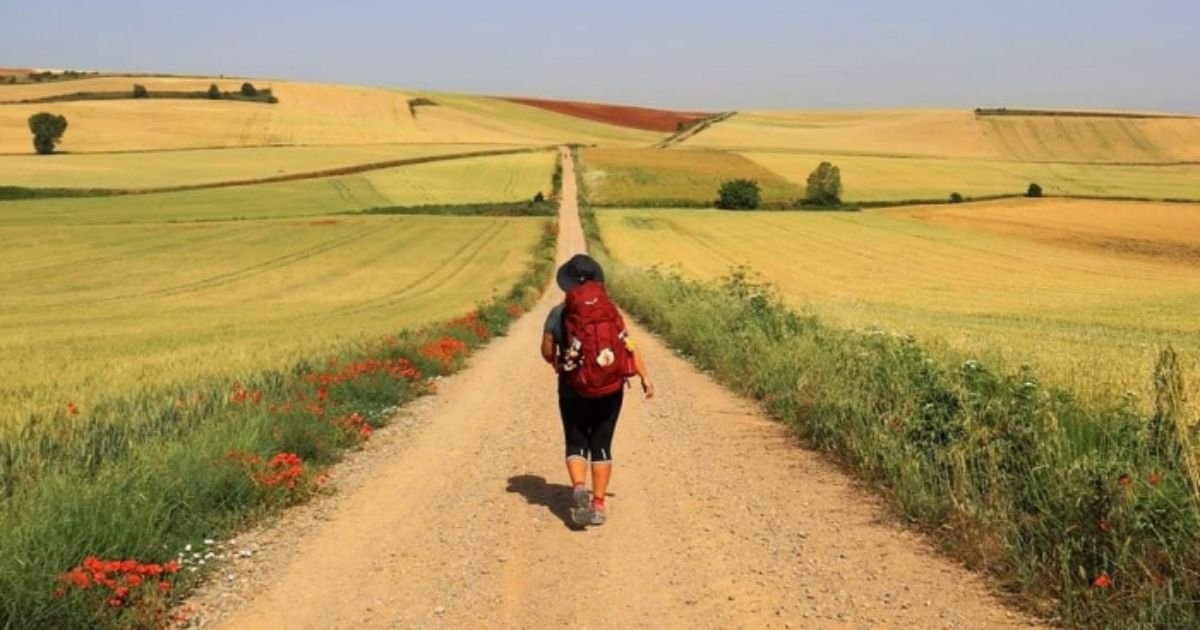
Pilgrimage as a Universal Phenomenon
Pilgrims: A Spiritual Journey That Transforms Souls
Have you ever felt the need to leave everything behind for a while and just walk, searching for something you can’t quite explain yourself? That, my friend, is the calling of the pilgrim. Today I invite you to learn more about this age-old figure, their history, their essence, and why, even today, it still makes so much sense.
What Is a Pilgrim?
Origin of the Word “Pilgrim”
The word “pilgrim” comes from the Latin peregrinus, meaning “foreigner” or “one who travels through distant lands”. But it’s not just about someone who walks… it’s about someone who walks with purpose.
Although pilgrimage is a practice found in many cultures and religions, in the context of Christianity, one of the most significant destinations is the Cathedral of Santiago in Santiago de Compostela, Spain, where, according to tradition, the remains of the Apostle Saint James the Greater are kept.
Modern Pilgrims vs. Pilgrims of Old
In the Middle Ages, pilgrims travelled out of religious devotion. Today, many still walk for that reason, but there are also those seeking to heal a wound, escape stress, find themselves again, or simply live a different kind of adventure. Being a pilgrim is more an attitude than a label. Pilgrimage is an age-old act that has accompanied humanity throughout the centuries, a journey made not only with the feet, but also with the heart and soul.
The Medieval Era: The Pilgrimage Boom
During the Middle Ages, Europe filled with walkers carrying staffs and wearing wide-brimmed hats. Santiago, Rome, Jerusalem… these were the star destinations. Some went as penance, others because of vows they had made, and quite a few in search of redemption.
The Meaning of Being a Pilgrim
In the classic sense, a pilgrim is someone who leaves their everyday life behind to set out on a spiritual journey. This act of faith aims not only to reach a sacred place, but also to seek an encounter with the transcendent and, in many cases, with oneself. Pilgrimage is a metaphor for life itself, where the road symbolises the course of a person’s existence, full of challenges, lessons and opportunities for growth.
Attributes of the Pilgrim
The pilgrim carries different symbols, such as the staff, the road, the cloak, the well of holy water and the distinctive shell. Each of these elements has its own meaning:
- The staff represents both endurance and leaving things behind;
- the open bag is a symbol of humility;
- the pilgrim’s shell used to be the emblem of those returning from Santiago de Compostela; among its other meanings, the shell symbolises death and rebirth.
Reasons to Become a Pilgrim
Faith and Spirituality
Many still walk moved by faith. Every step becomes a prayer, every blister an offering. It’s like talking to God while your feet touch the ground.
Personal Search or Self-Discovery
Others look for answers within themselves. They don’t need temples, just silence and the road. It’s like resetting the soul with every sunrise.
Tourism with a Purpose
Yes, some see it as a cultural experience. It’s not just hiking, it’s living a story, following centuries-old footsteps, and sharing the journey with people from all over the world.
The Camino de Santiago Frances: A Special Case
Why Is It So Popular?
Beyond its religious mystique, the Camino offers landscapes, history, delicious food, and a sense of community that isn’t easy to find elsewhere.
The Story of the Apostle Saint James
According to tradition, the remains of the Apostle Saint James lie in Compostela. That made the city one of the leading pilgrimage destinations in the Christian world.
Waymarking and Hospitality
Yellow arrows, welcoming hostels, pilgrim menus… everything is designed to make the Camino demanding, but also kind.
The First Pilgrims
The first pilgrims were mainly monarchs, abbots and monks, who undertook the journey for religious and political reasons. Among them were the Asturian kings Alfonso II and Alfonso III, who made the pilgrimage in the 9th century. Throughout the 10th century, the pilgrimage began to attract people from all over Europe, including Bretenaldo, a Frank who decided to settle in Compostela, and Bishop Gotescalco of Le Puy, who made the journey together with other clergy and the faithful.
The Golden Age of Pilgrimage (11th-13th Centuries)
Between the 11th and 13th centuries, the Camino de Santiago reached its peak, becoming one of the leading Christian pilgrimage routes alongside Jerusalem and Rome. During this period, thousands of people from all over Europe set out on the Camino, travelling on foot, on horseback or by boat. Support from the Crown, the papacy and monastic orders, such as the abbeys of Cluny and the Cistercians (Order of Cluny), was crucial to the route’s development.
The network of hospitals and hostels along the Camino de Santiago Frances was essential for welcoming and assisting pilgrims. These establishments, founded by kings, nobles and merchants, offered shelter, food and medical care to travellers. Hospitality became a defining feature of the Camino de Santiago, reflecting the importance of Christian care and charity.
Pilgrims in the Middle Ages
In medieval Catholicism, three classes of pilgrims were distinguished:
- Romeros were those who travelled to Rome.
- Palmeros were those who travelled to Jerusalem.
- Concheros. These were the true pilgrims, those who travelled to Santiago de Compostela.
- Crucenos were those who travelled to Santo Toribio de Liebana.
In general, it involved some reference to:
- penance, either self-imposed or sacramentally imposed;
- fulfilment of a vow;
- penance or a vow made on behalf of another person prevented, for some reason, from making the pilgrimage themselves.
Those doing penance began their journey as a way to atone for their transgressions. Some penitents carried their sin written on a piece of paper, which they left on the altar of the shrine.
Travellers commonly wore special attire, especially accessories that became symbols: the saddlebag (a large leather bag shepherds typically used to carry food or other belongings), the staff, a wide-brimmed hat, a cape with a shoulder cape, and the gourd for carrying water or wine. They also wore the emblematic pilgrim’s shell, or scallop shell, as an emblem.
The Late Middle Ages and the Challenges of the Camino (14th and 15th Centuries)
Despite the challenges posed by the Hundred Years’ War, the Black Death and economic crises, the Camino de Santiago Frances remained an important centre of pilgrimage throughout the Late Middle Ages. The Milky Way, seen as a path of souls bound for Paradise, reinforced the spiritual importance of the journey.
During the 14th century, coastal Galicia, with the port of A Coruna as a key reference point, experienced a commercial boom that attracted pilgrims from all over Europe. By the end of the century, the port had become a key arrival point for pilgrims travelling by sea from Flanders, Brittany, England and the Baltic countries.
Pilgrimage in the Modern and Contemporary Era
The Crisis of the Camino in the 16th Century
The 16th century brought with it a profound crisis in the pilgrimage to Santiago, largely due to the Protestant Reformation and the wars of religion in Europe. Criticism from humanist intellectuals, such as Erasmus of Rotterdam, and opposition from figures such as Martin Luther, drew many pilgrims away from the Camino. The Inquisition, with its suspicion of foreigners, further complicated matters for pilgrims.
In 1589, faced with the threat of an English attack led by Francis Drake, Archbishop Juan de Sanclemente ordered the remains of the Apostle Saint James to be hidden in the Cathedral of Santiago, where their whereabouts remained unknown until they were rediscovered in 1879.
The 19th-Century Revival
The Second Discovery of the apostle’s relics in 1879 marked the beginning of the revival of the Camino de Santiago. From then on, the pilgrimage began to grow in importance once again, especially with the papal declaration confirming the discovery of the apostolic remains in the bull Deus Omnipotens of 1884. The 20th century saw a slow but steady recovery, especially after the Second World War, with the creation of the first Jacobean associations and the celebration of Holy Years.
The decisive boost came in 1982 with the pilgrimage of Pope John Paul II to Santiago de Compostela. His speech, in which he called on Europe to rediscover its Christian roots, revived interest in the Camino, drawing pilgrims from all over the world.
The Pilgrim Experience in the 21st Century
A Cross-Cutting Phenomenon
In the early decades of the 21st century, the Camino de Santiago has established itself as a global phenomenon, attracting people of all ages and nationalities. Although the reasons for undertaking the journey have changed over time, the essence of the Camino remains the same: a spiritual and personal journey offering the chance to disconnect from the frantic pace of modern life and reconnect with what really matters.
Today, the pilgrimage to Santiago is a cross-cutting phenomenon that combines spiritual, cultural and ecological aspects. For many, the Camino is a way to explore their faith, while for others it is an opportunity to discover new cultures, make friends and reflect on life.
Hospitality on the Modern Camino
Hospitality remains a fundamental pillar of the Camino de Santiago today. Along the route, pilgrims can find a wide network of hostels, some run by religious organisations, others by Friends of the Camino associations, and others still by individuals who wish to offer walkers a place to rest and be welcomed.
Modern hostels, although more comfortable than their medieval counterparts, retain the spirit of community and solidarity that has characterised the Camino since its earliest days. In many of them, pilgrims can share meals, experiences and prayers, creating an atmosphere of camaraderie that transcends cultural and linguistic differences.
The Cultural and Economic Impact of the Camino
The revival of the Camino de Santiago has had a significant cultural and economic impact on the regions it passes through. Towns and cities along the route have seen a boom in tourism, contributing to local development and the preservation of historical and cultural heritage.
The Camino has also inspired a wide range of artistic and literary works, with numerous books, films and documentaries recounting pilgrims’ experiences. These works have helped spread awareness of the Camino and inspire new generations of pilgrims to set out on the journey.
The Sustainability Challenge
As the Camino de Santiago has grown in popularity, new challenges have also emerged, particularly around sustainability. The growing number of pilgrims has raised concerns about environmental impact and whether infrastructure can cope with the constant flow of travellers.
To address these challenges, various initiatives have been put in place, such as promoting responsible tourism, preserving natural landscapes and restoring historic paths. Environmental education programmes are also being developed to raise pilgrims’ awareness of the importance of looking after the natural surroundings they pass through.
The Camino de Santiago as a Symbol of Hope and Renewal
The Camino de Santiago is much more than a geographical route; it is a journey into oneself, an experience that transforms those who undertake it. Over the centuries, the Camino has withstood wars, crises and social change, remaining a symbol of faith, hope and renewal.
In an increasingly globalised world, often disconnected from its roots, the Camino de Santiago offers a unique opportunity to reconnect with history, spirituality and nature. It is a reminder that, beyond our differences, we are all pilgrims on the journey of life, searching for meaning, community and a higher purpose.
Patron Saint of Pilgrims
In Catholicism, Saint Raphael the Archangel is considered the patron saint of pilgrims.
How to Prepare for a Pilgrimage
Physical and Mental Preparation
You don’t need to be an athlete, but you do need some stamina. Walk for a few days beforehand, wear the right footwear, and get ready to discover your limits… and push past them.
What to Pack
Keep it simple: light clothing, a basic first-aid kit, water, sunscreen, your pilgrim credential, and plenty of attitude. Remember: less is more.
Benefits of Making a Pilgrimage
Inner Transformation
Many come back saying they’re not the same person. The Camino puts you face to face with yourself. No filters. No excuses.
Connection with Others and with Yourself
Pilgrims don’t walk alone. There’s always someone to share a stretch of the road, a story, or a silence with. And in those encounters, something inside you changes.
Myths and Truths About Pilgrims
No, not everyone is religious. And you don’t have to walk hundreds of kilometres either. Being a pilgrim is more about intention than the number of steps you take.
What It Means to Be a Pilgrim Today
Being a pilgrim today isn’t just about walking… it’s about waking up, stepping out of the routine, reconnecting with what really matters. It’s looking inward while moving forward on the outside. It’s letting the Camino transform you.
See also:

