Monte do Gozo

Loading…

Monte do Gozo

Monte do Gozo, located near Santiago de Compostela in Galicia, Spain, is one of the most iconic landmarks for pilgrims travelling the historic Camino Frances. At an altitude of 370 metres above sea level, this hill offers not only a stunning panoramic view of the city but also profound meaning for those walking this ancient route.

Over the centuries, Monte do Gozo has witnessed a great many historical moments, both religious and cultural, that have shaped the pilgrimage tradition toward Catedral de Santiago, the final destination of this legendary route.

Hostel in Monte do Gozo

Albergue
Author Image

Albergue Monte do Gozo


History and Religious Significance of Monte do Gozo

Monte do Gozo in the Middle Ages

Monte do Gozo owes its name — literally “Hill of Joy” — to the delight of pilgrims who, upon reaching its summit, could see the towers of Catedral de Santiago for the first time, marking the final goal of their arduous journey. In the Middle Ages, a small chapel stood at the summit, built in 1105 by Archbishop Diego Gelmírez, to offer pilgrims a place of rest and prayer.

For centuries, this hill was a sacred waypoint, and pilgrims would kneel before the chapel to thank God for having come so far on their pilgrimage. Many of them, especially those travelling on horseback, would dismount and walk the final stretch on foot — some even barefoot — as a sign of humility and devotion.

However, the chapel was abandoned in the 17th century, though the hill’s symbolism endured, and it became a landmark on the Camino Frances, the most heavily travelled route of the Camino de Santiago.

The 1989 Papal Visit

Monte do Gozo gained notable prominence in 1989, when World Youth Day was held in Santiago de Compostela with a visit from Pope John Paul II. Major infrastructure works were carried out on the hill at that time to accommodate the thousands of young people who came to the city for this historic event. It was on this occasion that the Pope’s presence and the enormous crowd gathered there gave the hill an even more symbolic and universal character.

Since that visit, Monte do Gozo has come to be regarded not only as a religious site, but also as a space for cultural and spiritual encounter.

Geographic Features and Accessibility

Monte do Gozo lies on the Camino Frances, just 4.5 km from the centre of Santiago de Compostela. This proximity allows pilgrims, upon reaching the hill, to take in the final stretch of the Camino toward Catedral de Santiago. From the summit, the cathedral’s towers can be seen, marking the fulfilment of a goal that many pilgrims consider the culmination of a transformative experience.

Modern Infrastructure

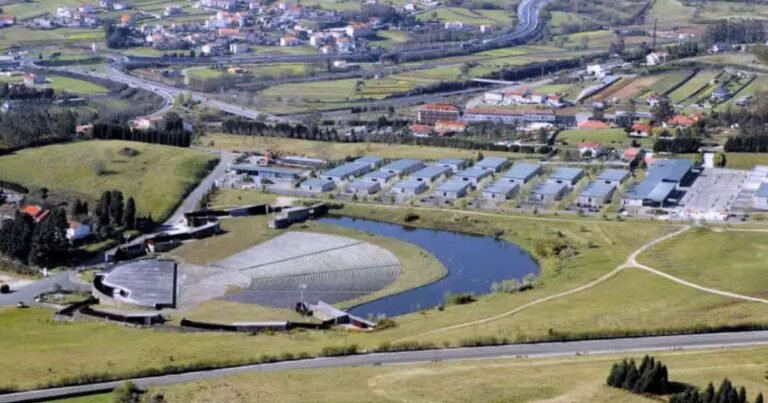
In recent decades, Monte do Gozo has undergone a process of modernisation to meet the needs of today’s pilgrims. It is now home to the Albergue Monte do Gozo, with capacity for hundreds of people, a restaurant, a café, a souvenir shop, and a football pitch, making it a comfortable and welcoming stop for walkers. The hill also has an open-air auditorium hosting numerous cultural and musical events.

One of the most notable festivals held on this stage is O Son do Camiño, a music event that, since 2018, has drawn thousands of people and featured major international artists such as The Rolling Stones, Bruce Springsteen, and Red Hot Chili Peppers, among others.

A Space for Cyclists

Although the hill is mainly associated with pilgrims on foot, it is also common to see cyclists riding the Camino de Santiago. Monte do Gozo offers a suitable space for these pilgrims, who enjoy the beauty of the Galician landscape as they complete their journey to Santiago de Compostela.

Monte do Gozo and Its Cultural Influence

An International Meeting Point

Monte do Gozo is not only a waypoint for pilgrims following the Camino de Santiago, but also a cultural space where diverse traditions, customs, and artistic expressions from around the world come together. The Camino de Santiago is a route that has been walked by people of different countries, cultures, and religions, and the hill has become a meeting point symbolising unity and diversity.

The Legacy of Pope John Paul II

Pope John Paul II‘s visit left an indelible mark on Monte do Gozo. The Pope came not only to bless the pilgrims, but also to highlight the importance of the Camino de Santiago as a spiritual path and an expression of the Christian faith. To this day, the legacy of that visit lives on, as the hill remains a place of reflection and celebration for the thousands of pilgrims who visit it each year.

Importance for Tourism in Galicia

Monte do Gozo holds great importance for tourism in Galicia, not only because of its ties to the Camino de Santiago, but also for its ability to attract visitors interested in history, culture, and spirituality. Every year, thousands of tourists from around the world visit the hill, making it an integral part of the region’s tourism offering.

Connection to Santiago’s City Centre

Monte do Gozo‘s proximity to the centre of Santiago de Compostela gives visitors easy access to the heart of the city without straying too far from the nature and tranquillity the hill offers. From there, pilgrims and tourists can continue on toward Santiago de Compostela Cathedral, whose architectural and religious splendour remains the city’s main attraction.

Monte do Gozo

Monte do Gozo is much more than a simple hill; it is a symbol of the faith, tradition, and unity that characterise the Camino Frances. Over the centuries, it has witnessed momentous events for thousands of pilgrims, and its significance remains as strong today, both for those walking toward Santiago and for tourists coming to learn its history. With rich infrastructure and an enduring cultural tradition, Monte do Gozo continues to be a place of joy and reflection, a landmark on the route to one of Christendom’s most sacred destinations.

Camino de Santiago Francés EN
Resumen de privacidad

Esta web utiliza cookies para que podamos ofrecerte la mejor experiencia de usuario posible. La información de las cookies se almacena en tu navegador y realiza funciones tales como reconocerte cuando vuelves a nuestra web o ayudar a nuestro equipo a comprender qué secciones de la web encuentras más interesantes y útiles.

Puedes revisar nuestra Política de Privacidad.