Astorga
Astorga is a Spanish municipality and city in the Province of León, in the autonomous community of Castilla y León, on the Camino de Santiago Francés.
Accommodation in Astorga


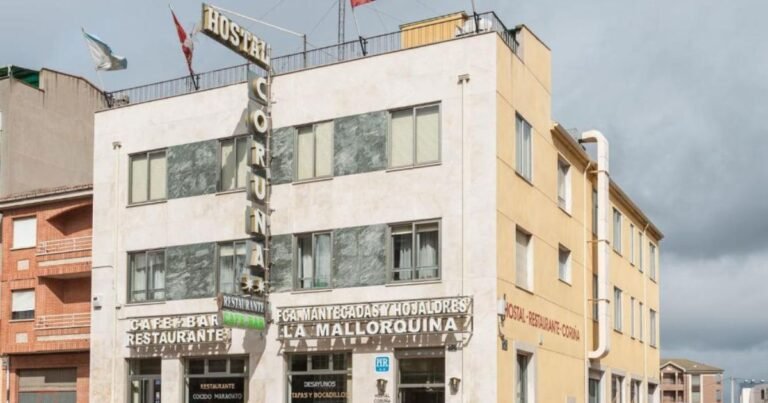
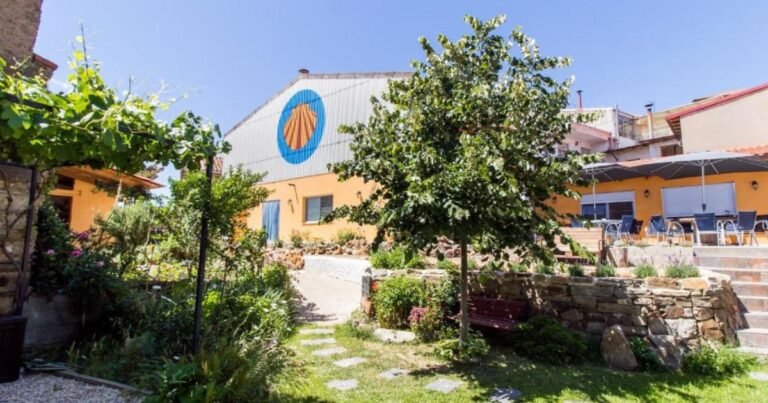
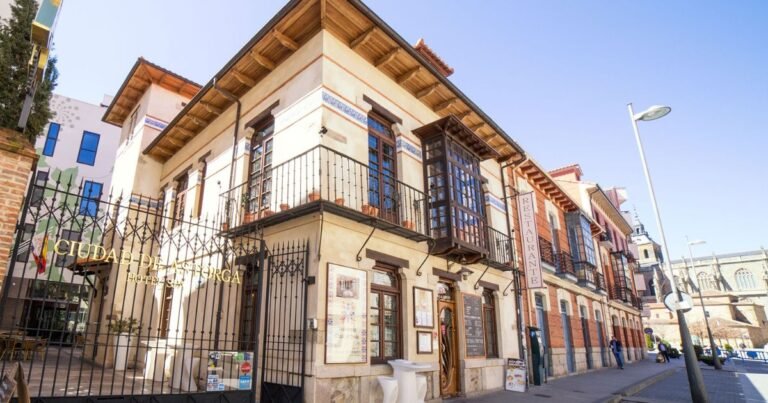

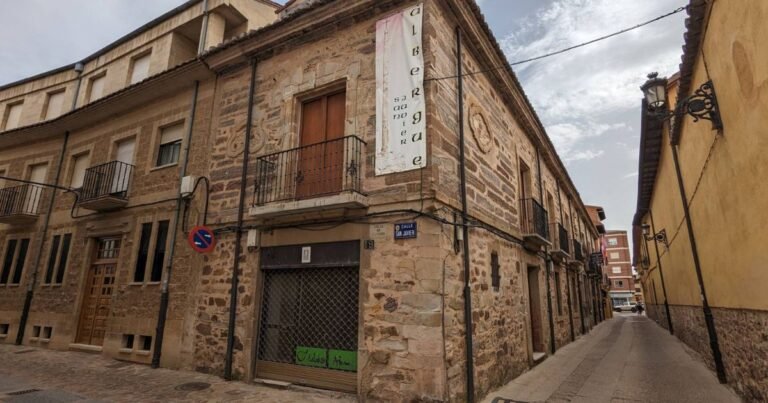
Hostels in Astorga
Toponymy of Astorga
The place name Astorga evolved naturally and popularly from the older name known as Asturica. Several theories have been proposed over time to explain the origin and meaning of this ancient name. On one hand, some historians and chroniclers, such as the famous Gil González Dávila, maintain that the name Asturica comes from the name of a figure called Astyr or Astur, said to be the squire of Memnon, a mythical hero who came to the region from the East. This theory suggests a connection with ancient tales and legends, lending the city’s name a certain prestige.
Others argue that the place name derives from words such as Astiria, Astirica or Asturia, terms already in use at the time of the conquests of Munuza, a Muslim governor. This historical context also plays an important role in the formation of the name, as it suggests a continuity in the place’s identity across the centuries.
Pedro Junco, a 17th-century writer, offered a different interpretation. In his 1635 work, drawing on historical texts such as Covarrubias’s dictionary, he proposed that the name derived from two words, Astu and Orgia. Combining these would form the name Astorgia, which he interpreted as “city for the worship of the gods”, referring specifically to the cult of Bacchus, the Roman god of wine. According to this interpretation, once Latinised, the name would become Asturica. Junco also claimed that before adopting the name Asturica, the city had been known as Rhoma, a Greek term meaning “strong”, pointing to the importance and strength of the place in antiquity.
Throughout history, the city of Astorga has been referred to by different names in various documents. For example, a document from the year 878 refers to it as Astorica. The famous Codex Calixtinus mentions it as Osturga and Austurga. Throughout the Middle Ages, the name continued to evolve, appearing as Astur, Asturius and Asturia. In the 19th century, the historian Víctor Gebhardt, in his General History of Spain, wrote that Astorga had earlier borne the name Asturica Amak, reflecting the various forms in which the city’s name has been recorded over the years.
In Antonio de Nebrija’s dictionary, in its 1734 edition, variants of the name are mentioned, describing Asturia as a region and city near Portugal, and Asturica Augusta as a city that formed part of Tarraconensis, popularly known as Rome. These references show how Astorga was seen not only in local terms, but as part of a wider context within the history of Spain.
In short, Asturica was the name given to the ancient capital of the 22 Astur tribes. Over time, Emperor Caesar Augustus granted it the surname Augusta, raising the settlement’s importance by making it the capital of a legal district (conventus). This not only highlights Astorga’s rich history but also reveals how its name evolved over centuries of history and cultural change on the Iberian Peninsula.
What to See in Astorga?



Roman Route
Main articles: Asturica Augusta and Muralla de Astorga.
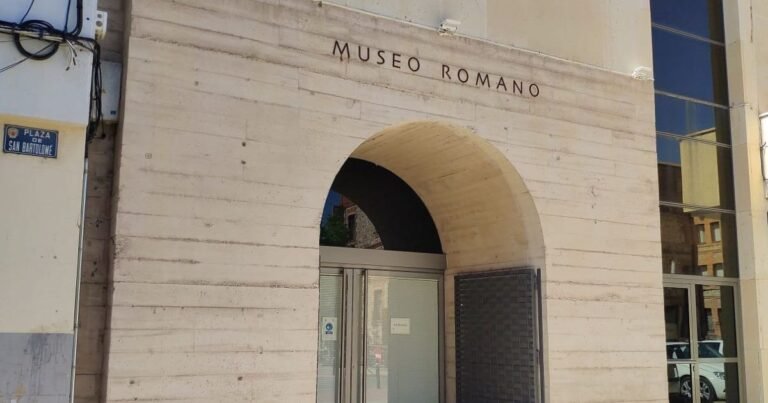
The first excavations began in 1835, but gained real momentum in the 1940s with José María Luengo. Since the late 20th century, work has been carried out that has made it possible to create a route for visiting the city’s Roman remains. Notable finds include the Termas Mayores and Menores (Greater and Lesser Baths), the still-functioning sewer network, the Aedes Augusti (imperial temple) and the Roman Ergástula, above which the Roman Museum now stands. The Domus of the mosaic of the bear and the birds, a typical Roman house, has also been preserved.
The Roman wall is also part of the city’s legacy. It began as a ditch and palisade built by the Legio X Gemina. In the 1st century a first walled enclosure was erected, and in the 3rd century it was completed with a wall over two kilometres long with 27 semicircular towers. This wall was reused in medieval times but suffered damage during the Peninsular War in the 19th century. Although no remains of the old gates survive, they live on in the names of some streets: Puerta Obispo, Puerta del Rey, El Postigo, Puerta del Sol and Puerta de San Miguel.
Astorga Cathedral
Main article: Astorga Cathedral
The cathedral, dedicated to Saint Mary, was consecrated in 1069 by Bishop Pedro Núñez. It was rebuilt in 1087 under Bishop Osmundo and again in the 13th century under Bishop Pedro Fernández. The definitive expansion began in 1471 and continued until the 18th century, combining Gothic, Renaissance and Baroque styles. The building has a rectangular floor plan, three apses and naves, with two towers on the main façade. The Gothic section was built in the late 15th and early 16th centuries, under the direction of Francisco de Colonia and the Gil de Hontañón brothers. The Churrigueresque Baroque façade was begun in the 17th century — its left tower damaged by natural disasters and wars — and was finally completed in 1965. Inside, the 16th-century Renaissance choir stands out, along with several chapels, including that of Our Lady of the Majesty and the Capilla Mayor by Gaspar Becerra. There is also a crypt from 1521, a neoclassical cloister from 1755, and a Rococo sacristy from 1772, alongside the Diocesan Museum and the Diocesan Archive.
Astorga Episcopal Palace
Main article: Astorga Episcopal Palace
After the 1886 fire that destroyed the old episcopal palace, Bishop Joan Baptista Grau i Vallespinós commissioned Antoni Gaudí to design a new building, with construction beginning in 1889. However, after the bishop’s death in 1893, Gaudí withdrew from the project due to disagreements, leaving architects Francisco Blanch y Pons and Manuel Hernández in charge, until Ricardo García Guereta completed the building in 1913. During the Spanish Civil War it was used as a barracks, and in 1963 it opened as the Museum of the Ways (Museo de los Caminos).
The palace, built in grey granite from El Bierzo in Neo-Gothic style, has a Latin-cross floor plan and four façades with towers at each corner. It was designed to combine features of both a castle and a palace, including a moat. The entrance features a porch with three arches and buttresses. Although Gaudí had designed a five-metre angel for the façade, it was never built. At the rear there is an apse with three small apsidioles. The ground floor has an entrance hall and a staircase that lets in plenty of light. The structure rests on decorated pillars and ribbed vaults. Outside, figures of three angels designed by Gaudí are preserved, though they never took their intended place on the roof.
Museums, Archives and Library of Astorga
Main article: Museums of Astorga
The visual arts are represented in the Cathedral Museum, the Museum of the Ways and the Holy Week Museum. The Cathedral Museum, opened in 1954, occupies ten rooms and houses liturgical works from the cathedral. The Museum of the Ways, housed in the Episcopal Palace since 1962, displays pieces related to the Camino de Santiago and includes works by contemporary León artists. The Brotherhood of the Santa Vera Cruz organises exhibitions of religious heritage, featuring works by Gregorio Español and other carvings. The Roman Museum, opened in 1999, displays objects from the ancient Asturica Augusta, tracing its life from its origins to the late Roman period. There is also the Chocolate Museum, founded in 1994, which showcases the city’s chocolate-making history in a modernist building since 2015. Casa Panero, opened in 2011, is the home of the Panero family and gathers the legacy of writers from the Astorga School.
Astorga also has a municipal library, established in 1931, housed in a former hospice. There is also a Municipal Historical Archive, with documents dating back to 1253, including a council-minutes record from 1427, and the Diocesan Archive, created in 1973, which holds the diocese’s documentation dating back to the year 898.
Crossroads of Routes
Astorga, thanks to its strategic location and rich history, has been, since ancient times, a meeting point and starting point for numerous routes that facilitated the movement of different peoples and cultures. During Roman times, this city was connected to the most important cities of that era through several key communication routes. In an ancient reference known as the Tables of Astorga, dating from the 3rd century, several routes are mentioned in which the name Asturica appears, the city’s ancient name. Also from that century is the Antonine Itinerary, a document detailing the communication network that linked Astorga with other important cities such as Bracara Augusta, present-day Braga, following Route XVIII. Another connection was Route XIX, which passed through Lucus Augusti, today’s Lugo, heading towards Augusta Emerita, present-day Mérida, and continuing towards Tarragona via Caesaraugusta, today’s Zaragoza, along Route XXXII, also known as Ab Asturica Terracone. This city was also connected to Bordeaux via Route XXXIV, known as Ab Asturica Burdigalam. These routes linked virtually every corner of the province of Tarraconensis, enabling the movement of troops, travellers and the transport of goods — with gold extracted from Las Médulas among the most notable.
To the south, the famous Vía de la Plata (Silver Route), intended to link Mérida with Astorga (Iter ab Emeritam Asturica), would centuries later coincide in some stretches with the Cañada Real de la Vizana. This route was used by livestock migrating from Extremadura to the mountains of León, in a movement known as transhumance. Today, this ancient route has become one of the main communication arteries connecting western Spain, running from Gijón to Seville via the N-630 road and the Ruta de la Plata motorway. Various institutions are promoting this stretch as a tourist route, also called the Ruta de la Plata, which has generated some disagreement, since historical evidence shows its original course ran exclusively from Mérida to Astorga. Since 2006, the Association of Vía de la Plata Towns, chaired by the mayor’s office of Astorga, has carried out various protest actions against this artificial extension of the route, seeking to preserve its authenticity and history.
Looking eastward, a road once linked Asturica with a place known as Legio, continuing on towards Caesaraugusta. This road later became part of the Camino de Santiago Francés and, over time, became the basis for the present-day N-120. Heading west, the road connecting to Lucus Augusti and Gallaecia was likewise absorbed, centuries later, into one of the stretches of the Camino de Santiago that sets out from Astorga and passes through places such as Foncebadón, Ponferrada and Villafranca del Bierzo, among other historic routes. Around these main routes grew a network of interconnected paths, including those used by muleteers (arrieros) and those used during raiding expeditions (razzias). These paths were used both by Muslim troops led by figures such as Tarik, Muza or Almanzor, and by French soldiers during the Peninsular War. All of these routes saw constant traffic, which not only kept them alive but also promoted cultural and human exchange, as well as bringing various artistic styles to the region. Today, the legacy of some of these communication routes can be seen at Astorga’s Museum of the Ways, founded in 1962, which preserves the rich history of these ancient routes.
The Camino de Santiago Francés in Astorga
The Camino de Santiago is one of the most famous and widely walked pilgrimage routes in the world, especially renowned for its rich history and cultural importance. Among the various routes leading to the Cathedral of Santiago in the city of Santiago de Compostela, the Camino de Santiago Francés stands out as the most popular and best known since the Middle Ages. This route has its roots in the ancient Roman road called Ab Asturica Burdigalam. Along its course, which begins in the town of San Justo de la Vega, the route heads towards the city of Astorga. Pilgrims enter the city through what was once the old Puerta del Sol, although sadly this gate no longer exists.
Once walkers enter Astorga, they pass through streets and squares that form part of the area’s history and culture. The route continues along Calle San Francisco, once known as Calle de las Tiendas. The pilgrim then reaches the Plaza Mayor, a lively central square, followed by Calle Pío Gullón, formerly known as Rúa Nueva. The route then continues along Santiago Crespo and finally heads towards Calle Santiago, once called Caleya Yerma in earlier times. This stretch ends in front of the Episcopal Palace, a notable building, as well as the Church of Santa Marta and the city’s famous cathedral. From this point, the pilgrim continues along Calle Leopoldo Panero and then San Pedro, where they find the Church of San Pedro, a modern building located in the area known as the Rectivía district. After crossing the N-6 road, the route continues towards the Foncebadón pass, another significant point along this pilgrimage route.
During the Middle Ages, Astorga offered a considerable number of hostels and hospitals dedicated to welcoming pilgrims arriving in the city. One of these, the Hospital de San Juan Bautista, has an interesting history: tradition holds that Saint Francis spent several days there recovering from illness. This hospital was the forerunner of a modern charitable and welfare institution. However, as the centuries have passed, most of these hostels have disappeared, and today only memories remain, along with some descriptions found in historical documents that have survived over time.
Until the late 1980s, pilgrims passing through Astorga could find shelter and accommodation thanks to the efforts of the congregation of the Brothers of Our Lady of Lourdes. From that point on, accommodation services for pilgrims were taken over by the Association of Friends of the Camino de Santiago of Astorga. This association, after offering assistance at various locations, established the Siervas de María hostel in 2006, with a total capacity of 164 beds for pilgrims. Meanwhile, the San Javier hostel, opened in 2003 and run by the Vía de la Plata Cultural Association, offers 110 beds. More recently, in 2019, another hostel called Só Por Hoje opened, providing 10 beds for walkers looking for a place to rest. In 2007, the Association of Friends of the Camino de Santiago of Astorga was also awarded the Elías Valiña prize by the Xunta de Galicia, recognising its promotional work and its dedication to preserving and promoting the Jacobean routes, underscoring the importance of these traditions today.
Astorga
| Country | Spain | |
|---|---|---|
| Autonomous Community | Castilla y León | |
| Province | Province of León | |
| Comarca | Tierra de Astorga | |
| Judicial district | Astorga | |
| Location | 42°27′25″N 6°03′25″W | |
| Elevation | 869 m | |
| Area | 46.78 km² | |
| Population centres | Astorga, Castrillo de los Polvazares, Murias de Rechivaldo, Santa Catalina de Somoza and Valdeviejas | |
| Founded | Around 14 BC | |
| Population | 10,308 (2024) | |
| Density | 238.41 inhabitants/km² | |
| Demonym | astorgano, astorgana | |
| Postal code | 24700 | |
| Dialling code | 987 | |
| Twinned with | Reus (Tarragona) Moissac (France) Clavijo (La Rioja) Mérida (Badajoz) | |
| Patron saint | Santo Toribio (16 April) | |
| Patron saint (female) | Santa Marta (23 February) | |
| Website | www.aytoastorga.es | |
See also

