Ponferrada
Ponferrada is a Spanish city in the Province of León, in the autonomous community of Castilla y León. It lies in the Comarca del Bierzo, of which it is the capital.
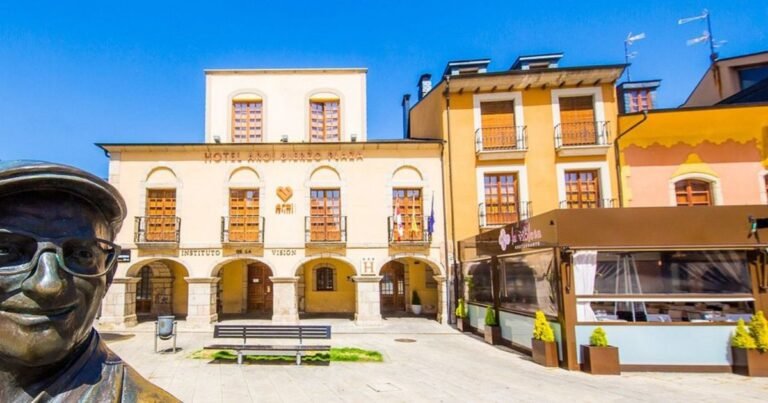
Accommodation in Ponferrada
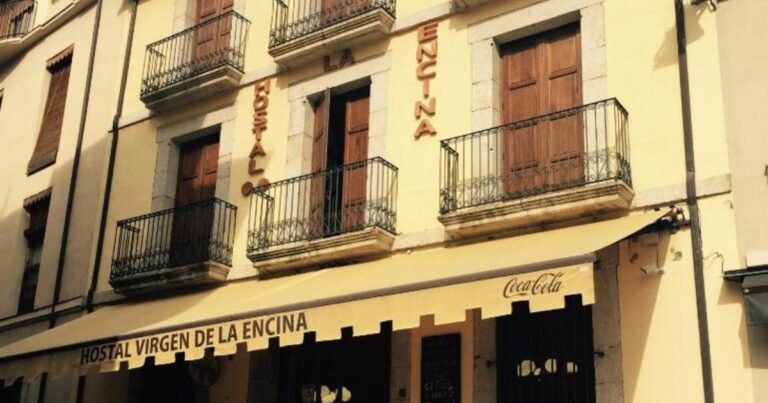
Hostels in Ponferrada
What to see in Ponferrada?
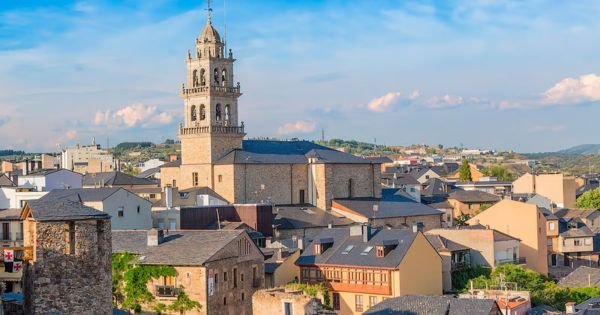
History of Ponferrada
The history of Ponferrada spans several stages, from prehistory to the present day. Although there is evidence of settlements in the area since the Neolithic period, historical documentation begins in the 11th century. During that period, Bishop Osmundo of Astorga ordered the construction of a bridge over the River Sil in collaboration with King Alfonso VI of León, around the year 1082. This fortified bridge, reinforced with iron, gave rise to the town’s name (Pons Ferrata, ‘iron bridge’).
The church of San Pedro was founded in 1086, and around it grew La Puebla de San Pedro, the first name of Ponferrada, which later became known as Ponte Ferrato.
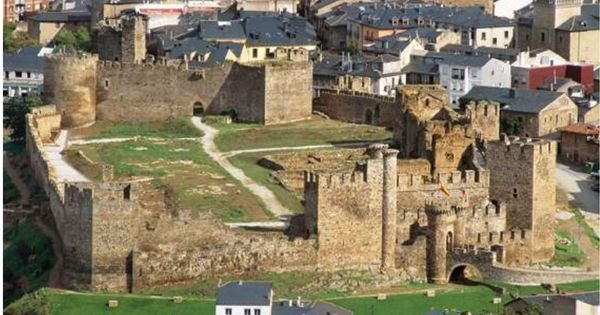
In 1180, King Fernando II granted the town its first charters, and it was later given to the Order of the Temple by Alfonso IX of León. The Templars’ presence in Ponferrada left its mark, including the tradition that credits the order with the discovery of the image of the Virgen de la Encina around 1200.
After the dissolution of the Order of the Temple in the 14th century, Ponferrada came under the rule of the Castro family. During this period, the town grew significantly, with the building of walls and the arrival of peasants, merchants and craftsmen.
In the 14th century, Enrique III granted Ponferrada to the Count of Trastámara, Pedro Enríquez, who married Isabel de Castro. After several disputes and misdeeds, the town was confiscated by King Juan II, but was finally recognised as the property of Doña Aldonza de Mendoza in 1431.
Over the centuries, Ponferrada changed hands and was caught up in various conflicts, including the Irmandiño Revolt in 1467. After the death of Pedro Álvarez Osorio in 1483, a succession conflict broke out, resolved by the Catholic Monarchs in 1486, which led to the creation of the Marquisate of Villafranca del Bierzo and the loss of Ponferrada Castle to the Crown.
In the modern era, during the Peninsular War, Ponferrada was the seat of the Junta Superior de León on several occasions. In the 19th century, the city was part of the province of Villafranca and later of the province of León.
In the 20th century, in 1908, Ponferrada was granted city status by King Alfonso XIII. The exploitation of mineral resources and the construction of the Endesa thermal power plant in 1949 transformed the character of the city, making it the region’s main population centre and economic hub.
Demonym of Ponferrada
The demonym of Ponferrada for its inhabitants is ponferradino for men and ponferradina for women.
Geography
In the Bierzo region, Ponferrada is located 113 kilometres from the provincial capital, León. The municipality is crossed by the following roads: the A-6 Autovía del Noroeste between kilometre markers 383 and 392, the former N-6 road, the N-536 national road connecting with Priaranza del Bierzo and Carucedo, and the CL-631 regional road, which links to Toreno. Ponferrada lies at the confluence of the Sil and Boeza rivers, at the eastern edge of the Bierzo plain, in the north-west of the province of León.
The municipality’s terrain has two clearly distinct areas. To the north, the land is flat, lying in the valleys of the Sil and Boeza rivers, at an altitude of around 550 metres. South of the valleys lies the mountainous area belonging to the Montes de León, which reaches heights of over 1,500 metres.
The city stands 524 metres above sea level. The municipality’s altitude ranges from 2,051 metres at Pico Tuerto, in the Montes Aquilianos (part of the Montes de León), down to 414 metres on the banks of the River Sil. The municipality covers a total area of 283.17 km².
Heritage of Ponferrada
Other monuments in Ponferrada
- Calle del Reloj, which connects the square of the basilica with the town hall square.
- Torre del Reloj (former city gate). The only free-standing clock tower in Spain. Rectangular in plan, its first two sections were built in the 16th century, during the reign of Carlos I, on top of one of the arches of the old medieval city wall. A third section was added at the end of the 17th century.
- Casa Consistorial (town hall, 1692), in Baroque style.
- Iglesia de San Andrés, near the castle.
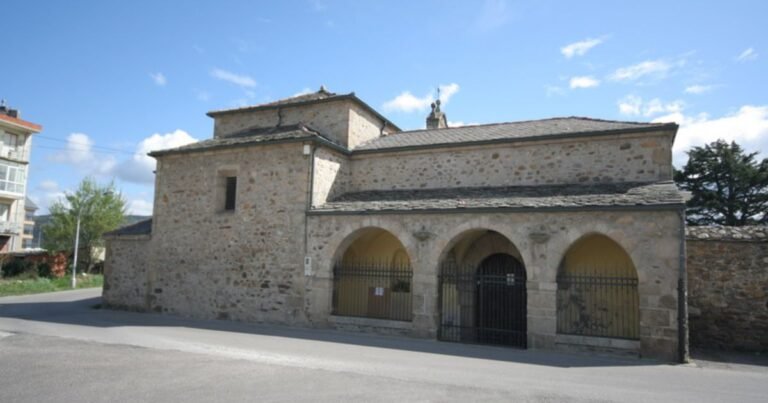
- Ermita El Salvador in Toral de Merayo, 18th century; Neoclassical.
- Roman fountain in Campo.
- Herrería de Compludo, in the village of Compludo. It is an example of a traditional medieval industry, made up of a water-powered system used for forging.
- Historic quarter of the village of Peñalba de Santiago, declared a site of artistic and historic interest.
- Museo del Bierzo: general art and archaeology museum of the Bierzo region. Located in the Palace of the Counts of Toreno, later Ponferrada’s former prison in the Modern Age, next to the Torre del Reloj. It has two floors for the permanent exhibition, and one for temporary exhibitions.
- Museo del Ferrocarril (Railway Museum): a museum dedicated to the railway, housed in what was Ponferrada’s station in the days of the Ponferrada–Villablino railway. It holds steam locomotives of various sizes, most of them from this railway, all fully restored, as well as carriages from either RENFE or this mining railway, signal control centres, a train simulator, scale model railways, and more. It also has an annex called Estación Arte, which hosts temporary exhibitions, especially aimed at young people so they can display their work.
- Museo de la Radio (Radio Museum): founded by journalist Luis del Olmo, it houses numerous unique radio sets.
- Museo de la Energía (Energy Museum): a museum made up of three phases. The first phase, opened in July 2011, involved the restoration of the former MSP thermal power plant in Ponferrada, displaying all the equipment once used to generate electricity from coal, since the plant retained all its original machinery, which has since been restored. This has brought new value to the old power plant where many ponferradinos and Bierzo residents once worked. This first phase is called La Fábrica de Luz (The Light Factory). In March 2023, the museum’s second phase opened: the Compostilla I plant, known by the museum as La Térmica Cultural, located just 100 metres from the MSP plant, which houses a conference hall, three permanent exhibitions and a galleon, among other things. The third phase consists of the Carboniferous Forest, which will be unique in the world and will attempt to recreate the climate and environment of the era when coal was formed. This entire project is called Ene.Museo, developed by the Ciuden foundation.
- Nearby, in the vicinity of the municipality, are also the ruins of the Roman mines of Las Médulas, declared a UNESCO World Heritage Site, which belonged to Astur territory at the time they were worked.
Festivals and events in Ponferrada
La Encina Festival
The Fiestas de La Encina in Ponferrada are a major celebration honouring the Virgen de la Encina, patron saint of the city and of the Bierzo region. The main day of the festival is 8 September, followed by La Encinina on 9 September. These two days are local public holidays under the town council’s decree and are moved to a different date if they fall on a Saturday or Sunday.
In addition, a festival for young people and children called Cima is held in the Parque del Temple from 1 to 6 September. During this event, inflatable attractions are set up, along with a train that tours the park, craft workshops, adventure activities, theatre performances and dance shows for children.
The festivities, which run from 5 to 9 September, include a ceramics fair, exhibitions by local painters, food tastings and the Festival de la Canción Berciana (Bierzo Song Festival), in which choral groups from across the region take part. There are also sports competitions and concerts at the Auditorio Municipal as part of the Noches de la Encina series, which has drawn well-known national artists.
One of the most popular events is the parade of floats on the afternoon of 8 September, culminating in the crowning of the festival queen and her ladies-in-waiting. Marquees are set up on the esplanade between Avenida de la Libertad and Avenida de la Lealtad for food tastings and live bands that liven up the summer verbena nights.
Noche Templaria (Templar Night)
Another important celebration in Ponferrada is the Noche Templaria (Templar Night), which takes place on the first full moon of July. This event recreates a fantastical medieval happening, portraying the return of the Grand Master of the Order of the Knights Templar to the city of the Iron Bridge to seal a pact of friendship and hand over custody of the sacred Ark of the Covenant and the Holy Grail. The Noche Templaria includes a Templar parade, music, fireworks, food tastings and street entertainment, making it one of the liveliest festivities of the Ponferrada summer.
La distancia de Ponferrada hasta Columbrianos son 5 km
La distancia de Ponferrada hasta Fuentes Nuevas son 8 km
La distancia de Ponferrada hasta la Catedral de Santiago en Santiago de Compostela son 209 km
Ponferrada
| Country | España | |
| Autonomous community | Castilla y León | |
| Province | Provincia de León | |
| Comarca | El Bierzo | |
| Judicial district | Ponferrada | |
| Location | 42°32′46″N 6°35′27″O | |
| Elevation | 5122 m (mín: 4463, máx: 20993) | |
| Area | 283,17 km² | |
| Settlements | Bárcena del Bierzo Bouzas Campo Carracedo de Compludo Columbrianos Compludo Compostilla Cuatrovientos Dehesas Espinoso de Compludo Flores del Sil Fuentesnuevas Lombillo de los Barrios Manzanedo de Valdueza La Martina Montes de Valdueza Otero Ozuela Palacios de Compludo Peñalba de Santiago La Placa Ponferrada Rimor Salas de los Barrios San Adrián de Valdueza San Andrés de Montejos San Clemente de Valdueza San Cristóbal de Valdueza San Esteban de Valdueza San Lorenzo Santa Lucía de Valdueza Santo Tomás de las Ollas Toral de Merayo Urbanización Patricia Valdecañada Valdefrancos Villanueva de Valdueza Villar de los Barrios | |
| Founded | 11th century, as Pons Ferrata | |
| Population | 62 963 hab. (2023) | |
| Density | 232,33 hab./km² | |
| Demonym | ponferradino, ponferradina | |
| Postal code | 24401-24404 | |
| Dialling code | 987 | |
| Twinned with | Pachuca de Soto | |
| Patroness | Virgen de la Encina (8 de septiembre) | |
| Website | https://www.ponferrada.org/es | |