Santa Catalina de Somoza

Loading…


Santa Catalina de Somoza

Nestled in the heart of the Maragatería region, Santa Catalina de Somoza is a hidden gem in the municipality of Astorga, in the Provincia de León, in the autonomous community of Castilla y León. With an elevation of 984 metres and a small population of under fifty residents, this village stands as a strategic waypoint on the Camino de Santiago Francés. Its value lies not only in its geography or its role on the Way of St James, but in its cultural richness, its traditional Maragato architecture and the deep historical roots it has preserved intact over time.

Santa Catalina de Somoza on the Camino de Santiago

The Camino de Santiago Francés passes through Santa Catalina de Somoza, making the village an essential stop for thousands of pilgrims who walk this age-old route year after year. This privileged position has made the village not just a resting place, but a space of intercultural and spiritual encounter. The cobbled streets, stone houses with slate roofs and old inns bear witness to the continuous passage of travellers over the centuries.

What to see in Santa Catalina de Somoza?
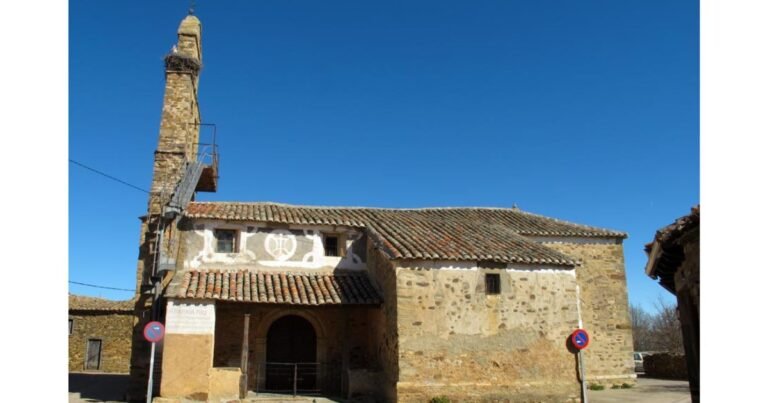
Iglesia
Author Image

Iglesia Santa María Santa Catalina de Somoza


Traditional Maragato Architecture: Legacy of a Unique Culture

The character of Santa Catalina is deeply shaped by Maragato architecture, typical of this part of western León. Maragato houses are easily recognised by their large size, solid wooden gates, and the distinctive central courtyard around which the rooms are arranged. These buildings reflect a way of life historically tied to the transport of goods between Galicia and Castile, a trade in which the Maragatos specialised.

Traditional materials — stone, clay and wood — are used with great skill to create sturdy buildings that are aesthetically in harmony with the mountainous landscape. This architectural heritage is well preserved in Santa Catalina, which adds to its tourist and cultural value.

History of Santa Catalina de Somoza

The origins of Santa Catalina de Somoza date back to the Middle Ages, although some archaeological finds suggest the area may have been inhabited even earlier. The first written document mentioning the village dates from the 12th century, in the context of donations to the local clergy. Since then, the settlement has been linked to the development of the Camino de Santiago and to the territorial evolution of the Kingdom of León and later of Castile.

Over the centuries, Santa Catalina has kept its identity as a farming and livestock community, stoically weathering the ups and downs of history. Being part of the municipality of Astorga has allowed it to benefit from heritage protection and rural development policies.

Maragato Gastronomy: Flavour and Tradition

Santa Catalina de Somoza shares the Maragato culinary legacy, whose best-known jewel is the cocido maragato, a hearty dish served “backwards”: starting with the meats, followed by chickpeas with vegetables, and finishing with the soup. This unusual way of eating symbolises the resilience and strength of the Maragato people, suited to long working days and the harsh climate of the plateau.

Local products such as cured meats, honey, aged sheep’s cheese and artisan bread round out the region’s culinary offer. All of this is a further draw for visitors seeking authentic experiences and traditional flavours.

Patron Saint Festival of Santa Catalina de Somoza

Santa Catalina de Somoza celebrates its patron saint festival on 25 November, in honour of Saint Catherine of Alexandria, a Christian martyr held in great popular devotion. On this date, the community gathers to celebrate masses, processions and communal meals that strengthen social bonds and local identity.

The community spirit of the residents, combined with hospitality towards pilgrims, makes this festival a unique event that blends the sacred and the festive in an atmosphere of reflection and celebration.

Flora and Fauna of Santa Catalina de Somoza

The elevation and geographical position of Santa Catalina de Somoza favour a rich and varied biodiversity. Holm oaks, oaks and rockrose scrub dominate the landscape, while birds of prey, roe deer and wild boar inhabit the surrounding area. This natural wealth makes the area ideal for hiking, birdwatching and nature photography.

Services for Pilgrims in Santa Catalina de Somoza

Despite its small size, Santa Catalina is well equipped to welcome pilgrims with services such as hostels, rural guesthouses and bars. The parish hostel offers simple but welcoming accommodation, following the Camino’s tradition of hospitality. In addition, the Camino signage is clear and consistent, allowing walkers to find their way with ease.

Santa Catalina de Somoza

Santa Catalina de Somoza is not merely a geographical point on the Camino de Santiago. It is a village with history, with soul, with a living cultural heritage and a privileged natural setting. Visiting it means immersing yourself in centuries of tradition, hospitality and spirituality. It means discovering the essence of the Maragatería and being part, even if only for a few hours, of a legacy that transcends time.

Those wishing to discover the true inland Spain, one that remains true to its roots while reinventing itself in harmony with the present, will find in Santa Catalina de Somoza an essential destination.

CountrySpain
Autonomous communityCastilla y León
ProvinceProvince de León
ComarcaMaragatería​
Judicial districtAstorga
MunicipalityAstorga
Location42°27′16″N 6°09′31″W
Elevation984 m
Population47 residents (INE 2017)
Postal code24718
Dialling code987
WebsiteAyuntamiento de Astorga
Camino de Santiago Francés EN
Resumen de privacidad

Esta web utiliza cookies para que podamos ofrecerte la mejor experiencia de usuario posible. La información de las cookies se almacena en tu navegador y realiza funciones tales como reconocerte cuando vuelves a nuestra web o ayudar a nuestro equipo a comprender qué secciones de la web encuentras más interesantes y útiles.

Puedes revisar nuestra Política de Privacidad.