Profile
Puente de la Rabia Zubiri
The Puente de la Rabia in Zubiri: History, Legends and Its Significance on the Camino de Santiago
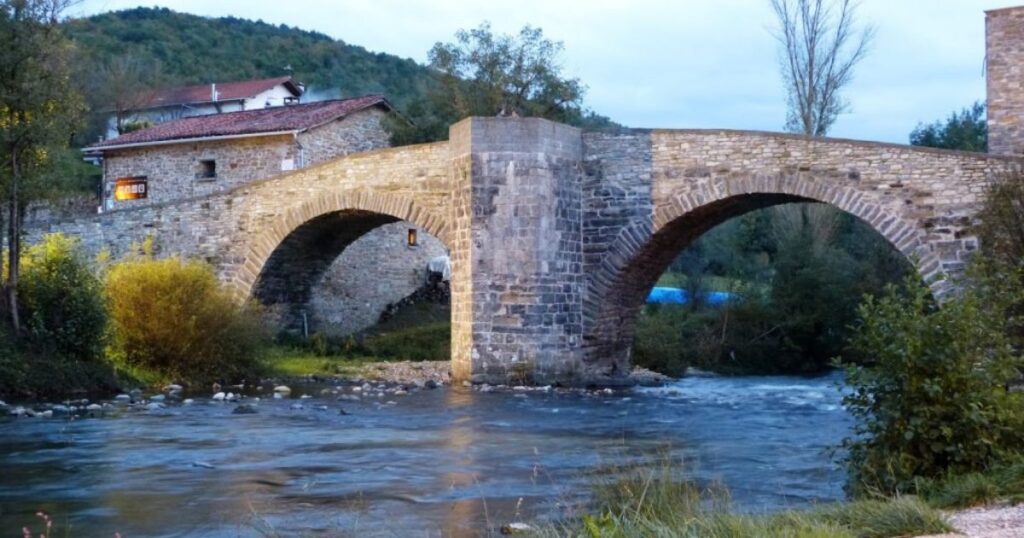
The Puente de la Rabia, located in Zubiri, Navarra, is a place steeped in history and legends that has endured in collective memory over the centuries. This medieval bridge, which crosses the Arga River, is part of the route of the Camino de Santiago Frances, one of the most important pilgrimage routes in the world. Its name, wrapped in mystery and tradition, has fascinated pilgrims and travelers who have crossed it. In this article, we explore in depth the history of the Puente de la Rabia, the legends surrounding it and its importance on the Camino de Santiago.
History of the Puente de la Rabia
Origin and Construction of the Puente de la Rabia Zubiri
The Puente de la Rabia was built during the Middle Ages, a period in which numerous structures were erected to make it easier for pilgrims to travel along the Camino de Santiago. Building this bridge over the Arga River served not only a practical purpose, but also symbolized devotion and support for pilgrims making the arduous journey to the tomb of the Apostle Saint James in Compostela.
The term “Zubiri” in Basque means “the village of the bridge,” underscoring the bridge’s importance to the town’s identity. Although the exact date of its construction is unknown, the bridge is believed to have been a crucial crossing point since the Middle Ages, allowing the passage not only of people but also of livestock, which was essential for the local economy.
The Camino de Santiago and the Puente de la Rabia
The Puente de la Rabia is an iconic spot on the Camino de Santiago Frances, one of the busiest pilgrimage routes. This route connects with Roncesvalles, one of the first resting places on the way after crossing the Pyrenees from France. For pilgrims, crossing the Puente de la Rabia means not only advancing on their spiritual journey, but also connecting with an ancient tradition that has seen thousands of travelers pass through over the centuries.
The bridge has witnessed the constant flow of pilgrims, who often pause in Zubiri to reflect, rest and take in the rich history that precedes them. Over the years, the Puente de la Rabia has become a symbol of perseverance and faith, core elements of the Camino de Santiago.
The Legend of the Puente de la Rabia
Origins of the Legend of the Puente de la Rabia
The legend of the Puente de la Rabia is deeply rooted in local culture. According to tradition, the bridge was believed to have healing properties, especially for treating rabies in animals. Legend has it that if an animal sick with rabies was taken to the bridge and walked three times around the central pillar, the animal would be cured of its illness.
This ritual was linked to the discovery of the remains of Saint Quiteria, a saint known for protecting against rabies. Saint Quiteria is venerated as a powerful intercessor against disease, and her association with the Puente de la Rabia reinforced the belief that this place held miraculous powers.
The Central Pillar of the Puente de la Rabia and Its Meaning
The central pillar of the Puente de la Rabia plays a crucial role in the legend. According to tradition, this pillar is where the bridge’s healing power is concentrated. The fact that animals were led around this pillar three times is no coincidence; the number three carries deep symbolic meaning in many cultures, often associated with divinity, protection and perfection.
Stories of miraculous cures helped make the Puente de la Rabia a pilgrimage site in its own right, where local residents and travelers brought their animals seeking relief. Although science has since disproven such healing powers, the legend persists as a testament to the power of faith and tradition in rural communities.
The Puente de la Rabia in a Cultural Context
Depictions in Art and Literature
The Puente de la Rabia has inspired artists and writers over the centuries. Its combination of history and legend has been depicted in various art forms, from paintings to literary works. Pilgrims who have passed through Zubiri have often documented their experiences, leaving behind a legacy of writings that capture the mystical essence of the bridge.
In literature, the Puente de la Rabia has been mentioned in numerous chronicles and guides to the Camino de Santiago, highlighting its importance as a landmark for pilgrims. The bridge has also been the subject of ethnographic studies exploring the persistence of legends in rural communities and their impact on popular culture.
Festivities and Celebrations
The Puente de la Rabia also plays a central role in local festivities. In Zubiri, events are held to commemorate the history and legends of the bridge, drawing both locals and visitors. These celebrations include fairs, processions and reenactments of the rituals associated with the bridge, keeping the tradition alive and reinforcing the community’s cultural identity.
The festivities surrounding the Puente de la Rabia are an opportunity for the community to come together and celebrate its heritage, while offering visitors an immersion in local culture. These celebrations not only honor the past, but also help preserve and pass on traditions to future generations.
Camino de Santiago Frances >> Navarra >> Zubiri >> Bridge de la Rabia
Map
Sorry, no records were found. Please adjust your search criteria and try again.
Sorry, unable to load the Maps API.