
Profile
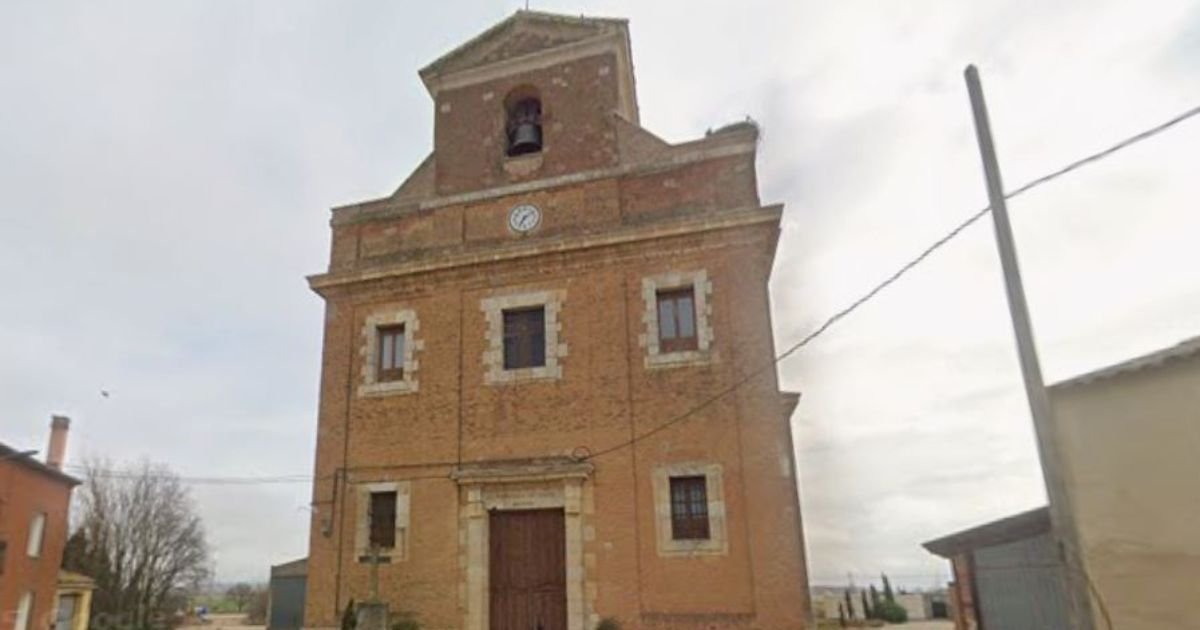
Church of Saint Juliana in Santillana de Campos
Right in the heart of Palencia’s Tierra de Campos, along the historic route of the Camino de Santiago Frances via the Via Aquitania, stands the Church of Saint Juliana of Santillana de Campos, a church combining architectural simplicity with profound spiritual meaning.
The village of Santillana de Campos, part of the municipality of Osorno la Mayor, retains a rural charm that evokes centuries of history linked to the passage of pilgrims, merchants and travelers who once walked this Jacobean branch toward Santiago de Compostela.
This spot, surrounded by grain landscapes and wide horizons, is part of a territory where stone and faith merge into a shared identity. The parish church dedicated to Saint Juliana is the most representative symbol of that heritage.
A church tied to Jacobean history
The Church of Saint Juliana stands as a testament to the effort and devotion of a community that managed to rebuild after losing its old medieval church.
The original church, in Romanesque style, once stood on the site of the current cemetery and, according to tradition, was destroyed by fire. In the late 19th century, residents undertook the construction of the current church, replacing the lost building while keeping its dedication to the martyr Saint Juliana.
The new building not only restored the space’s liturgical function, but also reaffirmed the continuity of worship and the pilgrim spirit in this village, located along one of the historic routes connecting Burgos, Palencia and Leon: the Via Aquitania.
The Via Aquitania: a historic route of the Camino Frances
The Via Aquitania was one of the oldest and most heavily traveled routes of the Camino de Santiago Frances as it crossed Castilla y Leon. This route connected Bordeaux with Astorga across the Castilian plateau, and on its way through the province of Palencia it linked towns such as Osorno la Mayor, Fromista, Carrion de los Condes and Sahagun.
In this context, Santillana de Campos played a secondary but significant role, as a farming settlement, a resting point and a place of passage for pilgrims seeking shelter, food and prayer. The Church of Saint Juliana served as a spiritual landmark and community meeting point for walkers and local residents alike.
Architecture and artistic style
The current church follows a late 19th-century Neo-Renaissance style, characterized by sobriety and balanced proportions. Its construction combines limestone and brick, materials abundant in the region, lending the church warmth and sturdiness.
The main facade features a central section with a semicircular arched entrance, flanked by pilasters and topped by a double espadana housing the bells. Its balanced design recalls the rural churches of 19th-century Castilla, which reinterpreted classical languages through a functional and devotional lens.
The interior is laid out as a single nave with a rectangular plan, covered by a shallow barrel vault. The raised presbytery visually leads toward the main altar, presided over by the titular image of Saint Juliana the Martyr.
Natural light enters through splayed side openings, creating a serene, contemplative atmosphere. The simplicity of the interior space heightens the church’s spiritual character, inviting quiet reflection and prayer.
Distinctive features
Although the ornamentation is understated, several heritage features stand out:
-
A silver processional cross dating from the 19th century.
-
Several liturgical pieces (chalices, monstrances and embroidered cloaks) reflecting local devotion.
-
A small main altarpiece with a gilded wooden structure, depicting the patron saint accompanied by protective saints.
The ensemble conveys the continuity between Castilian artistic tradition and 19th-century devotional forms.
Saint Juliana the Martyr: a symbol of faith and resistance
The church is dedicated to Saint Juliana of Nicomedia, a young 4th-century martyr who, according to tradition, was tortured for refusing to renounce her Christian faith and marry a pagan governor. Her cult spread throughout Europe during the Middle Ages and took deep root in Castilla, where numerous churches and chapels bear her name.
In Santillana de Campos, the saint is venerated as the village’s protector and a symbol of spiritual strength. Her image presides over the main altar, and her feast day, celebrated every February 16th, is the most important religious and social event of the year.
Religious festivities and celebrations
Every February, the village pays tribute to its patron saint with a program combining liturgical tradition and popular celebration. The day begins with the solemn mass in honor of Saint Juliana, followed by a procession through the streets of the village.
The sound of the bells, the banners and the participation of residents give the festivity a sense of collective emotion. Throughout the day, cultural events, tastings and community gatherings also take place, strengthening the community spirit of this century-old tradition.
The church as a center of life and cultural heritage
Beyond its religious value, the Church of Saint Juliana is a heritage landmark within the municipality of Osorno la Mayor. The church is kept up thanks to the care of local residents and the interest of visitors touring the area, drawn by the authenticity of rural Palencia.
Today the church is a point of tourist and cultural interest for those walking the Camino de Santiago or exploring the inland routes of the Via Aquitania. Guided tours are organized during the summer months, along with sacred music events and temporary exhibitions that showcase local heritage.
Location and surroundings
Santillana de Campos is located 10 kilometers from Osorno la Mayor and 50 kilometers from the city of Palencia. The most convenient access is via the A-231 highway (Camino de Santiago Frances), taking the exit toward Osorno and continuing along well-signposted local roads.
The surroundings offer a typical plateau landscape, with gentle hills, grain fields and traditional dovecotes. It is a perfect setting to enjoy rural and cultural tourism, far from the urban bustle, where time seems to stand still.
What to see near Santillana de Campos
A visit to the Church of Saint Juliana can be paired with other places of great interest along the Palencia stretch of the Jacobean route:
-
Fromista: famous for its Church of Saint Martin, a gem of European Romanesque architecture.
-
Osorno la Mayor: a historic town with remains of the medieval castle and the Church of Our Lady of the Assumption.
-
Carrion de los Condes: a traditional pilgrim stop with an impressive monastic and Romanesque ensemble.
-
Canal de Castilla: one of the most remarkable 18th-century hydraulic works, ideal for walking or cycling routes.
-
La Olmeda Roman Villa, in Pedrosa de la Vega: one of the best-preserved late Roman villas in Spain.
These sites, together with Santillana de Campos, form a perfect cultural itinerary for those seeking to discover the heritage soul of the Camino Frances.
Historical curiosities
-
Records survive mentioning the old Romanesque church as early as the 13th century, linked to the Diocese of Palencia.
-
Some stones from the vanished church were reused in the current construction, integrating medieval fragments into the foundations.
-
One of the bells bears the inscribed date 1780, indicating it was rescued from the previous building.
-
At certain times of the year, the light of dawn falls directly on the main altar, creating a visual effect of great symbolic beauty.
Importance on the Camino de Santiago Frances
Along the route of the Via Aquitania, the church serves as a testament to the religious heritage linked to pilgrims. Its presence recalls the network of small churches and parishes that for centuries offered spiritual welcome to walkers.
Visiting Santillana de Campos means discovering a genuine fragment of the Camino, where rural hospitality, history and devotion remain intact. The Church of Saint Juliana is part of that cultural heritage that makes the province of Palencia one of the richest stretches of the Jacobean route.
Church of Saint Juliana in Santillana de Campos
The Church of Saint Juliana in Santillana de Campos represents the perfect fusion of tradition, faith and rural heritage. Located on the Via Aquitania branch of the Camino de Santiago Frances, this modest yet emblematic building sums up centuries of Castilian history and spirituality.
Visiting it offers a glimpse into the essence of Tierra de Campos: a land where stone, devotion and landscape converse in silence. A place where every toll of the bell still recalls the passage of pilgrims toward Santiago de Compostela.
Camino de Santiago Frances >> Via Aquitania >> Santillana de Campos >> Church of Saint Juliana Santillana de Campos
Map
Sorry, no records were found. Please adjust your search criteria and try again.
Sorry, unable to load the Maps API.

