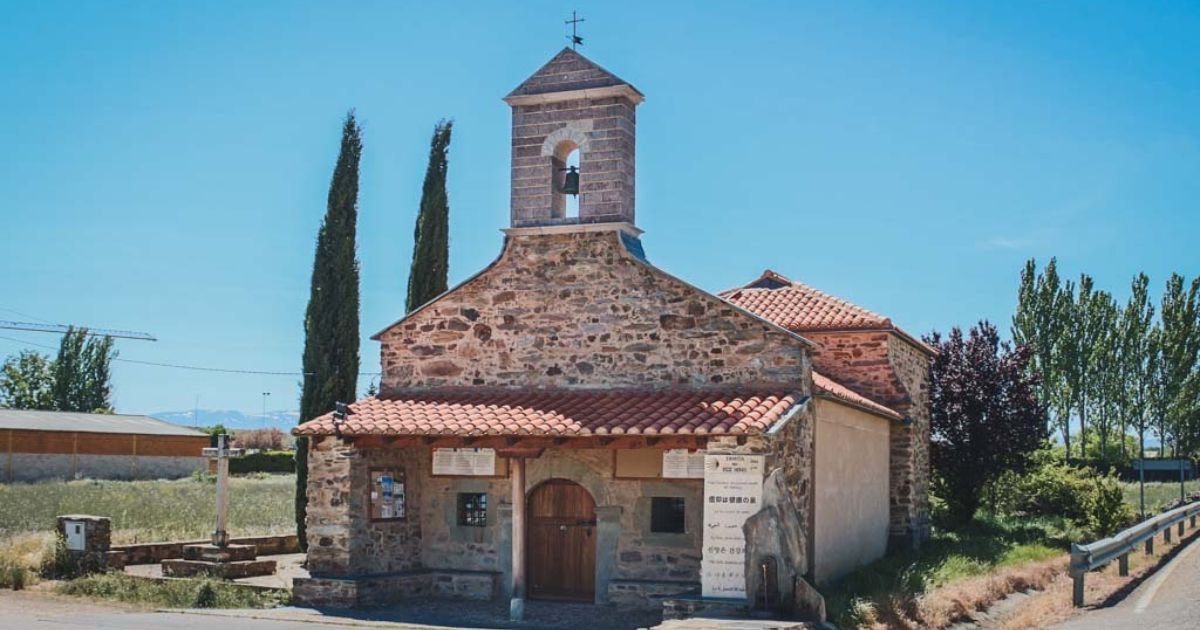


Ermita del Ecce Homo in Valdeviejas
In Leon Province, on the outskirts of Astorga, lies Valdeviejas, a small village home to a spiritual and architectural treasure: the Ermita del Ecce Homo. This modest chapel, full of history and legend, is a must-stop for pilgrims walking the Camino de Santiago Frances.
Location of the Ermita del Ecce Homo
Valdeviejas and Its Connection to the Camino de Santiago
Valdeviejas is a hamlet of Astorga, strategically located on the Camino de Santiago Frances. Its closeness to Astorga makes it a place of rest and reflection for pilgrims.
History of the Ermita del Ecce Homo Valdeviejas
The Ermita del Ecce Homo dates from the 16th century and, according to historical records, was originally dedicated to Saint Peter. Over time, due to a local legend, devotion shifted to the Ecce Homo, depicting Jesus at the moment of his Passion.
Architecture of the Ermita del Ecce Homo
The hermitage is an example of simple religious architecture. Built of stone, it has a single nave and a modest bell gable holding a bell. Its entrance porch offers shelter to pilgrims, and inside is the image of the Ecce Homo, an object of veneration.
The Legend of the Miraculous Well
One of the most endearing stories associated with the hermitage is that of the miraculous well. Legend has it that a pilgrim woman, stopping at the hermitage with her son, went to the well to draw water. The child fell into the well, and the mother, desperate, prayed to the Ecce Homo. Miraculously, the water level rose, allowing the child to be rescued safe and sound.
Meaning and Devotion
This story has strengthened devotion to the Ecce Homo in the region. An inscription on the hermitage reads: “Give alms, traveler, to this holy Ecce Homo, and at once you’ll see how you get out of your troubles,” reminding pilgrims of the importance of faith and charity.
Traditions and Festivities
The Feast of the Ecce Homo in May
Each year in May, Valdeviejas celebrates the Feast of the Ecce Homo. The festivity includes processions with banners, the blessing of fields and crops, and a solemn mass at the hermitage. Attendees enjoy typical dishes such as garbanzo Pico Pardal, along with sweets and traditional music.
Other Local Celebrations
Besides the feast in honor of the Ecce Homo, Valdeviejas celebrates other festivities, such as the Sacramental feast in August and the one dedicated to its patron, Saint Verissimus, in October. These celebrations strengthen the sense of community and tradition in the village.
The Hermitage as a Pilgrims’ Stop
The Ermita del Ecce Homo is a resting point for pilgrims on the Camino de Santiago. Near the hermitage is a municipal hostel offering accommodation and basic services, allowing walkers to recharge and continue their journey with renewed spirit.
Pilgrim Testimonies
Many pilgrims recount moving experiences when visiting the hermitage. The tranquility of the place, the hospitality of the locals and the story of the miraculous well leave a lasting impression, making this stop a meaningful moment on the Camino.
Ermita del Ecce Homo in Valdeviejas
The Ermita del Ecce Homo in Valdeviejas is more than a religious building; it is a symbol of faith, hope and community. Its history, architecture and the traditions surrounding it make it a special place for pilgrims and visitors. If you’re walking the Camino de Santiago, be sure to stop and discover the magic of this corner of Leon.
Frequently Asked Questions (FAQs)
1. Where Is the Ermita del Ecce Homo Located?
It is located in Valdeviejas, a hamlet of Astorga, in the province of Leon, Spain, along the Camino Frances.
2. What Is the Story Behind the Miraculous Well?
According to legend, a pilgrim woman rescued her son from the well thanks to the miraculous intervention of the Ecce Homo, strengthening local devotion.
3. What Festivities Are Celebrated at the Hermitage?
The main one is the Feast of the Ecce Homo in May, which includes processions, blessings and traditional meals.
4. Is the Hermitage Open to the Public?
Yes, the hermitage is open to pilgrims and visitors, especially during festivities and mass times.
5. Is There Accommodation Nearby for Pilgrims?
Yes, near the hermitage is a municipal hostel offering basic services for those walking the Camino de Santiago.