Martin of Tours
Saint Martin of Tours, also known as Martin the Merciful, is one of the most emblematic figures of Western Christianity. His life, marked by charity, humility and service, has inspired generations and left an indelible mark on the religious and cultural history of Europe and the Americas.
Origins and Upbringing
Martin was born around the year 316 in Sabaria, Pannonia (present-day Szombathely, Hungary). The son of a Roman military tribune, he moved with his family to Pavia, Italy, where he was raised in a pagan environment. Despite this, from an early age he showed an inclination toward Christianity, becoming a catechumen at the age of ten.
Military Service and Conversion
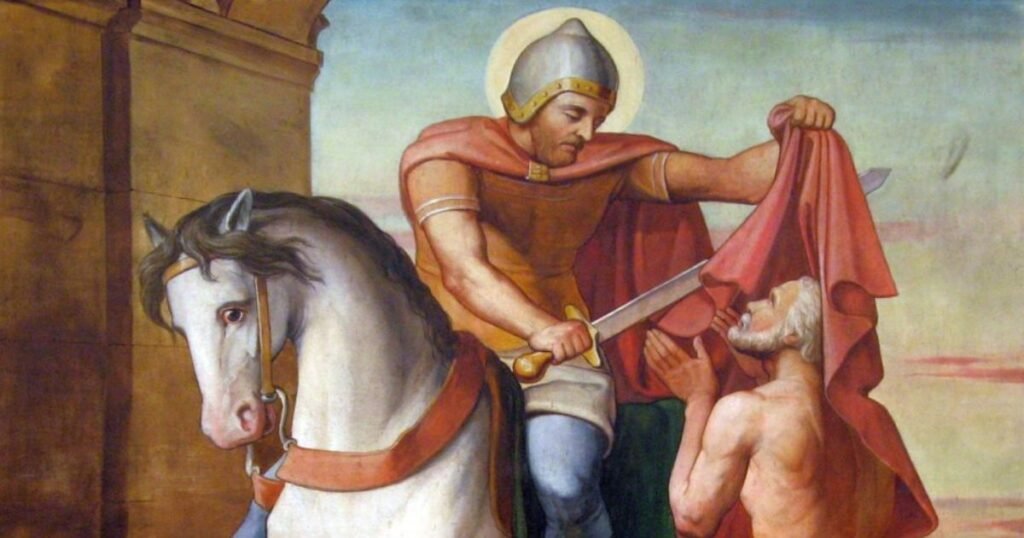
At the age of 15, following family tradition, he joined the Roman army, serving in the imperial cavalry. While stationed at Amiens, France, he performed an act of compassion that would immortalise him: on finding a beggar shivering with cold, he cut his military cloak in half and gave him one part. That same night, he had a vision of Christ wearing the half of the cloak, saying to him:
“Martin, still a catechumen, has clothed me with this robe.”
This event marked a turning point in his life, leading him to leave the military and devote himself entirely to the service of God.
Monastic Life and Episcopate
After leaving the army, Martin became a disciple of Hilary of Poitiers and founded the monastery of Ligugé, considered the oldest in Western Europe. In the year 371, he was chosen as Bishop of Tours, despite his initial reluctance. As bishop, he founded the monastery of Marmoutier, from which he promoted the evangelisation of rural areas and worked against pagan practices, always with an approach of mercy and without resorting to violence.
Death and Canonisation
San Martín died on 8 November 397 in Candes, France. His funeral, held on 11 November, drew a great crowd of the faithful. He was buried in Tours, where a basilica was built in his honour. Although he lived before the formalisation of the canonisation process, his sanctity was recognised by popular acclaim, making him one of the first non-martyr saints of the Church.
Legacy and Devotion
The figure of San Martín crossed borders, becoming the patron of numerous towns and professions, especially soldiers. His cult spread rapidly across Europe, and his feast day, 11 November, is celebrated in various countries with processions, fairs and liturgical events.
In Latin America, devotion to him arrived with the Spanish and Portuguese colonisers, and he was adopted as patron in cities such as Buenos Aires, where he was declared protector in 1580.
Basilica of Saint Martin of Tours
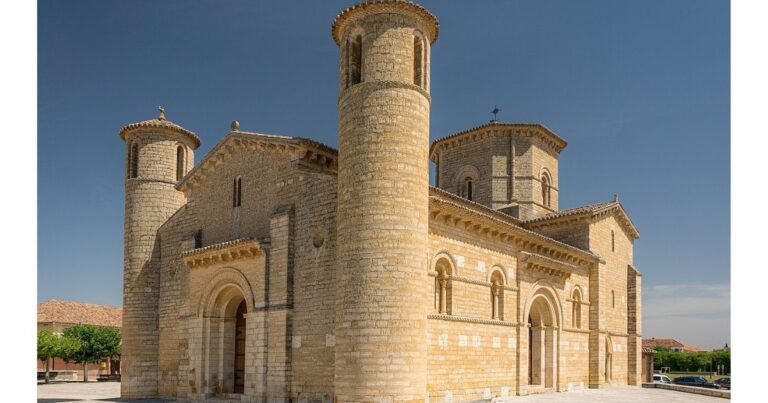
The Basilica of San Martín in Tours stands as an important centre of pilgrimage. Over the centuries it has suffered various acts of destruction and rebuilding, the current structure having been inaugurated in 1925. Relics of the saint are kept in its crypt, and its architecture combines Romanesque and Neo-Byzantine elements.
Iconographic Representation
San Martín is commonly depicted on horseback, sharing his cloak with a beggar, symbolising his act of charity. This image has been captured in countless works of art, from medieval frescoes to Renaissance paintings, notably the one painted by El Greco between 1597 and 1600.
Cultural and Linguistic Influence
The word “chapel” (Spanish: capilla) derives from the Latin word “cappa“, referring to San Martín’s cloak. Originally, the “chapel” was the place where this relic was kept, and over time the term came to be used more broadly for small places of worship.
Saint Martin of Tours
Saint Martin of Tours embodies the values of compassion, humility and selfless service. His legacy endures in collective memory, not only as a venerated saint, but as a timeless example of humanity and devotion to one’s fellow man.