Saint Nicholas of Myra or Saint Nicholas of Bari
Saint Nicholas, also known as Saint Nicholas of Myra or Saint Nicholas of Bari (in the West, after the place where his remains were moved) was a bishop who lived in the 4th century. More than two thousand churches around the world are dedicated to him.
Biography of Saint Nicholas of Bari
He was born in Patara, in the region of Lycia (now within the territory of Turkey) into a wealthy family, and from childhood stood out for his pious and generous character. His parents, devout Christians, raised him in the faith. After the death of his parents, Nicholas inherited a great fortune which he devoted to the needy, according to the hagiography written by Saint Methodius, Archbishop of Constantinople.
When his parents died, he distributed his entire fortune among the poor and went to live in Myra (Anatolia, present-day Turkey), where he would be consecrated bishop in a rather curious way. Legend has it that several priests and bishops were debating who would be the next bishop, since the previous one had died. Unable to agree, it was decided that it would be the next priest to enter the church, who happened to be Nicholas of Bari.
During his time as bishop, in his zeal to stamp out pagan cults, he ordered the demolition of the temple of Artemis in Myra, the largest and most famous temple in Lycia, along with several other pagan buildings.
Under a decree of Emperor Licinius against Christians, he was imprisoned and his beard burned, before being freed by Emperor Constantine.
He took part in the Council of Nicaea, condemning the doctrines of Arius, who refused to accept the dogma of the divinity of Christ. To combat these errors he used an exquisite gentleness, achieving great and sincere conversions, despite his modest gift for speculation and oratory so prized by Easterners. Yet when it came to protecting the weak from the powerful, Saint Nicholas, despite his advanced age, acted with great boldness and vigour.
Saint Nicholas of Bari died on 6 December in the year 343 in Myra, but his remains rest in the Italian port city of Bari, where they ended up after being taken out of Turkey following the Muslim conquest. After his death he became the first non-martyr saint to enjoy special devotion in both East and West. A multitude of miraculous tales grew up around him, at times obscuring his eminently practical and simple character.
Miracles of Saint Nicholas of Bari
Many miracles are attributed to him. One of the most famous tells that, while still young, he took pity on a ruined nobleman from the town of Patara, in Lycia, who, having fallen into utter poverty, had been forced to prostitute his three daughters (said, in the story, to be beautiful and virtuous). To remedy this, the saint of Bari threw three shoes — in other versions, purses — full of gold, on as many nights, through the window of the room «where that unnatural father slept, thus providing the timely remedy». In another version, which would become famous, he dropped gold coins down the chimney, which miraculously fell into woollen stockings the girls had left out to dry, and from this is thought to derive the tradition of hanging knitted stockings to receive gifts at Christmas. Likewise, the Bishop of Myra is sometimes depicted holding three gold coins in his hands in his best-known representations: in his operetta and in the legend of Santa Claus.

Pellicer, in his Tratado historico, records that it was customary at the court of Philip II of Spain to stage, on 6 December, the feast day of Saint Nicholas of Bari, the so-called Fiesta del zapato (“Feast of the Shoe”), with the occasional participation of a lady of the court.
Another well-known miracle is that of his having brought back to life, through his intercession, three children who had fallen from a tree and died instantly. He is also credited with the miracle of the three children who were slaughtered to feed the guests of an innkeeper, and were restored to life through the saint’s intercession. For this reason he is depicted with three children beside him, in a tub.
It is said that on one occasion he saved the lives of three generals unjustly condemned to death. It is also told that on another occasion, a group of sailors caught in the middle of a storm invoked the protection of Saint Nicholas, saw the saint’s figure appear above the ship, and the storm calmed at once. One of the most recent alleged miracles, said to have occurred during the Second World War, tells how, during a bombing raid on the city of Bari, a mother was separated from her child amid the confusion, and the child appeared hours later at the door of their home, safe and sound. The child said that a man he described as Saint Nicholas had helped him, protected him and brought him home.
Devotion to Saint Nicholas of Bari
In the East he is called Nicholas of Myra, after the city where he served as bishop, but in the West he is called Nicholas of Bari, because when the Muslims conquered Anatolia, a group of Christians secretly removed the saint’s relics and carried them to the city of Bari, in Italy. In that city such admirable miracles were credited to prayers made to him that his cult became immensely popular throughout Europe. He is the patron saint of Russia, Greece and Turkey. In Rome, as early as the year 550, a church had been built in his honour.
His name is notable even outside the Christian world, since his figure gave rise to the character of Santa Claus (from the German Sankt Niklaus), also known as Father Christmas.
San Josemaría Escrivá de Balaguer le nombró santo intercesor del Opus Dei (6 de diciembre de 1934).
Operetta: Saint Nicholas Is Coming
The Salesian priest Jerko Grzincic wrote a Christmas operetta titled Saint Nicholas Is Coming, in three acts. The musical piece involves a large cast of children, representing angels, devils, Saints Crispin and Gerard and others. It premiered for the first time before the Second World War in Ljubljana, to great success.
The first act takes place in heaven with the angels, who prepare for the great ceremony of going down to Earth. Saint Crispin (a shoemaker) and Saint Gerard (a tailor) make shoes and clothes for poor children.
The second act unfolds in a modern hell. The devils, led by Lucifer, plot how to lead children and young people astray.
The third act moves to Earth. Saint Nicholas now comes to greet the audience, accompanied by the angels. In his speech, the Holy Bishop teaches not only the children, but also their parents, friends and relatives: to be good and hardworking, pious and generous. The good children now receive their gifts.
At the end, Saint Nicholas wishes everyone a Merry Christmas, hoping they live in peace and harmony.
Leyenda de Papá Noel
Nicholas of Bari became the basis for the figure of Father Christmas, Santa Claus or Saint Nicholas, a legendary character who, according to Western culture, brings gifts to children at Christmas (the night of 24 to 25 December).
Saint Nicholas of Bari
| Name in Greek | Άγιος Νικόλαος |
|---|---|
| Born | around 270, Patara, Lycia, Roman Empire |
| Died | between 345 and 352, Myra, Roman Empire |
| Burial | Basilica of Saint Nicholas |
| Religion | Early Christianity |
| Professional Information | |
| Occupation | Presbyter |
| Positions held | Diocesan bishop, Catholic bishop |
| Religious Information | |
| Canonization | Wonderworker and prelate |
| Feast day | 6 December./ 19 December |
| Attributes | Bishop’s vestments, together with Christ on the right presenting him with the Gospel and the Theotokos on the left handing him the episcopal Omophorion (or Pallium) (sometimes with written accounts of his life and peaceful death; or also alongside the Church Fathers and Apostolic Fathers, and other Saints who defended the Faith); or the symbol of three gold coins. |
| Venerated in | Catholic Church |
| Patronage | Greece, Russia, Turkey ; Lorraine (France), Aberdeen, Alicante, Amsterdam, Bari, Mykolaiv, Beit Jala, Fribourg, Fresno de Cantespino, Galway, La Rioja (Capital), Macchia Valfortore, Portsmouth, Porlamar, Requena, San Nicolas de los Arroyos, Alhama de Almeria, Sigġiewi, Valdecanas de Cerrato, Molinaseca, children; sailors, fishermen, seafarers and travellers in general; pawnbrokers; prostitutes; the unjustly accused |
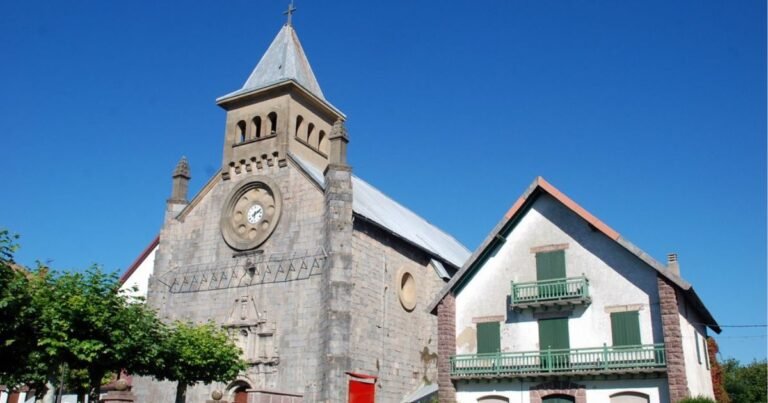
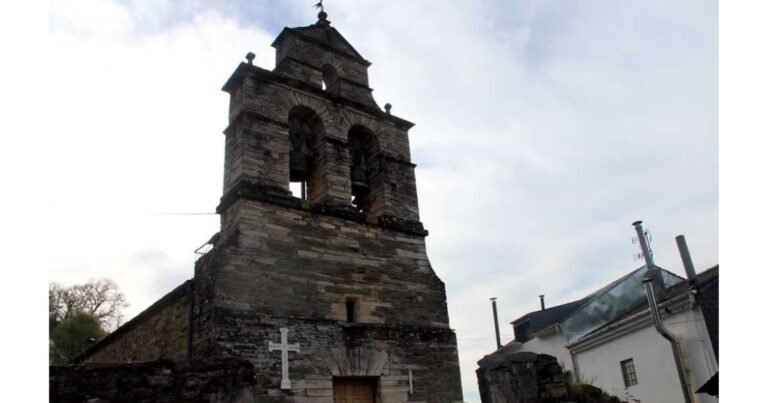
Churches dedicated to Saint Nicholas of Bari


Véase también:
